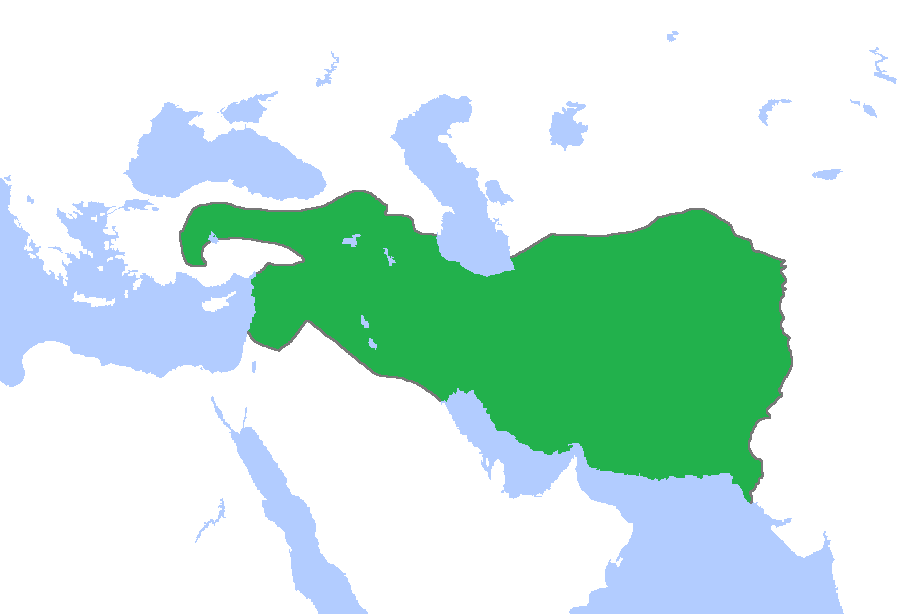
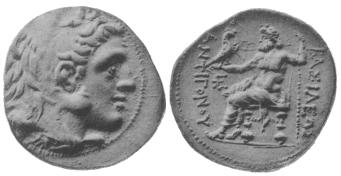
Crowned at 20, dead at 33 in Babylon — in just 13 years Alexander walked from Macedonia to the Indus, building the first empire to span three continents. Aristotle taught him, Hephaestion stood beside him, Bucephalus carried him, Darius feared him. After his death his corpse was stolen and his empire carved up, but the 70 Alexandrias he founded and the 300 years of Hellenistic civilization that followed carried Greek from the Nile to the Oxus.
📌 內容與授權:本頁事件說明文字(中英)為 Cosmic History Timeline 編輯整理。
圖片來自 Wikimedia Commons,作者與授權詳見每張圖下方連結。
延伸閱讀的 Wikipedia 與 Amazon 連結著作權歸原權利人;Amazon 連結為聯盟連結(不影響你的價格)。
📌 Sources & Credits: Event descriptions (zh / en) are editorial work by Cosmic History Timeline.
Images are sourced from Wikimedia Commons — author and license shown below each image.
Wikipedia and Amazon links belong to their respective rights holders; Amazon links are affiliate links (no extra cost to you).
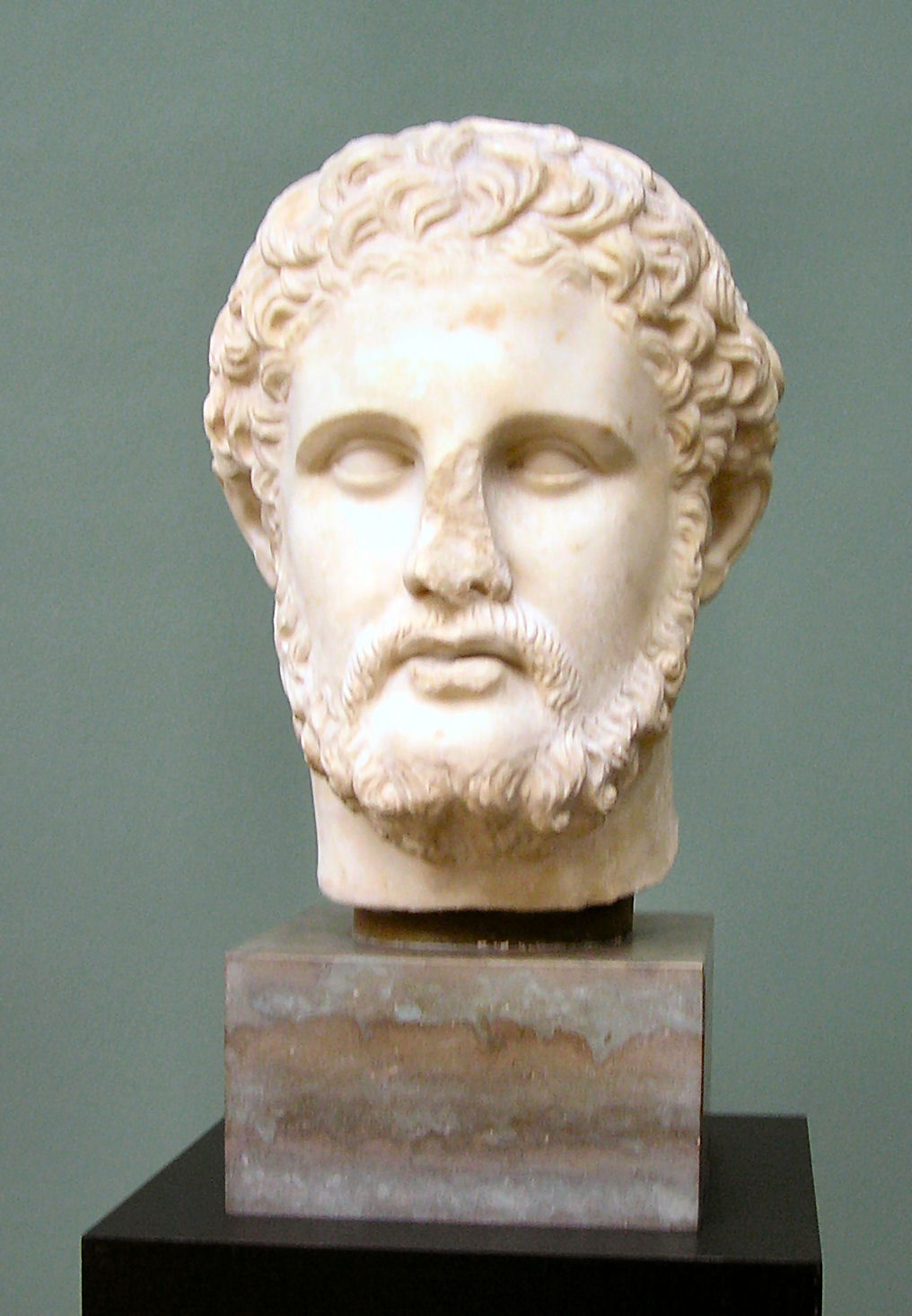
Philip II 23 歲即位,改革馬其頓軍制創薩里沙長矛方陣、兵團(phalanx)、混合兵種戰術。24 年內征服巴爾幹、-338 年 Chaeronea 擊敗希臘聯軍。將希臘統一為「柯林斯聯盟」,為兒子 Alexander 打下征服波斯根基。
At 23, Philip II became king and reformed Macedonian military — creating the sarissa pike phalanx and combined-arms tactics. In 24 years he conquered the Balkans; at Chaeronea (338 BC) he defeated the Greek coalition. He unified Greece as the League of Corinth, laying the foundation for his son Alexander's Persian conquest.
相關主軸:Related axes:波斯/伊朗Persia中東Middle East亞歷山大·早年Alexander · Early Years
From a prince of Pella to conqueror of the known world. In 32 years of life and 13 years of unbroken military success, he built an empire spanning three continents.
Age 12, tamed an unrideable stallion at Pella by realizing the horse feared its own shadow. Philip reportedly said: "My son, seek a kingdom equal to thyself; Macedonia is too small for thee."
From age 13, studied for three years under Aristotle at the Nymphaeum of Mieza — philosophy, medicine, rhetoric, biology. Throughout his campaigns, he slept with Aristotle's annotated copy of the Iliad under his pillow.
While Philip II campaigned against Byzantium, 16-year-old Alexander acted as regent. He crushed a Thracian Maedi revolt and founded Alexandropolis — the first of many cities named after himself.
8 月 2 日 Philip II 與 18 歲 Alexander 父子擊敗雅典-底比斯聯軍於 Chaeronea。神聖軍團 300 人全戰死。希臘城邦獨立自此終結,被納入馬其頓柯林斯聯盟。Demosthenes《金冠演說》哀悼希臘自由。
On August 2, Philip II and his 18-year-old son Alexander defeated the Athens-Thebes coalition at Chaeronea. The Theban Sacred Band of 300 fell to a man. Greek polis independence ended; all were incorporated into the Macedonian League of Corinth. Demosthenes's 'On the Crown' mourned Greek freedom.
相關主軸:Related axes:西方West跨文明Cross-Civilization亞歷山大·早年Alexander · Early Years
Philip II and his 18-year-old son crushed an alliance of Greek city-states. Alexander led the left-wing Companion Cavalry, broke the Theban Sacred Band, killed its commander, and reversed the fight — securing Macedonian rule over all Greece.
相關主軸:Related axes:希臘羅馬Greece & Rome亞歷山大Alexander the Great跨文明Cross-Civilization
Year after his accession, Thebes revolted while Alexander campaigned in Thrace. He raced back, stormed the city, killed 6,000, sold 30,000 into slavery, and razed everything — except, by his order, the house of the poet Pindar. The rest of Greece fell silent.
相關主軸:Related axes:希臘羅馬Greece & Rome亞歷山大Alexander the Great跨文明Cross-Civilization
圖:Frank Martini. Cartographer, Department of History, United States Military Acade · Public domain · Wikimedia CommonsImage: Frank Martini. Cartographer, Department of History, United States Military Acade · Public domain · Wikimedia Commons
腓尼基海港 Tyre 拒服,Alexander 修建 800 公尺堤道連島嶼,調 200 艘船封鎖,7 月後破城屠殺。
Phoenician port Tyre refused submission. Alexander built 800m causeway, blockaded with 200 ships.
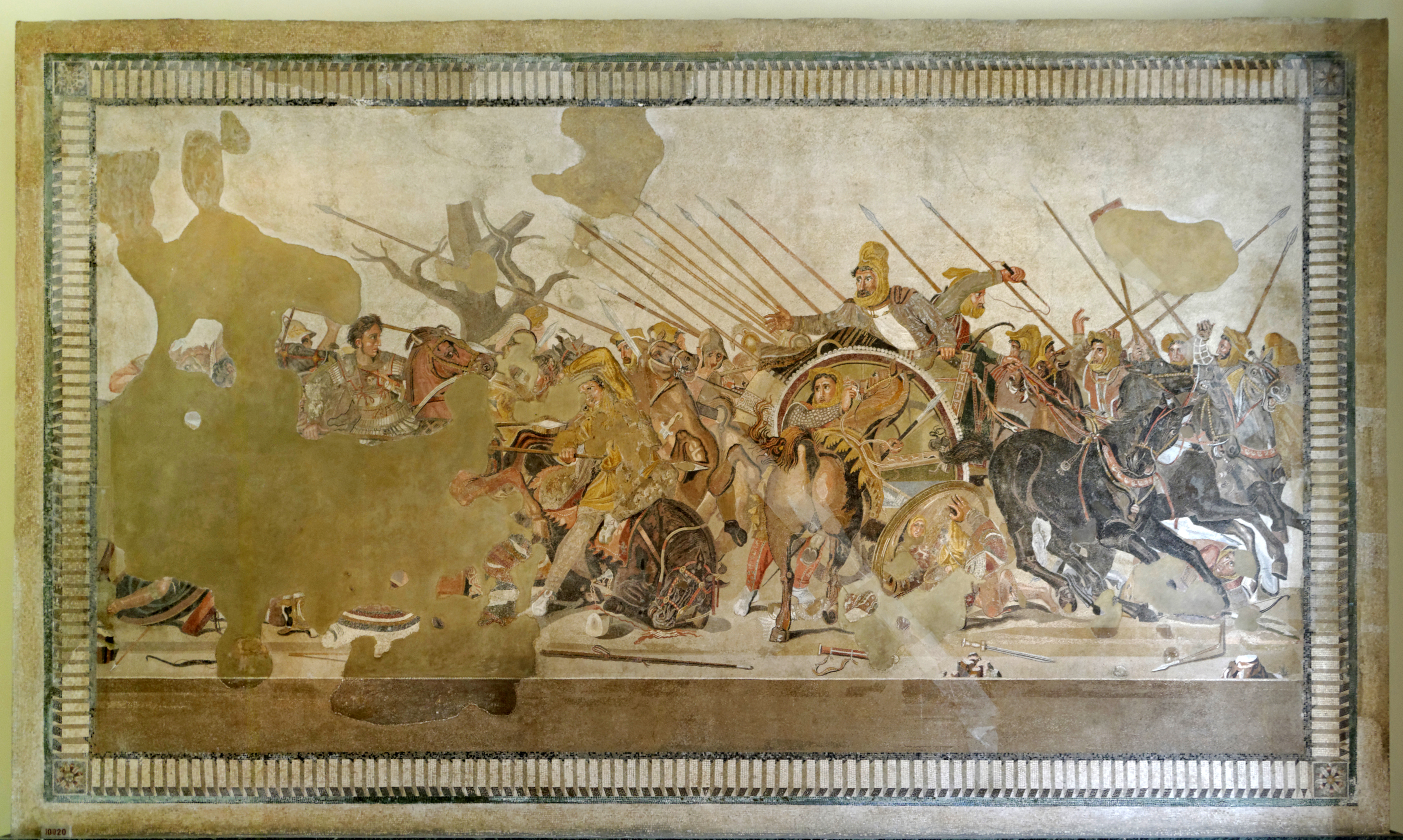
10 月 1 日 Alexander 4.7 萬大軍於 Gaugamela(今伊拉克北部)擊敗 Darius III 10 萬波斯軍。Darius III 逃亡,波斯帝國實質滅亡。Alexander 入 Babylon、Susa、Persepolis(焚毀)。220 年阿契美尼德結束,波斯進希臘化時代。
On October 1, Alexander's 47,000 troops defeated Darius III's 100,000-strong Persian army at Gaugamela (northern Iraq). Darius III fled; the Persian Empire effectively ended. Alexander entered Babylon, Susa, and Persepolis (which he burned). After 220 years, the Achaemenid Empire ended; Persia entered the Hellenistic age.
相關主軸:Related axes:希臘羅馬Greece & Rome兩河流域Mesopotamia亞歷山大Alexander the Great
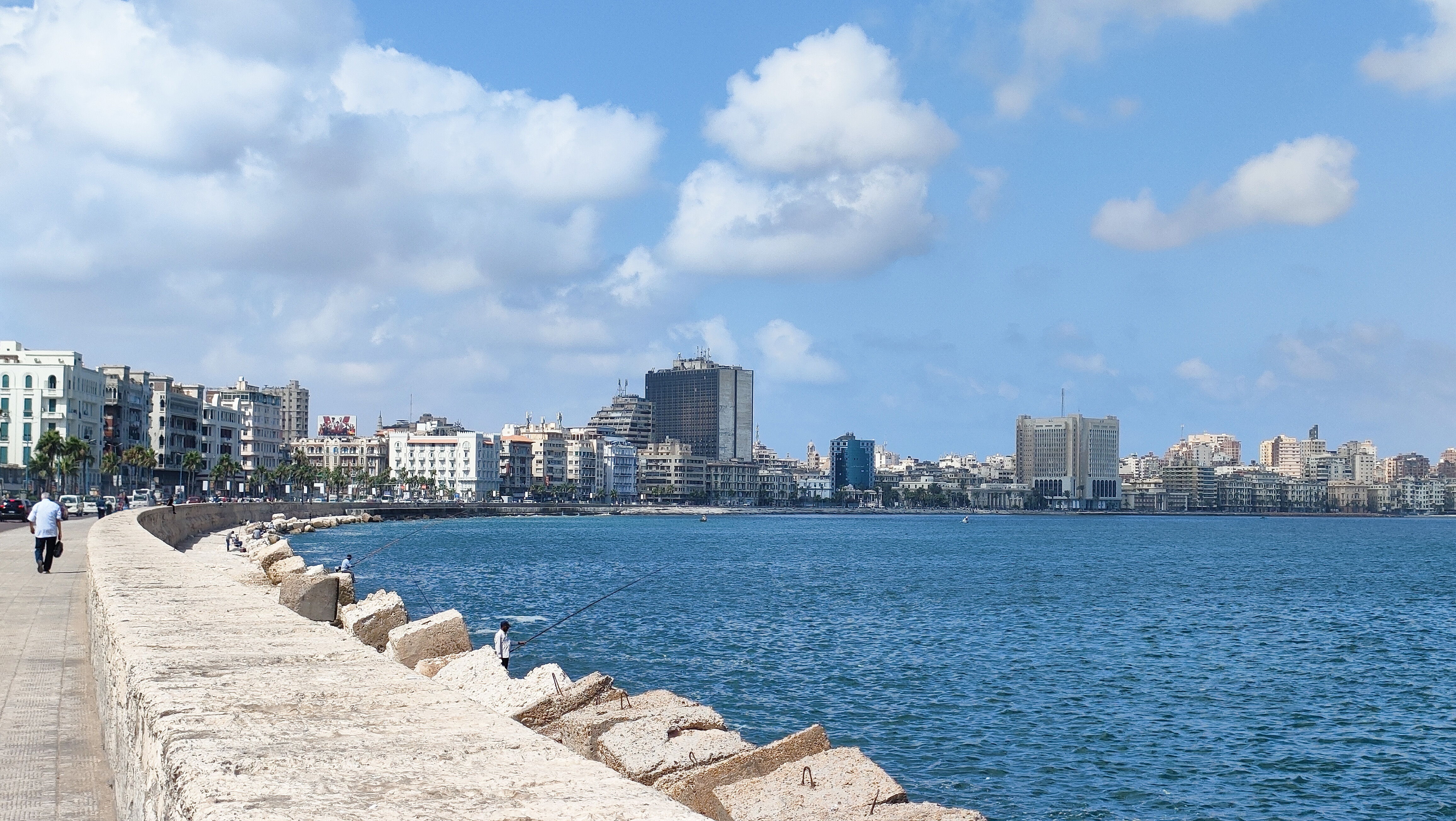
On April 7, Alexander the Great founded and named the city on the western Nile Delta coast. It became the Ptolemaic capital and the Mediterranean's richest, most cultured city — with the Pharos Lighthouse (one of the Seven Wonders), the Great Library, and the Mouseion making Hellenistic Egypt the world's academic capital.
攻陷波斯首都後·據傳於酒宴中受雅典名妓 Thais 慫恿,焚毀 Xerxes 的宮殿群,象徵報復一個半世紀前波斯燒雅典之仇。後世史家對此爭議不斷——意外醉態 vs 政治宣示。
After capturing the Persian capital, Alexander reportedly burned the palace complex of Xerxes during a drunken banquet — at the urging of the Athenian courtesan Thais — as symbolic revenge for the Persian sack of Athens 150 years earlier. Historians still debate: drunken accident or calculated act?
相關主軸:Related axes:波斯/伊朗Persia亞歷山大Alexander the Great希臘羅馬Greece & Rome
Alexander the Great defeated Darius III and burned Persepolis, ending the Achaemenid Empire. Darius fled and was killed by his own men, terminating two centuries of Persian dominance.
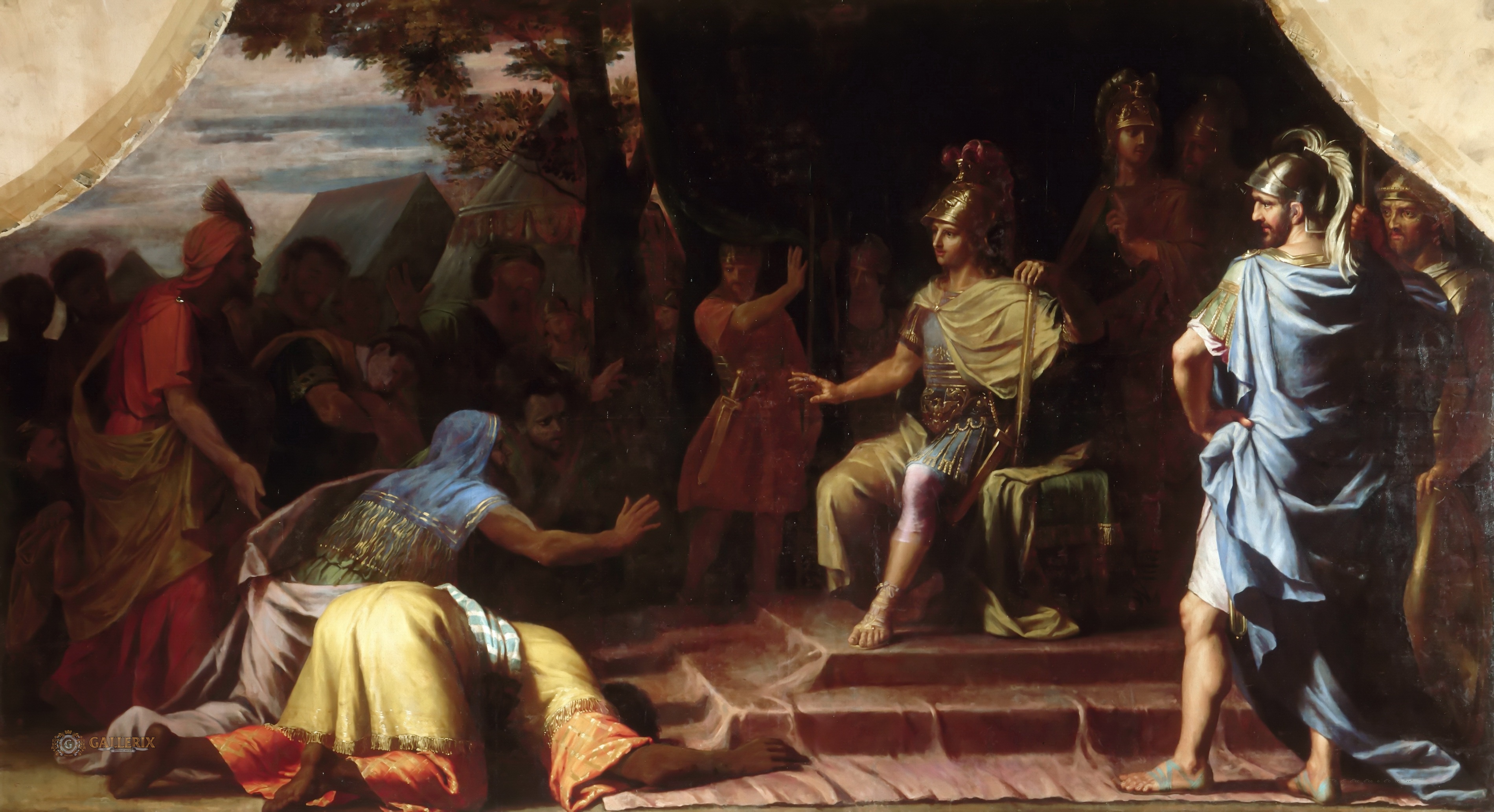
The Persian satrap Bessus murdered the fleeing Darius III and proclaimed himself king. Alexander hunted him down, captured him, and executed him by Persian methods (tearing apart). From then on Alexander styled himself 'Lord of Asia,' adopted Persian dress, and demanded ceremonial proskynesis (prostration) — alienating his Macedonian veterans.
相關主軸:Related axes:波斯/伊朗Persia亞歷山大Alexander the Great中亞/北亞Central Asia
At a banquet in Samarkand, the veteran Cleitus the Black — who had saved Alexander's life at Granicus — drunkenly accused him of betraying his Macedonian roots. Enraged, Alexander grabbed a spear and ran him through. He then refused food for three days, attempted self-harm, and was talked out of suicide only by his companions.
相關主軸:Related axes:亞歷山大Alexander the Great中亞/北亞Central Asia
在 Sogdiana 攻下難攻不落的 Sogdian Rock 後·迎娶土豪 Oxyartes 之女 Roxana。傳為亞歷山大唯一真心愛上的人。後生子 Alexander IV,但其子在繼業者戰爭中被毒殺。
After capturing the supposedly impregnable Sogdian Rock, Alexander married Roxana, daughter of the local chieftain Oxyartes. Said to be the only woman Alexander truly loved. Their son Alexander IV was later murdered during the Wars of the Diadochi.
相關主軸:Related axes:中亞/北亞Central Asia亞歷山大Alexander the Great
A failed plot by the royal pages to assassinate Alexander led to all conspirators being stoned to death. Callisthenes — Aristotle's nephew and Alexander's official historian — was implicated for openly opposing proskynesis. He died in prison, permanently rupturing Alexander's relationship with Aristotle.
The Indian sage Calanus, who joined Alexander's army on the return march, fell ill in Persia. Refusing to be a burden, he requested a funeral pyre and burned himself alive — the first time Greeks witnessed Jain-style voluntary death. His parting words: "We shall meet in Babylon." Eight months later, Alexander died in Babylon.
相關主軸:Related axes:亞歷山大Alexander the Great印度教Hinduism
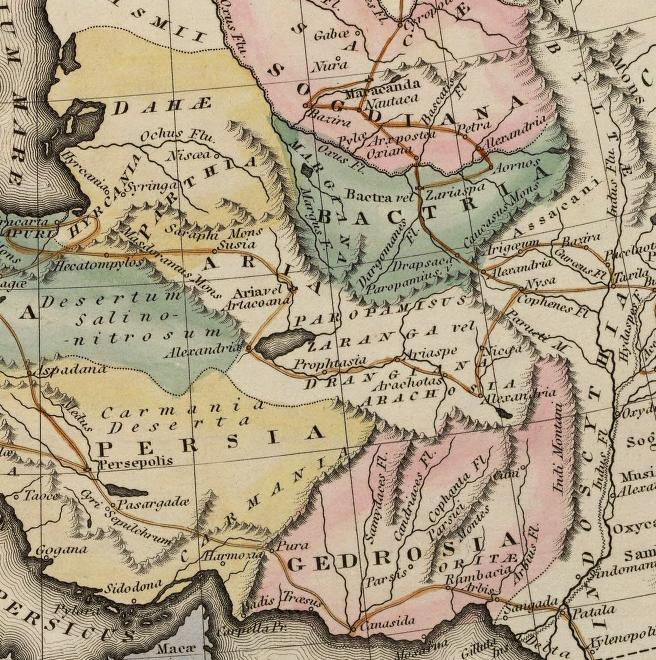
Returning from India, Alexander chose to cross the southern Gedrosian Desert (Baluchistan) — partly to punish his troops for refusing to march further east. In 60 days, lacking food and water, two-thirds of the army and camp followers perished. His worst military disaster.
相關主軸:Related axes:亞歷山大Alexander the Great中亞/北亞Central Asia
Childhood companion and second-in-command Hephaestion died of fever at Ecbatana. Alexander reportedly fasted for days, shaved his head in mourning, executed the attending physician, and petitioned the oracle of Ammon to deify Hephaestion.
為融合馬其頓與波斯,亞歷山大強令 80 名馬其頓將領在 Susa 集體迎娶波斯與米底貴族女子,自己則同時娶大流士女兒 Stateira II 與 Artaxerxes III 女兒 Parysatis II。亞歷山大死後多數將領立刻休妻——融合計畫破產。
To fuse Macedonian and Persian elites, Alexander ordered 80 of his generals to marry Persian and Median noblewomen in a single mass ceremony at Susa. He himself married two more royal Persian women. After his death most of the generals immediately divorced their wives — the fusion experiment collapsed.
相關主軸:Related axes:波斯/伊朗Persia亞歷山大Alexander the Great中東Middle East
Legend says the body did not decay for six days. As the elaborate funeral cortege traveled toward Macedon, Ptolemy intercepted it in Syria and diverted it to Alexandria as a symbol of legitimacy. The exact tomb location has been lost to history.
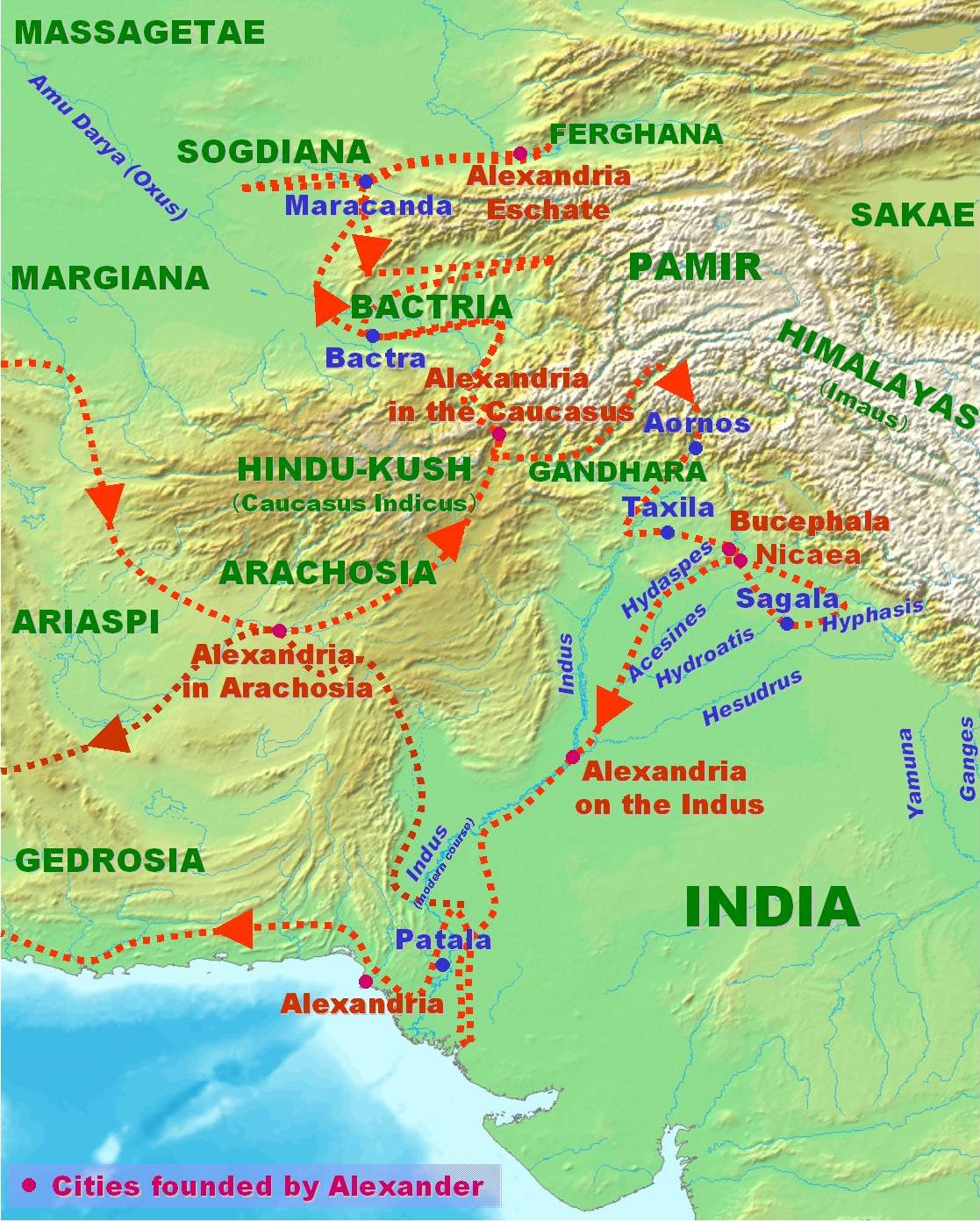
Across his campaigns Alexander founded at least 70 Alexandrias — Alexandria in Egypt, Alexandria-Eschate in modern Afghanistan, Alexandria-Bucephala in Pakistan, and many more. These Greek colonies kept Greek language, architecture, and philosophy alive across the Middle East and Central Asia for centuries, seeding the Hellenistic world.
繼業者戰爭 (Diadochi)·42 年帝國分裂Wars of the Diadochi — 42 years of empire fragmentation
圖:Unknown, likely by or after Heinrich Leutemann, published 1878 · Public domain · Wikimedia CommonsImage: Unknown, likely by or after Heinrich Leutemann, published 1878 · Public domain · Wikimedia Commons
From the end of the Wars of the Diadochi (-281) to Cleopatra's suicide (-30), Greek language and culture dominated the eastern Mediterranean and western Asia for 250 years — Ptolemaic Egypt, Seleucid Mesopotamia, Antigonid Macedon. The Library of Alexandria, Euclid's geometry, Archimedean mechanics, and Stoic philosophy all flourished in this era.
Ptolemy I 在 Alexandria 建 Mouseion 學院與大圖書館,藏書最多時 70 萬卷(含希臘、希伯來、埃及各文本)。Euclid、Eratosthenes、Archimedes 皆於此工作。多次毀於火(凱撒、Aurelian、阿拉伯時代)。
Ptolemy I built the Mouseion academy and Great Library at Alexandria, at its peak housing 700,000 scrolls (Greek, Hebrew, Egyptian, and more). Euclid, Eratosthenes, and Archimedes worked there. It burned multiple times (by Caesar, Aurelian, and in the Arab era).
He took refuge with Antiochus III of the Seleucid Empire. He proposed using the Syrian navy to land an army in Italy, himself commanding. Antiochus refused. Antiochus was then crushed by Rome at Magnesia (-190). Rome demanded Hannibal's extradition; he fled again, to Bithynia.
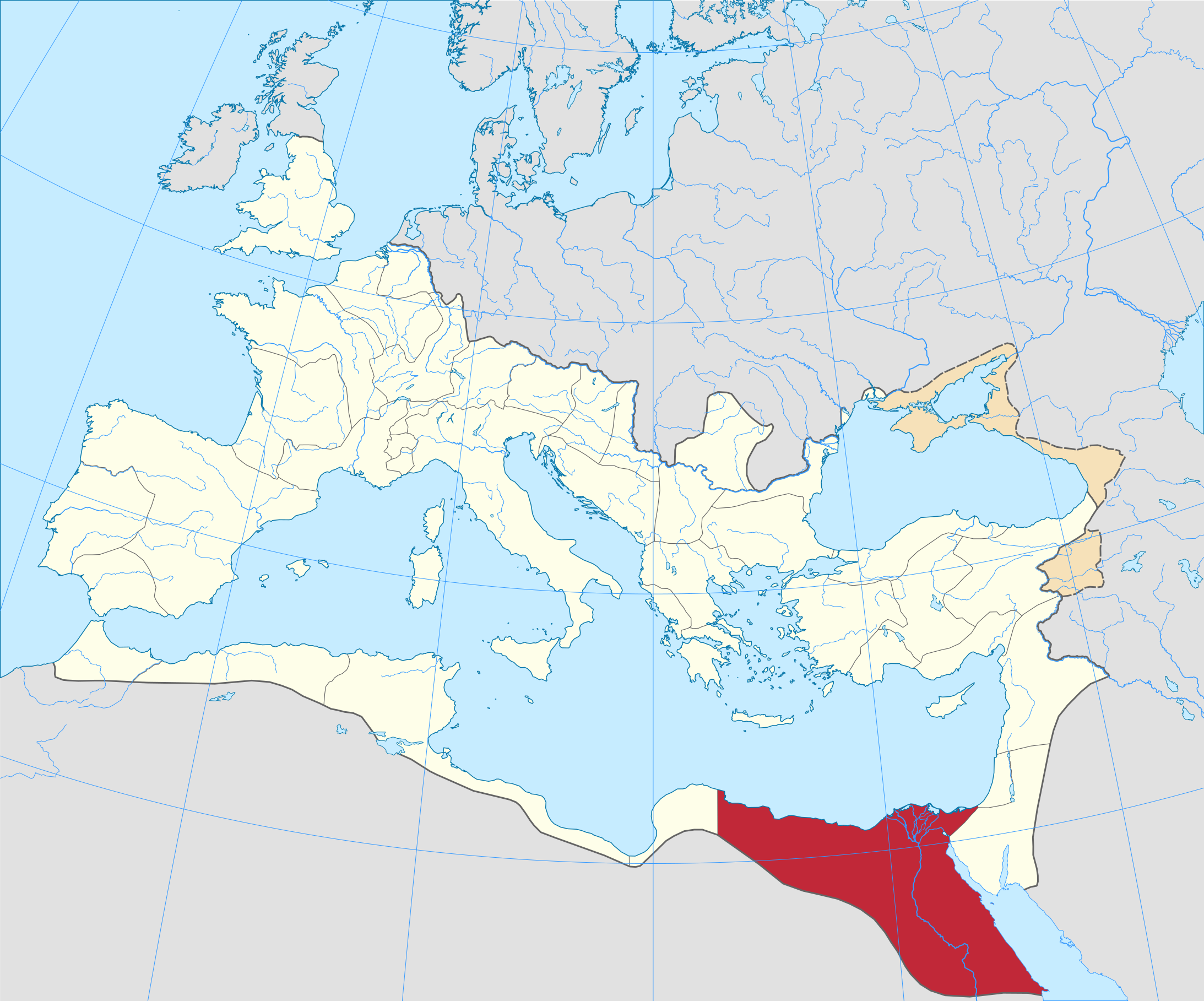
After Octavian ended Ptolemaic rule, Egypt became the personal property of Roman emperors (the only province not under the Senate). Nile grain fed Rome's million residents. The 115-117 Jewish-Roman war destroyed Alexandria's Jewish community. Diocletian's 250-300 persecution targeted Christians.