古代 · 60 條事件
Ancient · 60 events
古近紀
Paleogene Period
圖:Scotese, Christopher R.; Vérard, Christian; Burgener, Landon; Elling, Reece P.; · CC BY 4.0 · Wikimedia Commons Image: Scotese, Christopher R.; Vérard, Christian; Burgener, Landon; Elling, Reece P.; · CC BY 4.0 · Wikimedia Commons 恐龍滅絕後哺乳動物迅速多樣化的時期
Period of rapid mammalian diversification after the dinosaur extinction.
恐龍滅絕·K-Pg事件
K-Pg Extinction (Dinosaurs Extinct)
圖:The original uploader was Fredrik at English Wikipedia. · Public domain · Wikimedia Commons Image: The original uploader was Fredrik at English Wikipedia. · Public domain · Wikimedia Commons 直徑10公里小行星撞擊墨西哥猶加敦半島,非鳥類恐龍全部滅絕,哺乳類趁機崛起。
A 10km asteroid strikes the Yucatán Peninsula; non-avian dinosaurs extinct; mammals rise to dominance.
相關主軸: Related axes: 恐龍 Dinosaurs 新生代生命演化 Cenozoic Life Evolution
新生代(至今)
Cenozoic Era (to present)
圖:Mauricio Antón · CC BY 2.5 · Wikimedia Commons Image: Mauricio Antón · CC BY 2.5 · Wikimedia Commons 哺乳類與鳥類大輻射演化,草原擴張,靈長類出現,最終演化出人類,延續至今。
Mammals and birds diversify explosively; grasslands expand; primates evolve; culminates in humans.
恐龍滅絕・白堊紀末
Dinosaur Extinction — End Cretaceous
圖:The original uploader was Fredrik at English Wikipedia. · Public domain · Wikimedia Commons Image: The original uploader was Fredrik at English Wikipedia. · Public domain · Wikimedia Commons 小行星撞擊尤卡坦半島,非鳥恐龍全部滅絕。只有鳥類存活至今。
Asteroid struck Yucatán. All non-avian dinosaurs went extinct. Only birds survived to present day.
相關主軸: Related axes: 生命 Life 地球 Earth
古新世
Paleocene
圖:Scotese, Christopher R.; Vérard, Christian; Burgener, Landon; Elling, Reece P.; · CC BY 4.0 · Wikimedia Commons Image: Scotese, Christopher R.; Vérard, Christian; Burgener, Landon; Elling, Reece P.; · CC BY 4.0 · Wikimedia Commons 恐龍滅絕後的復甦期。哺乳類開始填補生態空缺,體型逐漸增大。
Recovery period after dinosaur extinction. Mammals began filling ecological niches and growing larger.
哺乳類大爆發
Mammalian Adaptive Radiation
圖:John Gould (14.Sep.1804 - 3.Feb.1881) · Public domain · Wikimedia Commons Image: John Gould (14.Sep.1804 - 3.Feb.1881) · Public domain · Wikimedia Commons 恐龍滅絕後百萬年內,哺乳類快速多樣化,填補所有生態空缺。
Within a million years of dinosaur extinction, mammals rapidly diversified to fill all ecological niches.
恐鳥崛起
Terror Birds Rise
圖:Amanda from Chicago, USA · CC BY 2.0 · Wikimedia Commons Image: Amanda from Chicago, USA · CC BY 2.0 · Wikimedia Commons 巨型肉食鳥類(駭鳥)成為南美洲頂級掠食者,有些身高超過 2 米。
Giant predatory birds (Phorusrhacids) became apex predators in South America. Some over 2m tall.
最早的囓齒類
First Rodents
圖:Public domain · Wikimedia Commons Image: Public domain · Wikimedia Commons 囓齒類出現,日後成為哺乳類中物種數量最多的類群。
Rodents appeared, eventually becoming the most species-rich order of mammals.
最早的食肉目
First Carnivorans
圖:Emőke Dénes · CC BY-SA 4.0 · Wikimedia Commons Image: Emőke Dénes · CC BY-SA 4.0 · Wikimedia Commons 原始食肉目(小古貓等)出現,是現代貓、狗、熊的祖先。
Early carnivorans (Miacids) appeared — ancestors of modern cats, dogs, and bears.
始新世
Eocene
圖:Scotese, Christopher R.; Vérard, Christian; Burgener, Landon; Elling, Reece P.; · CC BY 4.0 · Wikimedia Commons Image: Scotese, Christopher R.; Vérard, Christian; Burgener, Landon; Elling, Reece P.; · CC BY 4.0 · Wikimedia Commons 新生代最溫暖的時期。現代哺乳類的主要類群出現:馬、鯨魚、蝙蝠、靈長類。
Warmest period of the Cenozoic. Major modern mammal groups appeared: horses, whales, bats, primates.
PETM 全球暖化事件
PETM — Paleocene-Eocene Thermal Maximum
圖:Public domain · Wikimedia Commons Image: Public domain · Wikimedia Commons 古新世-始新世極熱事件。全球溫度暴升 5-8°C,海洋酸化,大量物種遷徙。
Global temperature surged 5-8°C. Ocean acidification. Massive species migration.
相關主軸: Related axes: 氣候 Climate
第一批靈長類
First Primates
圖:Lemur_catta_001.jpg: Alex Dunkel (Visionholder)
Aye-aye_(Daubentonia_madagascari · CC BY-SA 3.0 · Wikimedia Commons Image: Lemur_catta_001.jpg: Alex Dunkel (Visionholder)
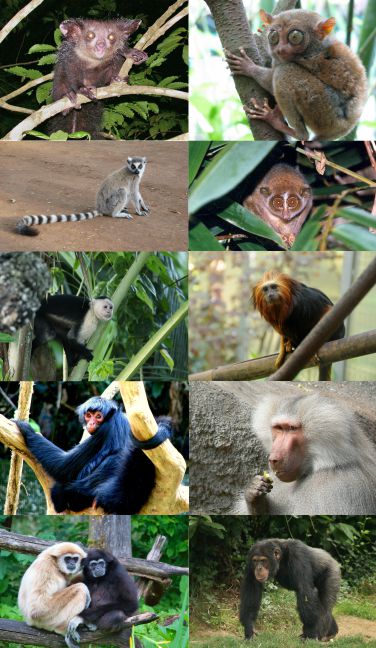
Aye-aye_(Daubentonia_madagascari · CC BY-SA 3.0 · Wikimedia Commons K-Pg滅絕事件後哺乳類大輻射,最早的靈長類在熱帶森林中演化,具立體視覺與靈活雙手。
After K-Pg extinction, mammals diversify; earliest primates evolve in tropical forests with stereoscopic vision and grasping hands.
相關主軸: Related axes: 新生代生命演化 Cenozoic Life Evolution
始祖馬
Eohippus (Dawn Horse)
圖:Charles Robert Knight · Public domain · Wikimedia Commons Image: Charles Robert Knight · Public domain · Wikimedia Commons 最早的馬,只有狗的大小,有四趾。五千萬年間逐漸演化為現代馬。
Earliest horse, dog-sized with four toes. Evolved into modern horses over 50 million years.
喜馬拉雅山形成
Himalayas Form
圖:NASA Landsat image · Public domain · Wikimedia Commons Image: NASA Landsat image · Public domain · Wikimedia Commons
Collision of Indian and Eurasian plates begins uplifting the Himalayas ~50 million years ago.
最早的蝙蝠
First Bats
圖:Archbob · CC0 · Wikimedia Commons Image: Archbob · CC0 · Wikimedia Commons 最早的飛行哺乳類出現,回聲定位能力讓蝙蝠成功佔據夜間空中生態位。
First flying mammals appeared. Echolocation enabled bats to dominate nocturnal aerial niches.
鯨魚從陸地走入海洋
Whales Walk into the Sea
圖:Kevin Guertin from Ottawa, Ontario, Canada · CC BY-SA 2.0 · Wikimedia Commons Image: Kevin Guertin from Ottawa, Ontario, Canada · CC BY-SA 2.0 · Wikimedia Commons 巴基鯨(Pakicetus)是有腳的鯨魚祖先。從陸地哺乳類演化為海洋巨獸。
Pakicetus — a whale ancestor with legs. Mammals evolved from land back into the ocean.
械齒鯨・早期巨鯨
Basilosaurus — Early Giant Whale
圖:Mohammed ali Moussa · CC BY-SA 3.0 · Wikimedia Commons Image: Mohammed ali Moussa · CC BY-SA 3.0 · Wikimedia Commons 體長可達 18 米的早期鯨魚,已完全適應海洋生活但仍保留退化後肢。
Up to 18m long. Fully aquatic but still had vestigial hind limbs.
南極冰蓋形成
Antarctic Ice Sheet Forms
圖:NASA Goddard's Scientific Visualization Studio · Public domain · Wikimedia Commons Image: NASA Goddard's Scientific Visualization Studio · Public domain · Wikimedia Commons 約3400萬年前,大氣CO2濃度下降,南極冰蓋形成,地球進入更涼爽的冰室氣候,對全球洋流和氣候產生深遠影響。
About 34 million years ago, falling CO2 levels allowed the Antarctic ice sheet to form, shifting Earth into a cooler icehouse climate.
相關主軸: Related axes: 新生代生命演化 Cenozoic Life Evolution
始新世-漸新世大滅絕
Eocene-Oligocene Extinction
圖:This figure was originally created by Dragons flight and then altered by johnbob · CC BY-SA 3.0 · Wikimedia Commons Image: This figure was originally created by Dragons flight and then altered by johnbob · CC BY-SA 3.0 · Wikimedia Commons 全球急劇降溫(Grande Coupure),歐洲大量哺乳類滅絕,被亞洲物種取代。
Dramatic global cooling (Grande Coupure). Many European mammals went extinct, replaced by Asian species.
相關主軸: Related axes: 氣候 Climate
漸新世
Oligocene
圖:Scotese, Christopher R.; Vérard, Christian; Burgener, Landon; Elling, Reece P.; · CC BY 4.0 · Wikimedia Commons Image: Scotese, Christopher R.; Vérard, Christian; Burgener, Landon; Elling, Reece P.; · CC BY 4.0 · Wikimedia Commons 全球降溫,森林退縮,草原擴張。哺乳類體型增大,現代類群成形。
Global cooling. Forests retreated, grasslands expanded. Mammals grew larger, modern groups took shape.
巨犀
Paraceratherium — Largest Land Mammal
圖:Henry F. Osborn · Public domain · Wikimedia Commons Image: Henry F. Osborn · Public domain · Wikimedia Commons 史上最大陸地哺乳類,肩高約 5 米,體重約 15-20 噸。比大象大一倍。
Largest land mammal ever. ~5m at shoulder, ~15-20 tonnes. Twice the size of an elephant.
草原大擴張
Grassland Expansion
圖:Srr · CC BY-SA 3.0 · Wikimedia Commons Image: Srr · CC BY-SA 3.0 · Wikimedia Commons 全球降溫,森林退縮,草原擴張。改變哺乳類演化方向:跑得快的活下來。
Global cooling caused forests to retreat and grasslands to expand. Survival favored speed.
相關主軸: Related axes: 氣候 Climate
早期象類(乳齒象)
Early Elephants (Mastodons)
圖:https://wellcomecollection.org/works/nd8bwqmc · Public domain · Wikimedia Commons Image: https://wellcomecollection.org/works/nd8bwqmc · Public domain · Wikimedia Commons 象類祖先開始體型增大,發展出長鼻和象牙。
Elephant ancestors grew larger, developing trunks and tusks.
猿類與舊世界猴分歧
Apes Split from Old World Monkeys
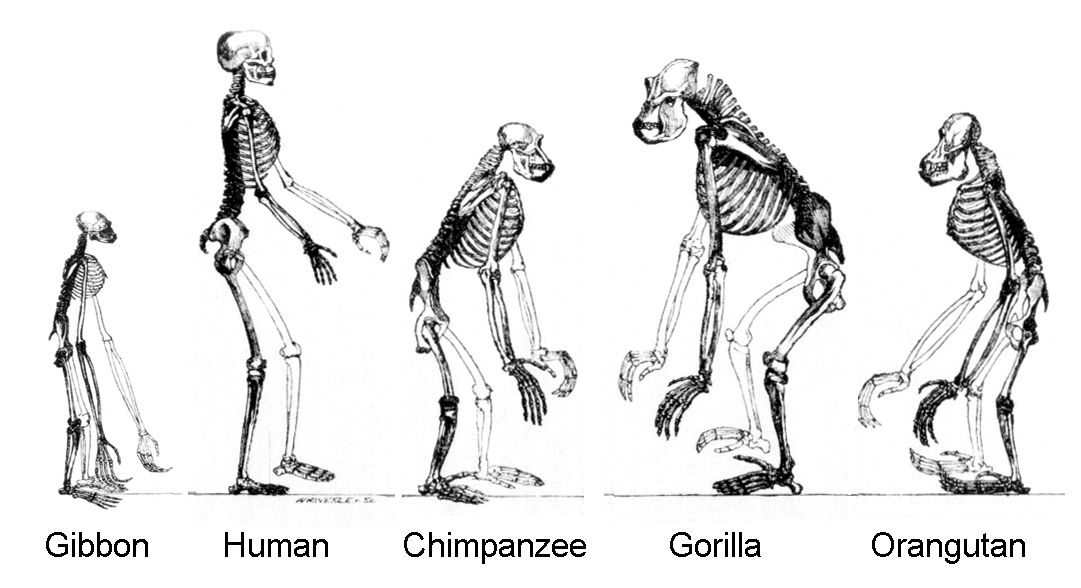
圖:The Nature Box · CC BY-SA 4.0 · Wikimedia Commons Image: The Nature Box · CC BY-SA 4.0 · Wikimedia Commons 類人猿與舊世界猴在漸新世末期分化,類人猿支系最終演化出長臂猿、猩猩、黑猩猩與人類。
Apes diverge from Old World monkeys in the late Oligocene; the ape lineage eventually produces gibbons, orangutans, chimps, and humans.
相關主軸: Related axes: 新生代生命演化 Cenozoic Life Evolution
早期猿類出現
Early Apes Appear
圖:The original uploader was TimVickers at English Wikipedia. · Public domain · Wikimedia Commons Image: The original uploader was TimVickers at English Wikipedia. · Public domain · Wikimedia Commons 猿類與舊世界猴分歧。猿類沒有尾巴、腦容量較大。
Apes diverged from Old World monkeys. Apes lacked tails and had larger brains.
新近紀
Neogene Period
圖:Scotese, Christopher R.; Vérard, Christian; Burgener, Landon; Elling, Reece P.; · CC BY 4.0 · Wikimedia Commons Image: Scotese, Christopher R.; Vérard, Christian; Burgener, Landon; Elling, Reece P.; · CC BY 4.0 · Wikimedia Commons 草原擴張、類人猿演化的時期
Period of grassland expansion and hominoid evolution.
中新世
Miocene
圖:Scotese, Christopher R.; Vérard, Christian; Burgener, Landon; Elling, Reece P.; · CC BY 4.0 · Wikimedia Commons Image: Scotese, Christopher R.; Vérard, Christian; Burgener, Landon; Elling, Reece P.; · CC BY 4.0 · Wikimedia Commons 草原時代。哺乳類多樣性巔峰。猿類多樣化,巨齒鯊稱霸海洋。
Age of grasslands. Peak mammal diversity. Apes diversified. Megalodon ruled the seas.
巨齒鯊
Megalodon
圖:Lonfat · Public domain · Wikimedia Commons Image: Lonfat · Public domain · Wikimedia Commons 史上最大鯊魚,體長可達 18 米,咬合力是暴龍的 6 倍。統治海洋 1300 萬年。
Largest shark ever, up to 18m. Bite force 6× that of T. Rex. Ruled the oceans for 13 million years.
猿類多樣化
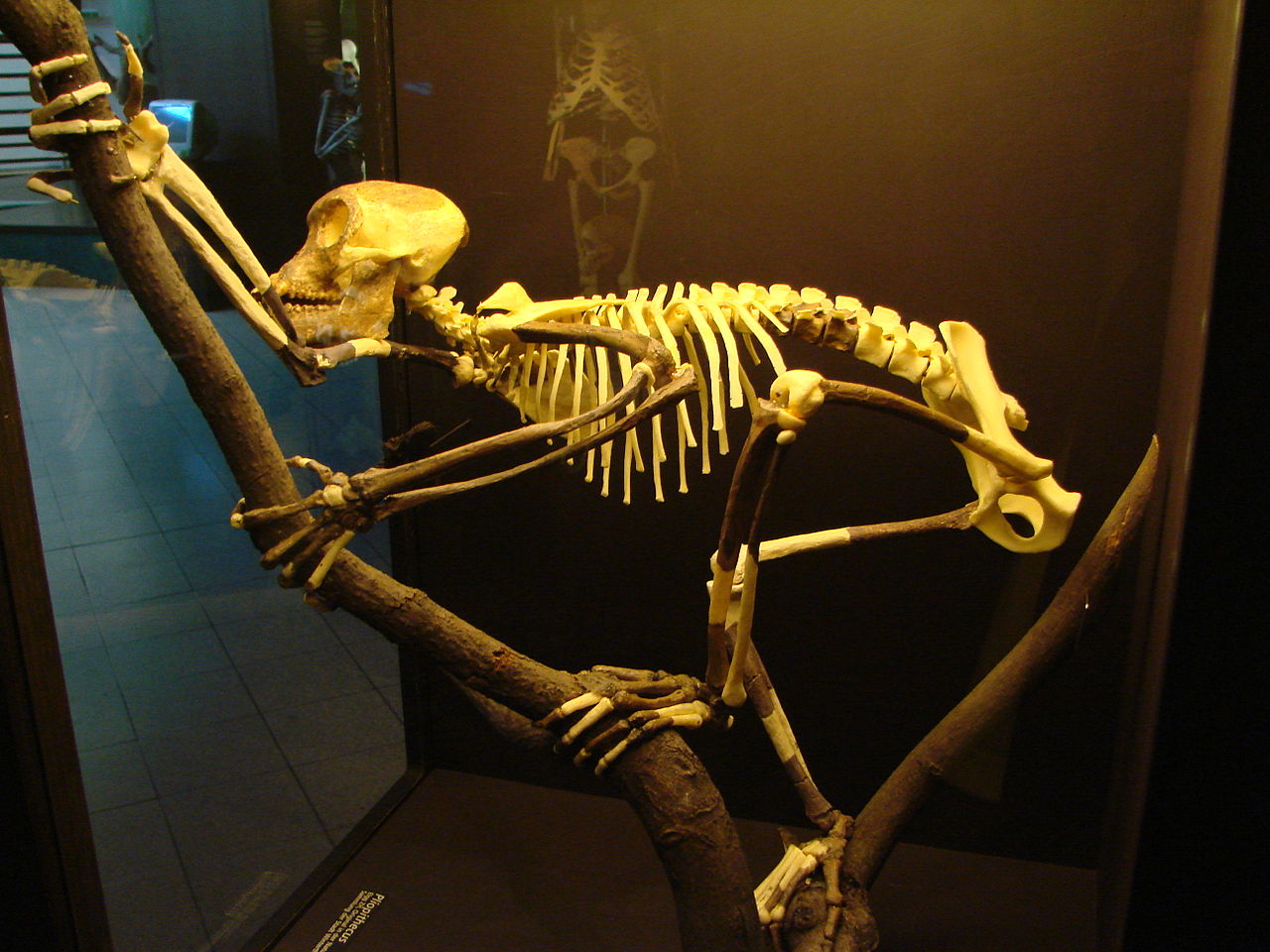
Ape Diversification
圖:Guérin Nicolas (messages) · CC BY-SA 3.0 · Wikimedia Commons Image: Guérin Nicolas (messages) · CC BY-SA 3.0 · Wikimedia Commons 各種古猿遍布非洲、歐洲和亞洲。原康修爾猿等為人類遠祖。
Diverse ape species spread across Africa, Europe, and Asia. Proconsul among early human ancestors.
馬的演化・單趾化
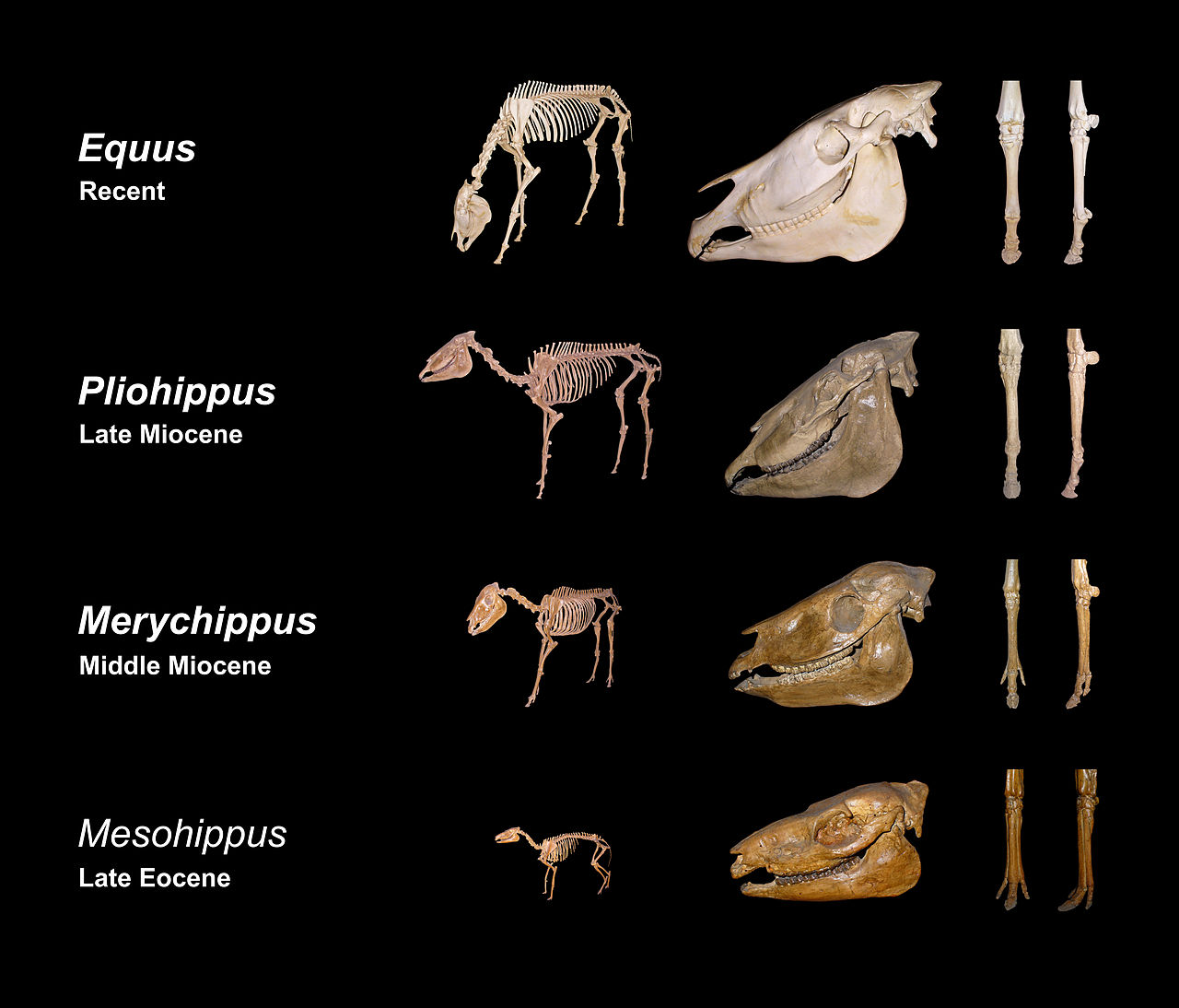
Horse Evolution — Single Toe
圖:H. Zell (User:Llez) · CC BY-SA 3.0 · Wikimedia Commons Image: H. Zell (User:Llez) · CC BY-SA 3.0 · Wikimedia Commons 馬從四趾演化為單蹄、體型增大、腿變長,適應草原奔跑。
Horses evolved from four toes to single hoof, grew larger with longer legs for running on grasslands.
劍齒虎出現
Saber-toothed Cats Appear
圖:George Miquilena
PePeEfe
Izvora
Ryan Somma · CC BY-SA 4.0 · Wikimedia Commons Image: George Miquilena
PePeEfe
Izvora
Ryan Somma · CC BY-SA 4.0 · Wikimedia Commons 劍齒虎科出現,犬齒長達 28 公分,是頂級掠食者。存活至約 1 萬年前。
Saber-toothed cats appeared with 28cm canines. Apex predators surviving until ~10,000 years ago.
猿類擴散到歐亞
Apes Spread to Eurasia
圖:The original uploader was TimVickers at English Wikipedia. · Public domain · Wikimedia Commons Image: The original uploader was TimVickers at English Wikipedia. · Public domain · Wikimedia Commons 猿類從非洲擴散到歐洲和亞洲,為日後人猿分化鋪路。
Apes migrated from Africa to Europe and Asia, setting stage for the human-ape divergence.
人猿分化
Human-Ape Divergence
圖:Jordan Engel · CC BY-SA 4.0 · Wikimedia Commons Image: Jordan Engel · CC BY-SA 4.0 · Wikimedia Commons 人類與黑猩猩的共同祖先分道揚鑣,人類演化的真正起點
The common ancestor of humans and chimpanzees diverges, marking the true start of human evolution.
相關主軸: Related axes: 新生代生命演化 Cenozoic Life Evolution
查德沙赫人・最早人族?
Sahelanthropus tchadensis
圖:Didier Descouens · CC BY-SA 4.0 · Wikimedia Commons Image: Didier Descouens · CC BY-SA 4.0 · Wikimedia Commons 2001 年在查德發現,距今約 700 萬年。可能是最早的人族成員,但仍有爭議。腦容量與黑猩猩相近,但枕骨大孔位置暗示可能直立行走。
Discovered in Chad in 2001, ~7 million years old. Possibly the earliest hominin, though debated. Brain size similar to chimpanzees, but foramen magnum position suggests possible bipedalism.
相關主軸: Related axes: 新生代生命演化 Cenozoic Life Evolution
千年始祖 Orrorin
Orrorin tugenensis
圖:UnknownUnknown (original)
Floris V at Dutch Wikipedia (this version) · CC BY-SA 3.0 · Wikimedia Commons Image: UnknownUnknown (original)
Floris V at Dutch Wikipedia (this version) · CC BY-SA 3.0 · Wikimedia Commons 2000 年在肯亞發現,距今約 600 萬年。股骨形態顯示可能已雙足行走,但仍生活在樹上。
Discovered in Kenya in 2000, ~6 million years old. Femur morphology suggests possible bipedalism while still arboreal.
相關主軸: Related axes: 新生代生命演化 Cenozoic Life Evolution
上新世
Pliocene
圖:Scotese, Christopher R.; Vérard, Christian; Burgener, Landon; Elling, Reece P.; · CC BY 4.0 · Wikimedia Commons Image: Scotese, Christopher R.; Vérard, Christian; Burgener, Landon; Elling, Reece P.; · CC BY 4.0 · Wikimedia Commons 持續降溫。南北美洲相連(巴拿馬地峽)。人猿分化,直立行走的猿人出現。
Continued cooling. Americas connected via Panama Isthmus. Human-ape split. Bipedal apes appeared.
始祖地猿 Ardi
Ardipithecus ramidus (Ardi)
圖:Chris Woodrich · CC BY-SA 4.0 · Wikimedia Commons Image: Chris Woodrich · CC BY-SA 4.0 · Wikimedia Commons 1994 年在衣索比亞發現,距今約 440 萬年。能雙足行走也能攀樹。「Ardi」化石比「Lucy」更早 120 萬年,改寫了人類演化理解。
Discovered in Ethiopia in 1994, ~4.4 million years old. Could walk bipedally and climb trees. 'Ardi' predates 'Lucy' by 1.2 million years, reshaping our understanding of human evolution.
相關主軸: Related axes: 新生代生命演化 Cenozoic Life Evolution
直立行走(南方古猿)
Bipedalism Evolves
圖:Neanderthal-Museum, Mettmann · CC BY-SA 4.0 · Wikimedia Commons Image: Neanderthal-Museum, Mettmann · CC BY-SA 4.0 · Wikimedia Commons 南方古猿開始直立行走,解放雙手,為大腦發展和工具使用創造條件。
Australopithecus begins walking upright, freeing the hands for tool use and enabling brain expansion.
相關主軸: Related axes: 新生代生命演化 Cenozoic Life Evolution
巨齒鯊滅絕
Megalodon Extinction
圖:Niels Stensen (Steno) · Public domain · Wikimedia Commons Image: Niels Stensen (Steno) · Public domain · Wikimedia Commons 海洋降溫和鯨魚競爭導致巨齒鯊滅絕。
Ocean cooling and whale competition drove Megalodon to extinction.
巴拿馬地峽形成・南北美大交換
Panama Isthmus — Great American Interchange
圖:Peel, M. C., Finlayson, B. L., and McMahon, T. A.(University of Melbourne)Citati · CC BY-SA 2.5 · Wikimedia Commons Image: Peel, M. C., Finlayson, B. L., and McMahon, T. A.(University of Melbourne)Citati · CC BY-SA 2.5 · Wikimedia Commons 南北美洲相連,動物大遷徙。北美的貓科、犬科南下;南美的犰狳、負鼠北上。
Americas connected. Cats and dogs went south; armadillos and opossums went north.
露西(南方古猿阿法種)
Lucy (Australopithecus afarensis)
圖:120 · CC BY 2.5 · Wikimedia Commons Image: 120 · CC BY 2.5 · Wikimedia Commons 最著名的早期人類化石,確認直立行走是人類演化的早期特徵
Most famous early human fossil, confirming bipedal walking as an early human trait.
相關主軸: Related axes: 新生代生命演化 Cenozoic Life Evolution
巧人・最早的人屬
Homo habilis — First Homo
圖:John Hawks, Marina Elliott, Peter Schmid, Steven E. Churchill, Darryl J. de Ruit · CC BY 4.0 · Wikimedia Commons Image: John Hawks, Marina Elliott, Peter Schmid, Steven E. Churchill, Darryl J. de Ruit · CC BY 4.0 · Wikimedia Commons 距今約 280-150 萬年。「能幹的人」,最早被歸入人屬(Homo)的物種。腦容量約 600cc,是第一個製造石器的人族。
~2.8-1.5 million years ago. 'Handy man', the first species classified in genus Homo. Brain ~600cc, first toolmaker.
相關主軸: Related axes: 新生代生命演化 Cenozoic Life Evolution
石器工具出現
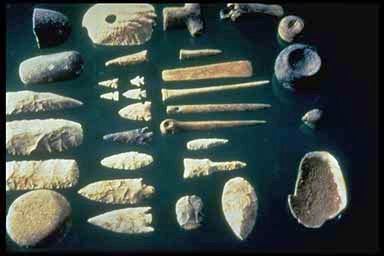
Stone Tools Appear
圖:U.S. National Park Service, Mississippi River Mussels: Tools From Mussel Shells · Public domain · Wikimedia Commons Image: U.S. National Park Service, Mississippi River Mussels: Tools From Mussel Shells · Public domain · Wikimedia Commons 能人製造最早的石器工具(奧杜萬工業),標誌人類技術文明的起點。
Homo habilis creates the earliest stone tools (Oldowan industry), marking the dawn of human technology.
第四紀
Quaternary Period
圖:Ktrinko · CC BY-SA 3.0 · Wikimedia Commons Image: Ktrinko · CC BY-SA 3.0 · Wikimedia Commons 冰河期交替與人類演化的時代,持續至今
Era of alternating ice ages and human evolution, continuing to present.
西元前 2600000 年
civilization
石器時代
Stone Age
圖:http://www.ornl.gov/info/news/pulse/pulse_v44_99.htm · Public domain · Wikimedia Commons Image: http://www.ornl.gov/info/news/pulse/pulse_v44_99.htm · Public domain · Wikimedia Commons 人類使用石器工具的漫長時代,涵蓋舊石器、中石器、新石器三個階段
The long era of human stone tool use, encompassing the Paleolithic, Mesolithic, and Neolithic periods.
更新世
Pleistocene
圖:Scotese, Christopher R.; Wright, Nicky M. · CC BY 4.0 · Wikimedia Commons Image: Scotese, Christopher R.; Wright, Nicky M. · CC BY 4.0 · Wikimedia Commons 冰河時代。長毛象、劍齒虎等巨型動物。人屬出現並擴散全球。
Ice Age. Megafauna like mammoths and saber-toothed cats. Genus Homo appeared and spread globally.
長毛象出現
Woolly Mammoth Appears
圖:Lou.gruber · Public domain · Wikimedia Commons Image: Lou.gruber · Public domain · Wikimedia Commons 適應冰河期的巨型象,遍布北半球。約 4000 年前最後的族群在西伯利亞滅絕。
Ice Age giant spread across Northern Hemisphere. Last population went extinct in Siberia ~4,000 years ago.
直立人出現・首次走出非洲
Homo erectus・First Out of Africa
圖:Franz Weidenreich · Public domain · Wikimedia Commons Image: Franz Weidenreich · Public domain · Wikimedia Commons 直立人是第一個離開非洲擴散到亞洲和歐洲的人種
Homo erectus is the first human species to migrate out of Africa into Asia and Europe.
相關主軸: Related axes: 人類遷徙 Migration 新生代生命演化 Cenozoic Life Evolution
大地懶
Giant Ground Sloth (Megatherium)
圖:en:User:Ballista · CC BY-SA 3.0 · Wikimedia Commons Image: en:User:Ballista · CC BY-SA 3.0 · Wikimedia Commons 體重可達 4 噸的巨型地面樹懶,站立時高 6 米。約 1 萬年前滅絕。
4-tonne giant ground sloth, 6m tall when standing. Extinct ~10,000 years ago.
人類控制用火
Control of Fire
圖:Charles Robert Knight · Public domain · Wikimedia Commons Image: Charles Robert Knight · Public domain · Wikimedia Commons 直立人學會控制和使用火,改變飲食方式,促進大腦發育,並提供保護。
Homo erectus controls fire, transforming diet, promoting brain development, and providing protection.
尼安德塔人與丹尼索瓦人分支
Neanderthal-Denisovan Split
圖:Fu et al. (2025) · CC BY 4.0 · Wikimedia Commons Image: Fu et al. (2025) · CC BY 4.0 · Wikimedia Commons 尼安德塔人和丹尼索瓦人從人類支系分化,後來與智人混血
Neanderthals and Denisovans diverge from the human lineage; they later interbreed with Homo sapiens.
智人出現
Homo sapiens Emerges
圖:Neanderthal-Museum, Mettmann · CC BY-SA 4.0 · Wikimedia Commons Image: Neanderthal-Museum, Mettmann · CC BY-SA 4.0 · Wikimedia Commons 現代智人在非洲演化出現,腦容量1400毫升,語言與抽象思維能力大幅提升。
Modern Homo sapiens evolves in Africa with a 1400ml brain, capable of language and abstract thought.
最早採集貝類
Earliest Shellfish Harvesting
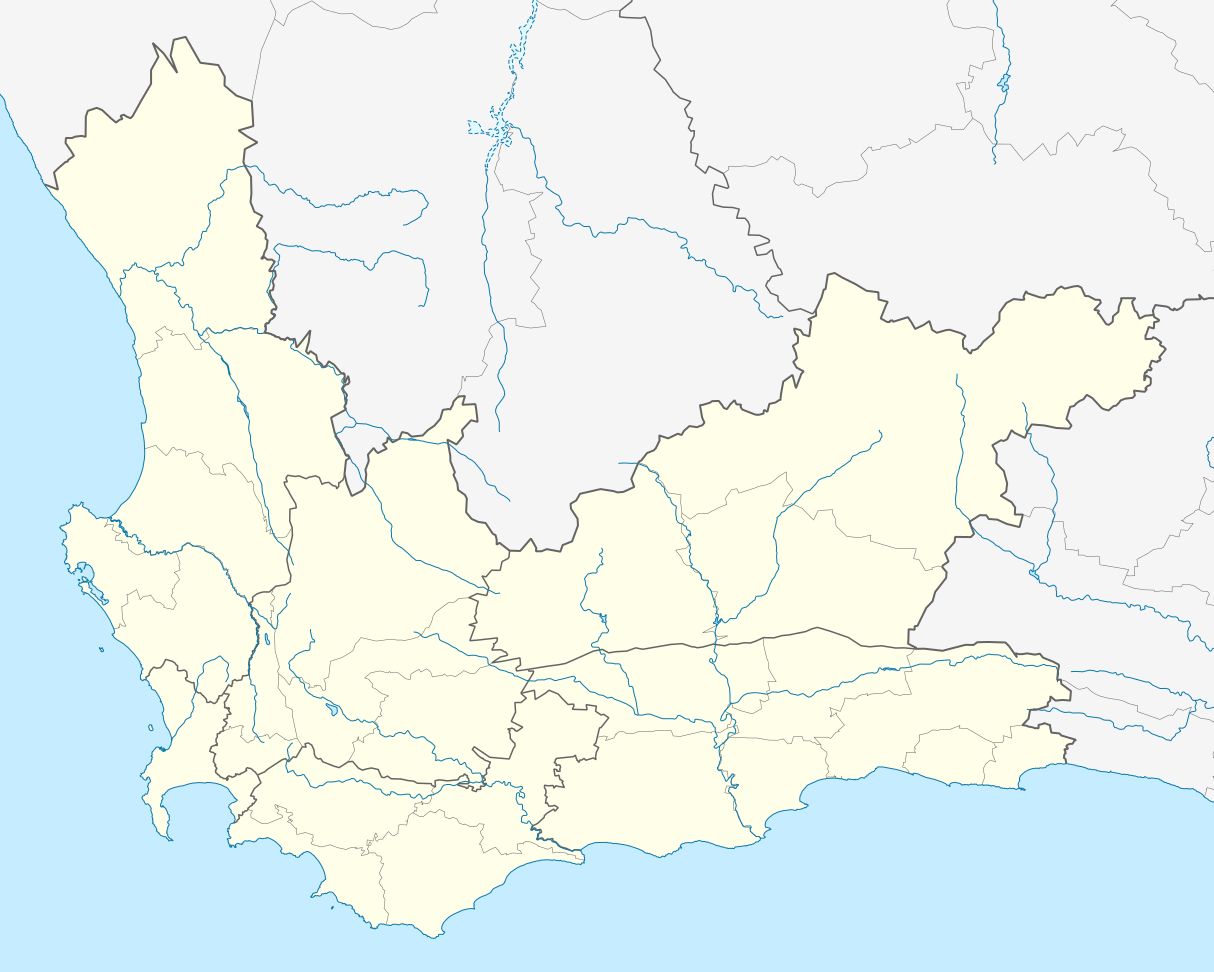
圖:Htonl · CC BY-SA 3.0 · Wikimedia Commons Image: Htonl · CC BY-SA 3.0 · Wikimedia Commons 南非洞穴發現人類最早利用海洋資源的證據
Earliest evidence of humans harvesting marine resources found in South African caves.
末次冰河期
Last Glacial Period
圖:Alps_location_map.png: Lencer
derivative work: Jo (talk) · CC BY-SA 3.0 · Wikimedia Commons Image: Alps_location_map.png: Lencer
derivative work: Jo (talk) · CC BY-SA 3.0 · Wikimedia Commons 最後一次冰河期,冰蓋覆蓋北美、歐洲大部,海平面下降120公尺,人類通過白令陸橋進入美洲。
Last glacial period; ice sheets cover North America and Europe; sea level drops 120m; humans cross into Americas via Bering land bridge.
貝殼裝飾品・象徵思維
Shell Ornaments・Symbolic Thought
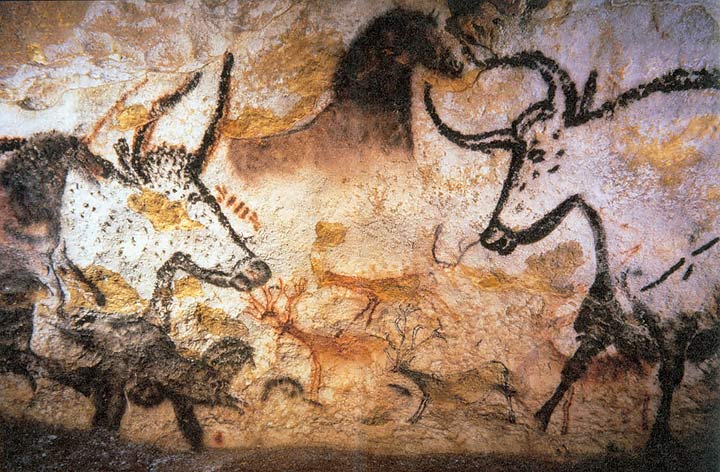
圖:Ramessos · CC BY-SA 3.0 · Wikimedia Commons Image: Ramessos · CC BY-SA 3.0 · Wikimedia Commons 最早的裝飾品出現,代表人類具備抽象思維與象徵行為
Earliest ornamental beads appear, indicating abstract thinking and symbolic behavior.
骨針・製衣技術
Bone Needles・Clothing Technology
圖:Anna Ancher · Public domain · Wikimedia Commons Image: Anna Ancher · Public domain · Wikimedia Commons 人類開始用骨針製作衣物,適應寒冷環境的關鍵技術
Humans begin making clothing with bone needles, a key adaptation for cold environments.
人口瓶頸(多峇巨災)
Population Bottleneck (Toba Catastrophe)
圖:Anynobody · CC BY-SA 4.0 · Wikimedia Commons Image: Anynobody · CC BY-SA 4.0 · Wikimedia Commons 多峇超級火山爆發導致全球降溫,人類瀕臨滅絕,僅存數千人
Toba supervolcano eruption causes global cooling; human population drops to as few as a few thousand.
相關主軸: Related axes: 地球 Earth
人類走出非洲
Out of Africa Migration
圖:NordNordWest · Public domain · Wikimedia Commons Image: NordNordWest · Public domain · Wikimedia Commons 智人大規模走出非洲,向亞洲、歐洲、澳洲擴散,逐漸取代其他人屬物種。
Homo sapiens migrates out of Africa en masse, spreading to Asia, Europe, and Australia, replacing other hominins.
語言能力成熟・行為現代性
Behavioral Modernity
圖:EU · Public domain · Wikimedia Commons Image: EU · Public domain · Wikimedia Commons
Emergence of symbolic thought, art, and complex language marks behavioral modernity ~70,000 years ago.
巨型動物群滅絕
Megafauna Extinction
圖:uncredited National Park Service (NPS) artist · Public domain · Wikimedia Commons Image: uncredited National Park Service (NPS) artist · Public domain · Wikimedia Commons 長毛象、劍齒虎、大地懶等巨型動物在人類擴散後相繼滅絕。
Mammoths, saber-toothed cats, giant sloths went extinct as humans spread globally.
相關主軸: Related axes: 人類演化 Human Evolution