A patrician on the verge of ruin who once told his pirate captors their ransom was too low. At 40 he formed the First Triumvirate; from 42 to 50 he conquered all Gaul; at 49 he led the Thirteenth Legion across the Rubicon saying "the die is cast"; he sent home "Veni, vidi, vici" and reformed the calendar. At 56 he died of 23 knife wounds in the Senate, sighing "You too, child?" to Brutus. The 500-year Roman Republic ended with him.
📌 內容與授權:本頁事件說明文字(中英)為 Cosmic History Timeline 編輯整理。
圖片來自 Wikimedia Commons,作者與授權詳見每張圖下方連結。
延伸閱讀的 Wikipedia 與 Amazon 連結著作權歸原權利人;Amazon 連結為聯盟連結(不影響你的價格)。
📌 Sources & Credits: Event descriptions (zh / en) are editorial work by Cosmic History Timeline.
Images are sourced from Wikimedia Commons — author and license shown below each image.
Wikipedia and Amazon links belong to their respective rights holders; Amazon links are affiliate links (no extra cost to you).
Born to a patrician family. Bankrupt and ambitious in his 30s; at 40 formed the First Triumvirate; from 42 to 50 conquered Gaul; at 49 crossed the Rubicon to start civil war; declared dictator for life; at 56 was stabbed 23 times in the Senate. The 500-year Roman Republic ended with him.
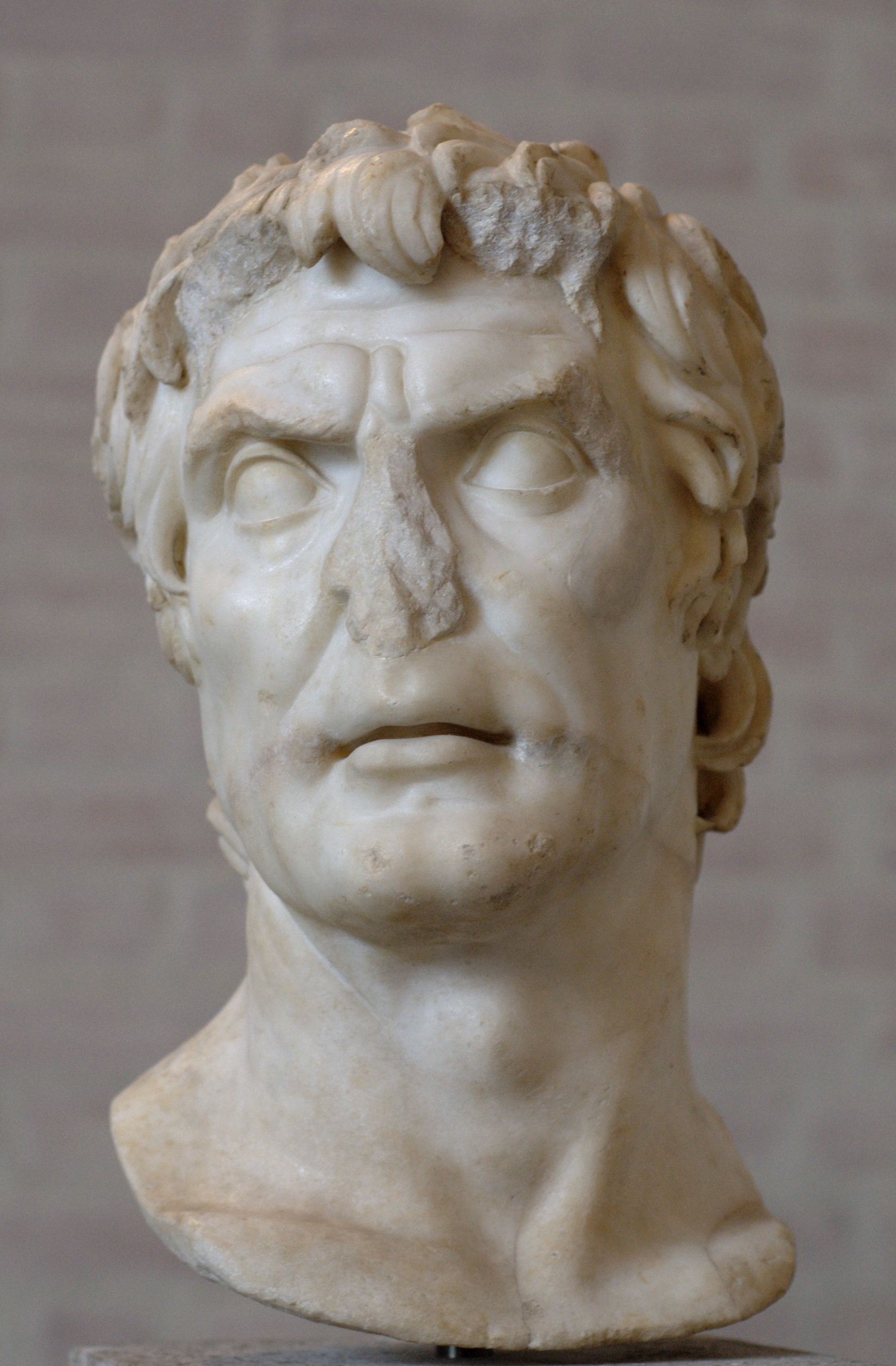
獨裁官 Sulla 屠平民派時,命少年凱撒休掉平民派 Cinna 之女 Cornelia。凱撒拒絕,遭剝奪財產與祭司職、被通緝。逃亡山林、染瘧疾。Sulla 後赦之但放話:「在這個少年身上,有許多個 Marius (平民派領袖)」——這個預言成真。
Dictator Sulla, purging the populares, ordered young Caesar to divorce his wife Cornelia, daughter of Sulla's enemy Cinna. Caesar refused. Stripped of inheritance and priesthood, he fled into hills with malaria. Sulla finally pardoned him with a warning: "In that boy I see many Mariuses" — referring to the populares' leader. The prophecy came true.
At 25, sailing to Rhodes to study rhetoric, was captured by Cilician pirates. They demanded 20 talents of silver. Caesar laughed and said it was too low — raised it to 50 himself. During 38 days of captivity he composed poems and read them to the pirates, casually warning he would crucify them all. Released, he immediately raised a fleet, hunted them down, and crucified every one.
圖:This file was donated to Wikimedia Commons as part of a project by the Metropoli · CC0 · Wikimedia CommonsImage: This file was donated to Wikimedia Commons as part of a project by the Metropoli · CC0 · Wikimedia Commons
Elected Aedile. To build his name, he borrowed massive sums to stage 320 pairs of gladiators (an unprecedented number), restored the Forum, and threw lavish public games. He became wildly popular but drowned in debt — only escaped to Spain as governor for relief.
競選大祭司長 (Pontifex Maximus,宗教界領袖、終身職)。豪賭一注,借光所有錢賄選。出門對母親說:「今天回家不是大祭司,就是流亡客。」結果壓倒性勝出。從此住在 Via Sacra 的官邸,宗教權力終身在握。
Ran for Pontifex Maximus — chief priest, lifetime office. Bet everything, borrowed every coin to bribe voters. Leaving home, he told his mother: "Today I return either as Pontifex Maximus, or not at all." He won by a landslide. From then he lived in the Via Sacra residence, holding religious power for life.
At 40, formed a secret political alliance with the richest Roman, Crassus, and the greatest Roman general, Pompey. Each got what he needed: Caesar the consulship and a Gallic command, Pompey land for his veterans, Crassus political settlement with Pompey. The Senate lost control of Rome.
Starting with victories over the Helvetii and Suebi, Caesar systematically subdued all of Gaul (modern France, Belgium, Switzerland). Twice crossed the Rhine to intimidate Germans; twice landed in Britain. Wrote his own propaganda — the Gallic Wars — winning lifelong political fame.
In August-September, Caesar twice crossed the Channel to land in southeastern Britain. Though he didn't stay, the campaign brought Britain into recorded history through 'Commentaries on the Gallic War.'
During the Gallic Wars (58–50 BC), Caesar defeated Vercingetorix's coalition at Alesia. Gaul became Roman territory and was Romanized over the next 500 years.
The Arverni chieftain Vercingetorix united the Gallic tribes against Rome, retreating to the hilltop fortress of Alesia. Caesar built two concentric siege walls — inner to trap 80,000 inside, outer to block the 250,000-strong relief army. The Gallic coalition collapsed; Vercingetorix rode down to surrender on horseback. All Gaul submitted.
The Senate ordered Caesar to disband his army and stand trial in Rome. On January 10, he led the Thirteenth Legion across the Rubicon — Italy's northern boundary. To bring an army across was treason. He famously said: "Alea iacta est" — "The die is cast." Civil war began.
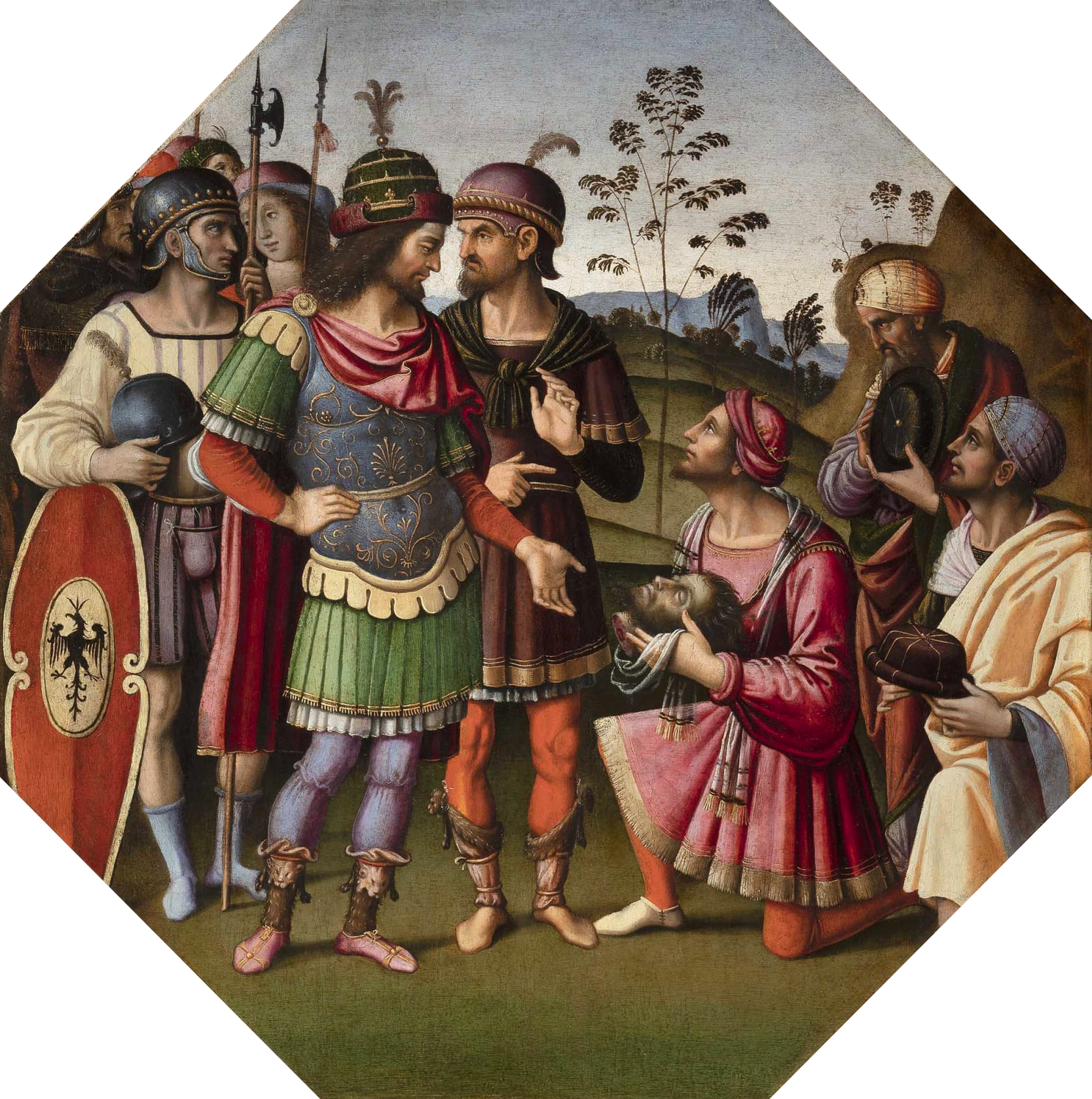
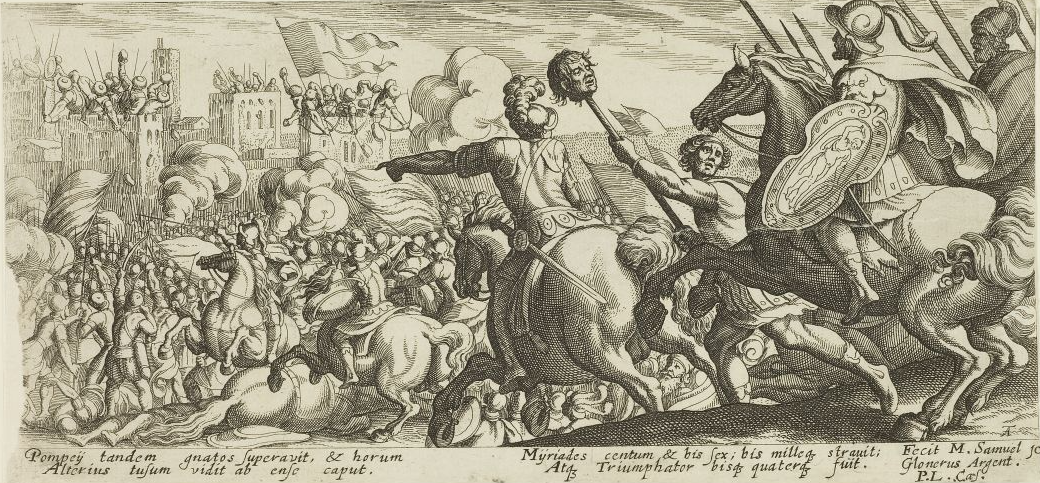
Pompey 逃到埃及尋庇護,少年法老 Ptolemy XIII 為討好凱撒,派人刺殺 Pompey 後割頭顱獻給凱撒。凱撒登岸見友人 (兼前女婿) 頭顱大哭、命厚葬。對 Ptolemy XIII 從此心存芥蒂——也讓他更傾向支持 Cleopatra。
Pompey fled to Egypt seeking refuge. The boy-pharaoh Ptolemy XIII, hoping to please Caesar, had Pompey assassinated and presented Caesar with his severed head. Caesar wept openly at the head of his old friend (and former son-in-law), ordered honorable burial. From then he distrusted Ptolemy XIII — and became sympathetic to Cleopatra.
相關主軸:Related axes:古埃及Ancient Egypt羅馬時代Roman Era凱撒·內戰Caesar · Civil War
圖:The Department of History, United States Military Academy · Public domain · Wikimedia CommonsImage: The Department of History, United States Military Academy · Public domain · Wikimedia Commons
At Pharsalus in Greece, Caesar's 22,000 met Pompey's 50,000. Caesar held a sixth line in reserve, used it to envelope Pompey's elite cavalry from the side, and broke them. Watching disaster, Pompey abandoned his army and fled — eventually to Egypt.
相關主軸:Related axes:希臘羅馬Greece & Rome羅馬時代Roman Era凱撒·內戰Caesar · Civil War
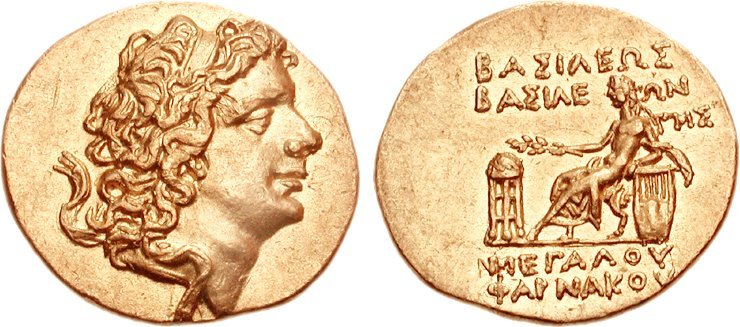
在 Zela (今土耳其) 5 天內擊敗 Pharnaces II of Pontus 入侵小亞細亞。凱撒寫信給羅馬只用三個字:「Veni, vidi, vici (我來、我見、我征服)」。
At Zela (modern Turkey), Caesar crushed Pharnaces II of Pontus in five days. He wrote to Rome in just three words: "Veni, vidi, vici" — "I came, I saw, I conquered."
At Thapsus in North Africa, Caesar annihilated the last republican army. He commanded under thunder and torrential rain despite an epileptic fit. Cato the Younger, the moral pillar of the Republic, heard the news at Utica, fell on his sword — survived — then in the night tore the wound open with his hands until his bowels spilled out. The Republic's conscience died with him.
相關主軸:Related axes:北非N. Africa羅馬時代Roman Era凱撒·內戰Caesar · Civil War
Caesar adopted the solar calendar of the Egyptian astronomer Sosigenes, replacing Rome's broken lunar system. 365 days a year, leap year every fourth. The Julian calendar lasted 1,600 years until the Gregorian reform of 1582. The month July is named for him.
At Munda in Spain, Caesar fought Pompey's son Gnaeus. Eight hours of grinding battle. At one point Caesar dismounted and shouted at his men: "Do you want to deliver me to this boy?" Then turned the battle. Afterward he said: "I have often fought for victory; today I fought for my life." The civil war was over.
相關主軸:Related axes:西班牙Spain羅馬時代Roman Era凱撒·內戰Caesar · Civil War
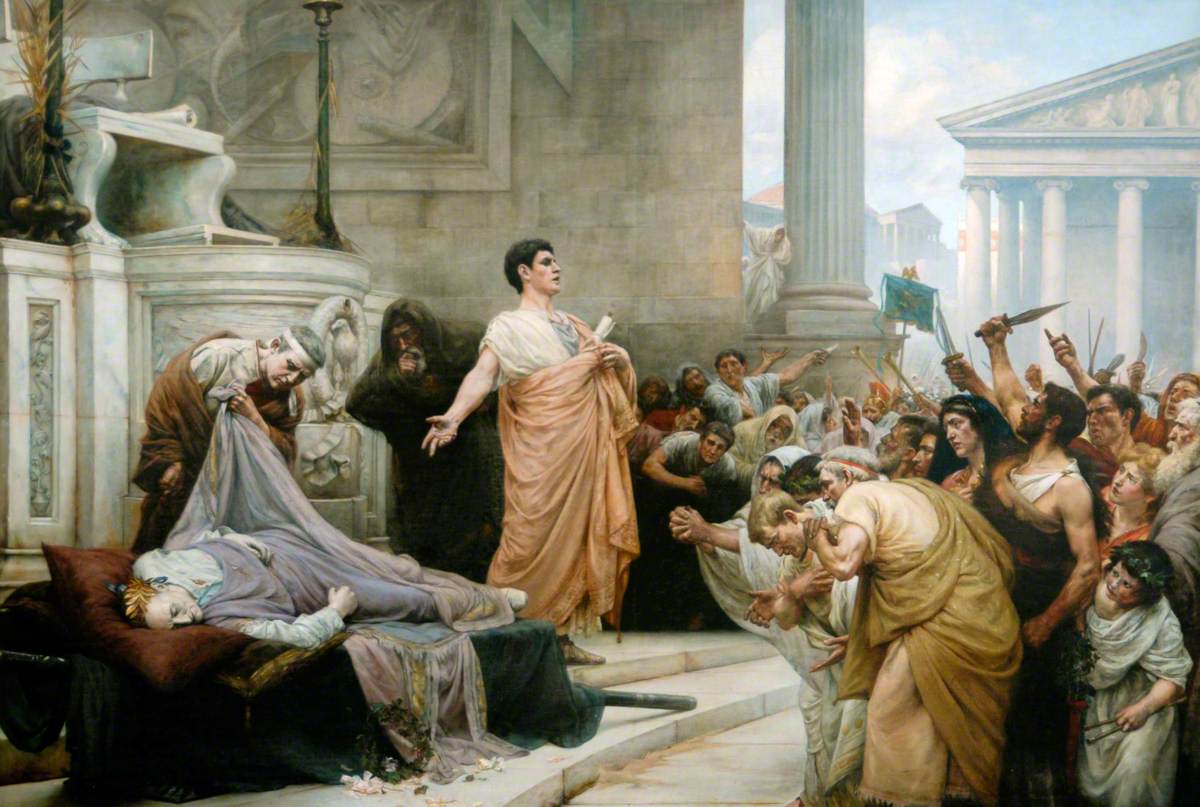
Three days after the assassination, at Caesar's funeral, Mark Antony read out Caesar's will publicly — 75 sesterces to every Roman citizen, his private gardens given to the city — and showed the bloody toga with 23 stab wounds. The mob erupted; the assassins Brutus and Cassius had to flee Rome that very night. Shakespeare's "Friends, Romans, countrymen" speech is based on this event.
圖:Ángel M. Felicísimo from Mérida, España · Public domain · Wikimedia CommonsImage: Ángel M. Felicísimo from Mérida, España · Public domain · Wikimedia Commons
尤利烏斯·凱撒在羅馬元老院被刺殺,引發內戰,最終導致羅馬共和國終結。
Julius Caesar is assassinated in the Senate, triggering civil war and ultimately ending the Roman Republic.
A month after being declared "Dictator for Life," on March 15 (the Ides of March), as Caesar entered the Theater of Pompey, 60+ senators stabbed him 23 times. Tradition says when he saw his protégé Brutus draw a dagger, he sighed in Greek: "Kai sy, teknon?" — "You too, child?" Shakespeare immortalized it as "Et tu, Brute?"