地球形成 Earth Forms

地球由太陽系早期微行星不斷碰撞積聚而成,初期地表為熔融岩漿海洋。
Earth accretes from colliding planetesimals; its surface is an ocean of molten magma.
45億年前地球在混沌中誕生,液態水和生命隨之而來。從此,這顆星球的氣候就在搖晃,決定了每一個生物的命運。
Earth formed in chaos 4.5 billion years ago; oceans and life followed. Since then, the climate has never stopped shifting—and every creature has paid the price.
在互動時間軸上瀏覽 → Open in interactive timeline →地球由太陽系早期微行星不斷碰撞積聚而成,初期地表為熔融岩漿海洋。
Earth accretes from colliding planetesimals; its surface is an ocean of molten magma.

地球最早期,地表熔融,隕石轟炸頻繁,大氣以水蒸氣、二氧化碳為主,無生命。
Earth's earliest period: molten surface, frequent meteorite bombardment, no life.
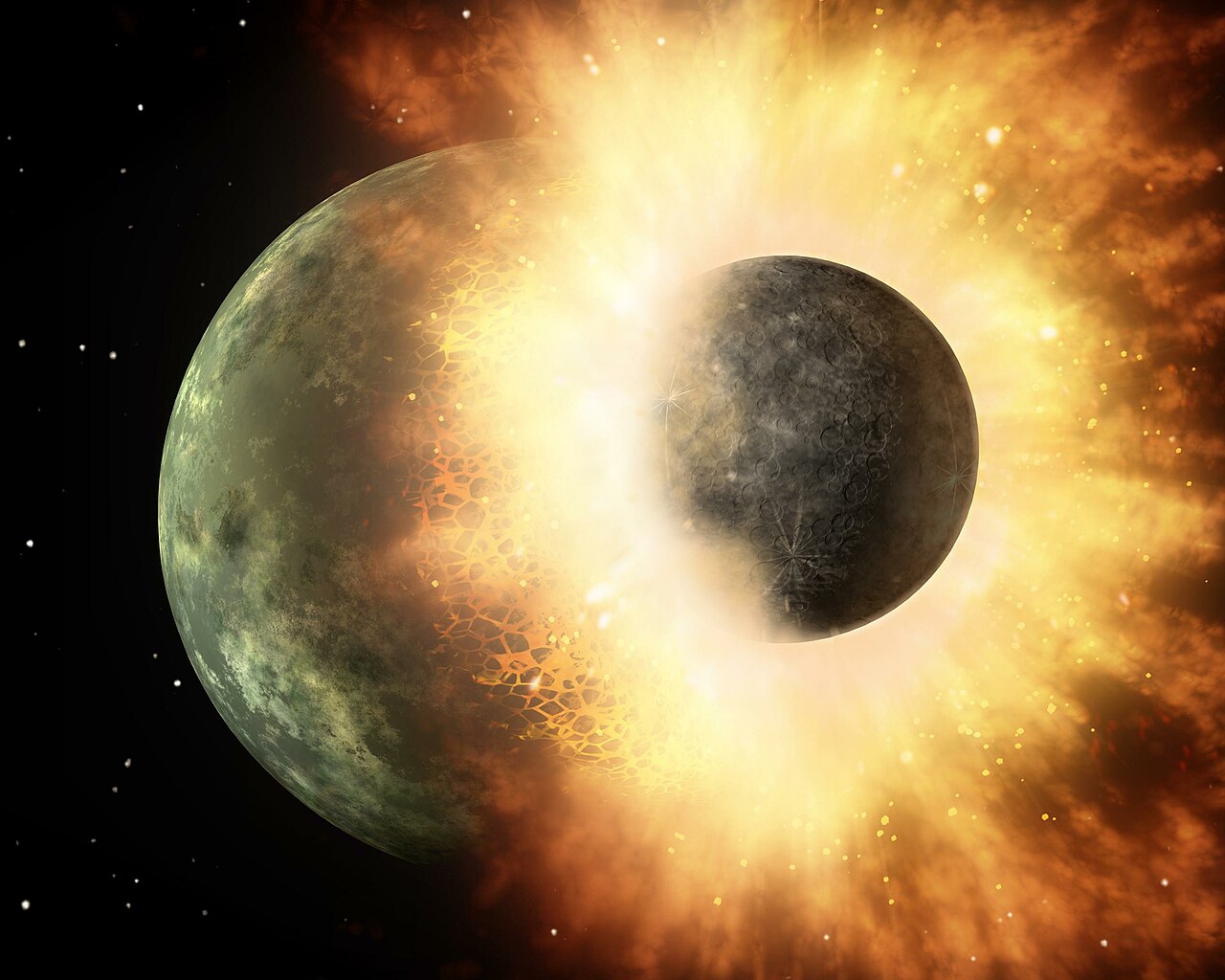
地球形成初期,頻繁的小行星撞擊使地表成為全球性的熔岩海洋,溫度超過1000度。
In early Earth history, frequent asteroid impacts created a global magma ocean with temperatures exceeding 1000°C.
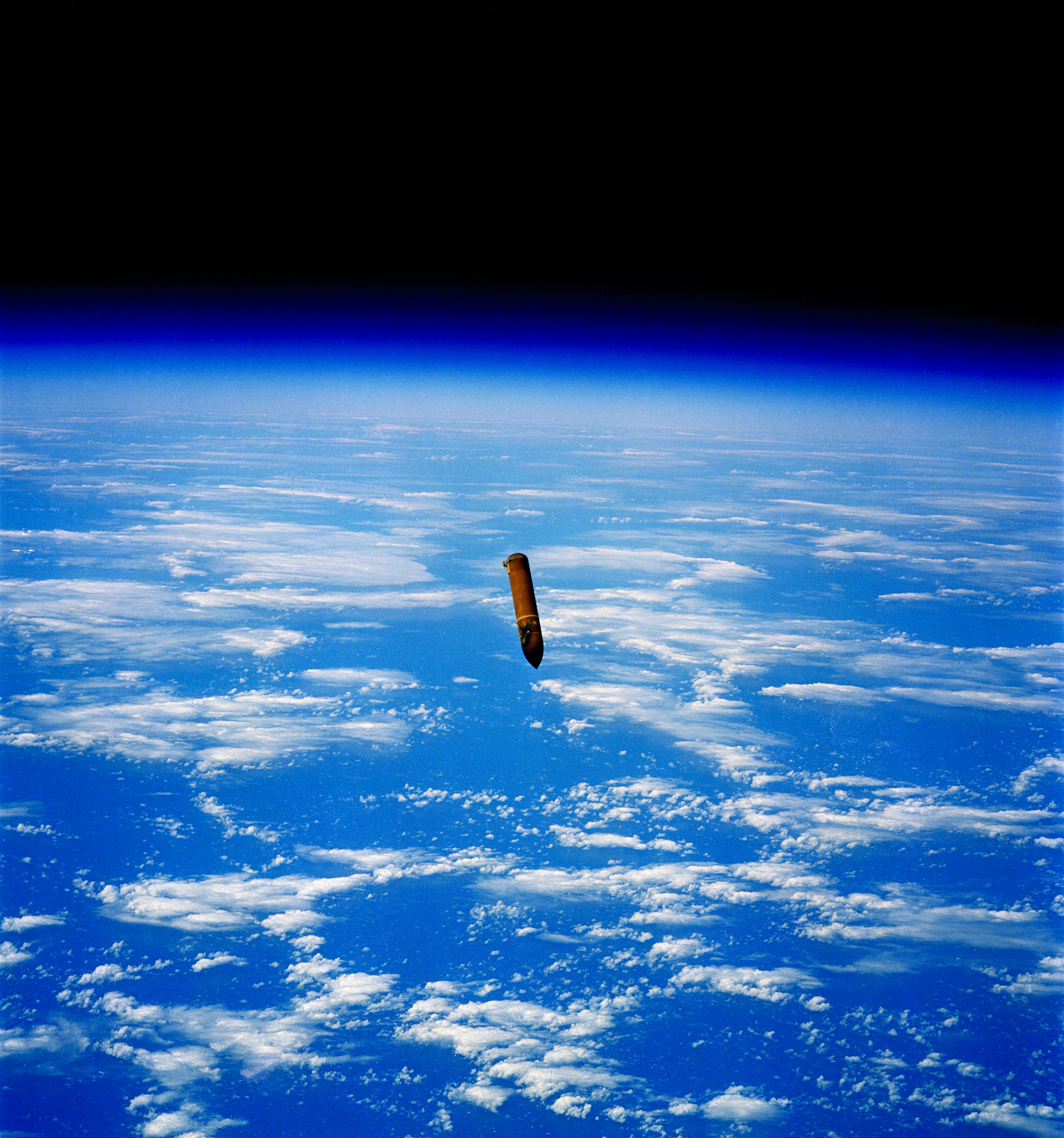
地球冷卻後,大氣中水蒸氣凝結形成最早的液態海洋,生命出現的先決條件。
As Earth cools, water vapor condenses to form the first liquid oceans — a prerequisite for life.

最早的大陸地殼碎片形成,格陵蘭發現的阿卡斯塔片麻岩是目前已知最古老的岩石。
The earliest continental crust fragments form; Acasta Gneiss in Canada is the oldest known intact rock.
加拿大發現的阿卡斯塔片麻岩是地球現存最古老岩石,約40億年前形成,證明地殼早期存在。
The Acasta Gneiss in Canada is Earth's oldest known intact crustal rock at ~4 billion years old.

太古宙最早期,地球最古老岩石形成
Earliest era of the Archean; Earth's oldest known rocks form.

最早的岩石與最原始生命(原核生物)出現,大氣無氧,藍藻開始演化。
Earliest rocks and primitive prokaryotic life appear; oxygen-free atmosphere; cyanobacteria evolve.
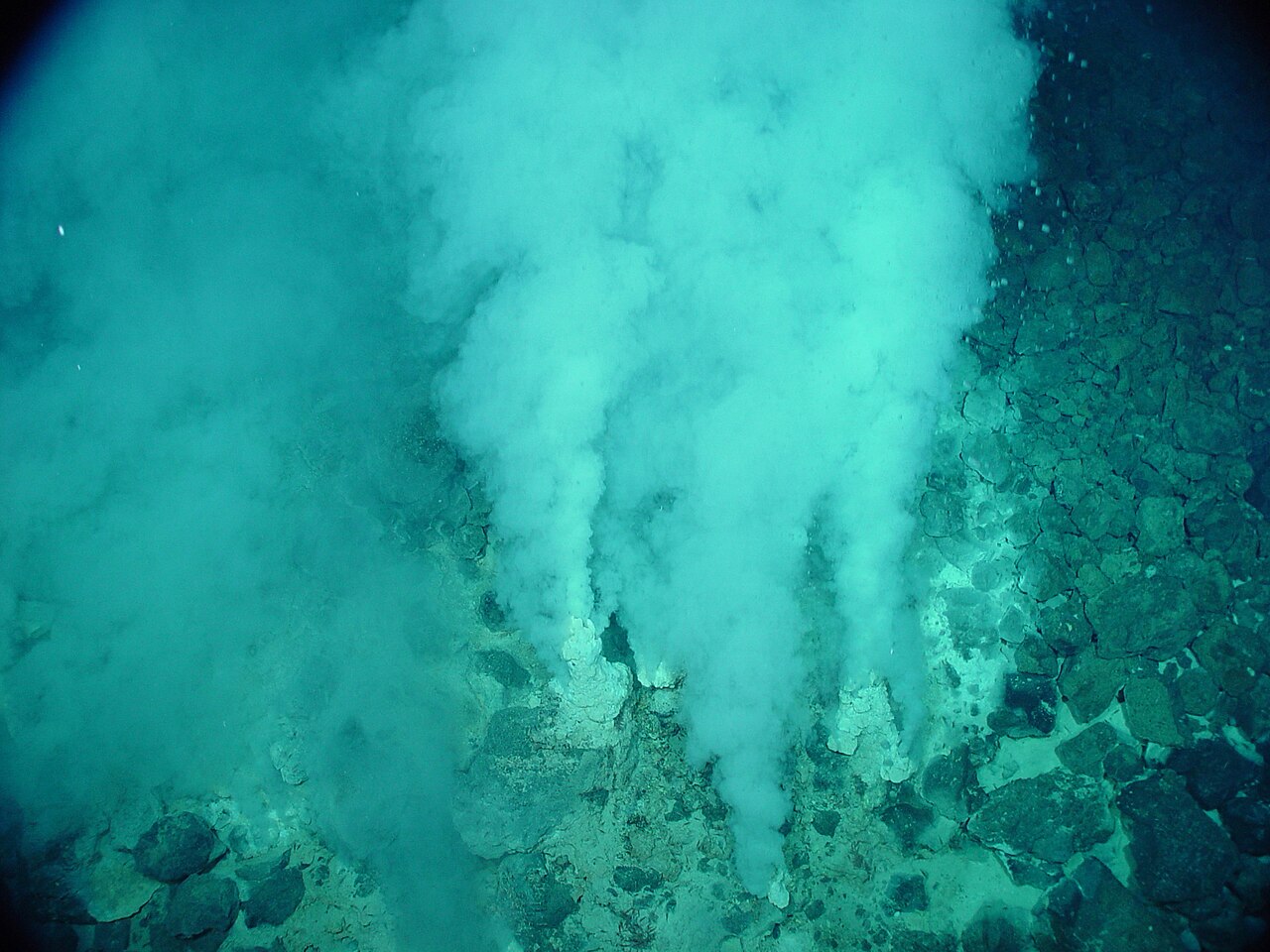
最早的單細胞原核生物在海洋中出現,開啟地球生命38億年的歷程。
The earliest single-celled prokaryotic life emerges in Earth's oceans, beginning 3.8 billion years of life.

最早的細菌和疊層石出現
Earliest bacteria and stromatolites appear.

地球板塊漂移活動開始,大陸不斷碰撞分裂,塑造今日地球的地貌與山脈。
Plate tectonic activity begins; continents drift, collide, and split, shaping today's geography and mountains.

藍藻開始產氧,最早的光合作用證據
Cyanobacteria begin producing oxygen; earliest evidence of photosynthesis.

大氧化事件前夕,板塊構造穩定化
Eve of the Great Oxidation Event; plate tectonics stabilize.

元古宙最早的時代,大氧化事件改變大氣成分,休倫冰河期使地球幾乎全部凍結,生命以原核生物為主。
Earliest era of the Proterozoic; the Great Oxidation Event transforms the atmosphere; Huronian glaciation nearly freezes the Earth.

大量帶狀鐵礦層形成,因大氧化事件鐵被氧化沉澱
Massive banded iron formations deposited as iron oxidized during the Great Oxidation Event.

大氧化事件、多次雪球地球冰河期、真核細胞與多細胞生物出現,生命急速複雜化。
Great Oxidation Event, Snowball Earth glaciations, eukaryotes and multicellular life appear.

地球史上最早、最嚴重的冰河期之一,由大氧化事件導致溫室氣體甲烷破壞而引發,持續3億年。
One of Earth's earliest and most severe glaciations, triggered by the Great Oxidation Event destroying methane greenhouse gas; lasted 300 million years.

藍藻光合作用產生大量氧氣積累在大氣中,造成厭氧生物大滅絕,卻為複雜生命鋪路。
Cyanobacteria produce vast oxygen that accumulates in the atmosphere, killing anaerobic life but enabling complex organisms.

休倫冰河期發生,可能是地球最早的雪球事件
Huronian glaciation occurs, possibly Earth's earliest Snowball Earth event.

具有細胞核的真核細胞出現,這是生命複雜化的關鍵一步,奠定所有高等生物的基礎。
Cells with a true nucleus emerge, a critical leap toward complex life and the ancestor of all higher organisms.

大規模造山運動,最早的超大陸開始形成
Major mountain-building events; earliest supercontinents begin forming.

大陸地殼穩定化,最早的複雜單細胞生物出現
Continental crust stabilizes; earliest complex single-celled organisms appear.

生命開始出現有性生殖,多細胞藻類演化,羅迪尼亞超大陸形成,海洋生態系逐漸複雜化。
Sexual reproduction evolves; multicellular algae appear; Rodinia supercontinent assembles; marine ecosystems grow more complex.

大陸被沉積物覆蓋,哥倫比亞超大陸開始分裂
Continents covered by sedimentary platforms; Columbia supercontinent begins breaking apart.

有性生殖出現,大陸持續延展擴張
Sexual reproduction emerges; continents continue to extend and expand.

羅迪尼亞超大陸開始聚合,多細胞生物可能出現
Rodinia supercontinent begins assembling; multicellular life may emerge.

已知最早有完整記錄的超大陸,幾乎包含當時所有陸塊,後來分裂成多個板塊。
The earliest well-documented supercontinent, containing nearly all landmasses; later broke apart into multiple plates.
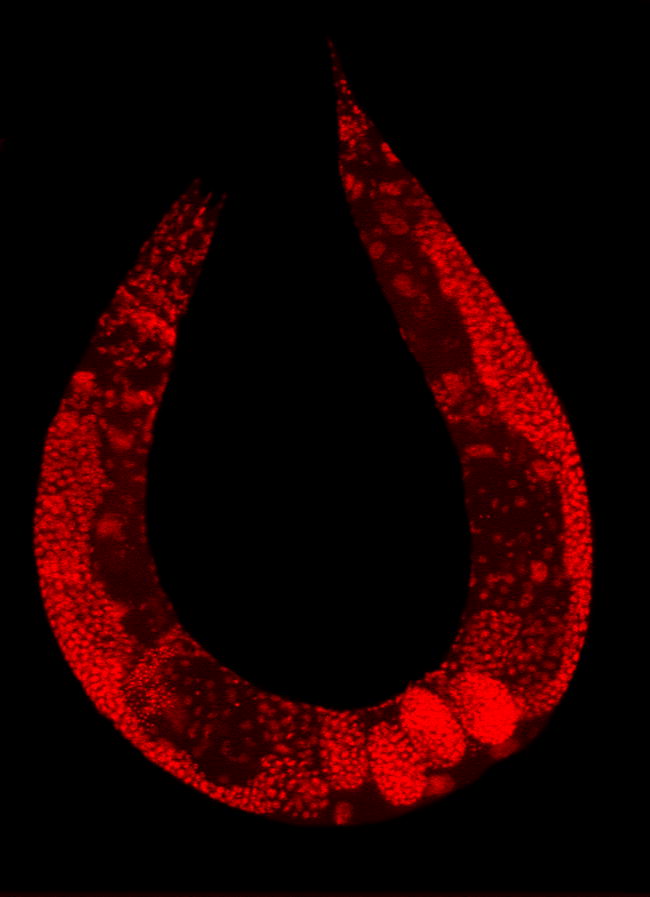
最早的多細胞生物演化出現,細胞開始分工合作,為複雜動植物的演化奠基。
The first multicellular organisms evolve; cells begin to specialize, laying the groundwork for complex life.

雪球地球多次凍結,埃迪卡拉紀最早複雜動物出現,為寒武紀大爆發奠基。
Multiple Snowball Earth events; earliest complex animals appear in the Ediacaran; groundwork laid for the Cambrian explosion.

羅迪尼亞超大陸開始分裂,多細胞生物多樣化
Rodinia supercontinent begins rifting; multicellular life diversifies.

地球兩次幾乎完全凍結(雪球地球),海洋表面結冰,生命在海底熱液口存活,結束後生命爆發性複雜化。
Earth freezes twice (Snowball Earth); life survives near hydrothermal vents; after thawing, life complexifies explosively.

地球幾乎完全被冰雪覆蓋,全球平均溫度降至零下50度,海洋表面結冰,持續近1億年。
Earth almost entirely frozen; global temperatures drop to -50°C; ocean surfaces freeze for nearly 100 million years.

雪球地球結束後,最早的複雜多細胞生物出現,軟體動物,無骨骼,是動物演化的先驅。
After Snowball Earth, the first complex multicellular organisms appear — soft-bodied, boneless pioneers of animal evolution.

幾乎所有現代動物門在短短數百萬年內同時出現,三葉蟲稱霸海洋,是生命演化的大爆發時代。
Nearly all major animal phyla appear simultaneously; trilobites dominate the seas; the explosion of complex life.
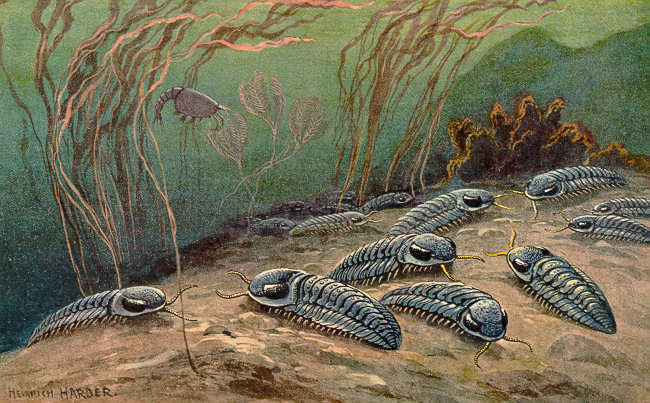
生命從海洋到陸地的偉大征程,包含寒武紀大爆發、魚類時代、第一批陸地植物與動物,以二疊紀大滅絕終結。
Life's great journey from sea to land: Cambrian explosion, Age of Fishes, first land plants and animals, ending with the Permian extinction.

可見生命的時代,從寒武紀大爆發至今,包含古生代、中生代、新生代
The eon of visible life, from the Cambrian Explosion to the present, encompassing the Paleozoic, Mesozoic, and Cenozoic eras.

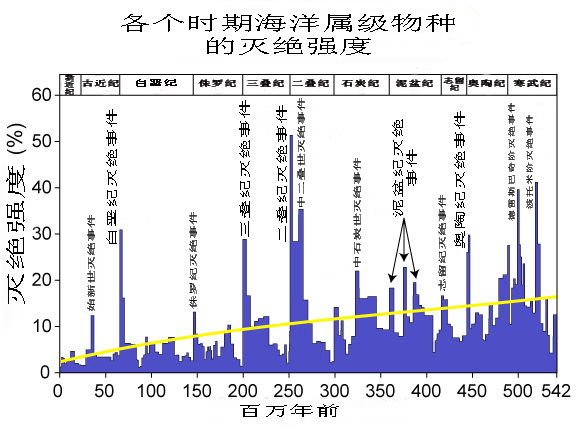
海洋生物空前繁盛,珊瑚礁出現,末期發生地球第二大滅絕事件(奧陶紀大滅絕),85%物種消失。
Marine life flourishes; coral reefs appear; ends with Earth's second-largest extinction (85% of species lost).

Major glaciation ~460–430 Mya affecting Gondwana, linked to the first mass extinction event.

有頜魚類演化出現,陸地植物開始定居,珊瑚礁大量發展,氣候相對溫和穩定。
Jawed fish evolve; land plants colonize shore; coral reefs expand; relatively warm and stable climate.

「魚類的時代」——各類魚種繁盛,四足動物登陸,蕨類森林出現,末期發生大滅絕。
'Age of Fishes' — diverse fish species; tetrapods colonize land; fern forests appear; major extinction at end.

巨大沼澤森林覆蓋大陸,大量植物埋入地層形成今日煤礦,第一批爬蟲類與有翅昆蟲出現。
Vast swamp forests cover continents; buried plants form today's coal deposits; first reptiles and winged insects appear.
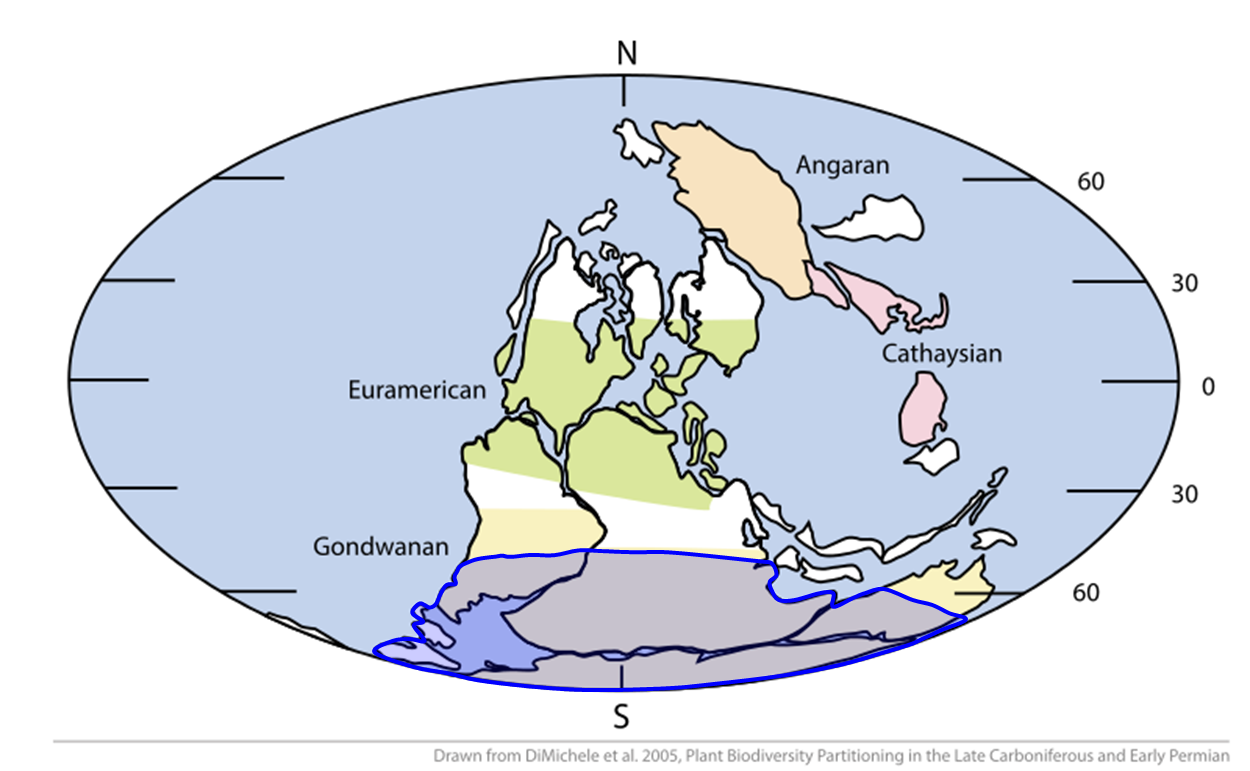
Longest ice age ~360–260 Mya, associated with the spread of land plants and CO₂ drawdown.
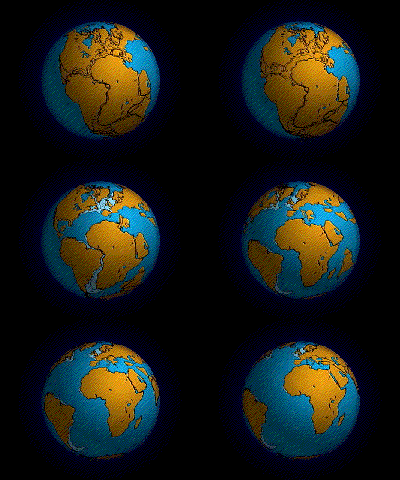
Supercontinent Pangaea assembles from earlier landmasses around 335 million years ago.

盤古大陸形成,以史上最大滅絕事件結束——96%海洋物種與70%陸地脊椎動物消失。
Pangaea forms; ends with Earth's greatest extinction — 96% of marine species and 70% of land vertebrates lost.

二疊紀大滅絕後生命復甦,恐龍與哺乳類同時演化出現,盤古大陸開始分裂。
Life recovers after Permian extinction; dinosaurs and mammals both evolve; Pangaea begins breaking apart.

恐龍主宰大地的時代,包含三疊紀、侏羅紀、白堊紀,哺乳類與鳥類也在此期間演化出現。
The age of dinosaurs: Triassic, Jurassic, and Cretaceous periods; mammals and birds also evolve.

約2.52億年前,96%的海洋物種和70%的陸地脊椎動物滅絕,可能由大規模火山噴發引發,是地球歷史上最嚴重的大滅絕。
96% of marine species and 70% of land vertebrates perished — the most severe mass extinction in Earth's history, likely triggered by massive volcanic eruptions.

恐龍稱霸陸地,超巨型蜥腳類恐龍出現,始祖鳥演化,盤古大陸持續分裂,氣候溫暖濕潤。
Dinosaurs dominate land; giant sauropods appear; Archaeopteryx evolves; warm and humid climate.
Pangaea begins rifting apart ~200 Mya, eventually forming today's continents and oceans.

開花植物大爆發,恐龍多樣性達到頂峰,以隕石撞擊引發的大滅絕事件結束。
Flowering plants explode in diversity; dinosaurs reach peak diversity; ends with asteroid impact extinction.

恐龍滅絕後哺乳動物迅速多樣化的時期
Period of rapid mammalian diversification after the dinosaur extinction.

哺乳類與鳥類大輻射演化,草原擴張,靈長類出現,最終演化出人類,延續至今。
Mammals and birds diversify explosively; grasslands expand; primates evolve; culminates in humans.

小行星撞擊尤卡坦半島,非鳥恐龍全部滅絕。只有鳥類存活至今。
Asteroid struck Yucatán. All non-avian dinosaurs went extinct. Only birds survived to present day.

古新世-始新世極熱事件。全球溫度暴升 5-8°C,海洋酸化,大量物種遷徙。
Global temperature surged 5-8°C. Ocean acidification. Massive species migration.

Collision of Indian and Eurasian plates begins uplifting the Himalayas ~50 million years ago.

約3400萬年前,大氣CO2濃度下降,南極冰蓋形成,地球進入更涼爽的冰室氣候,對全球洋流和氣候產生深遠影響。
About 34 million years ago, falling CO2 levels allowed the Antarctic ice sheet to form, shifting Earth into a cooler icehouse climate.
全球急劇降溫(Grande Coupure),歐洲大量哺乳類滅絕,被亞洲物種取代。
Dramatic global cooling (Grande Coupure). Many European mammals went extinct, replaced by Asian species.

全球降溫,森林退縮,草原擴張。改變哺乳類演化方向:跑得快的活下來。
Global cooling caused forests to retreat and grasslands to expand. Survival favored speed.

草原擴張、類人猿演化的時期
Period of grassland expansion and hominoid evolution.
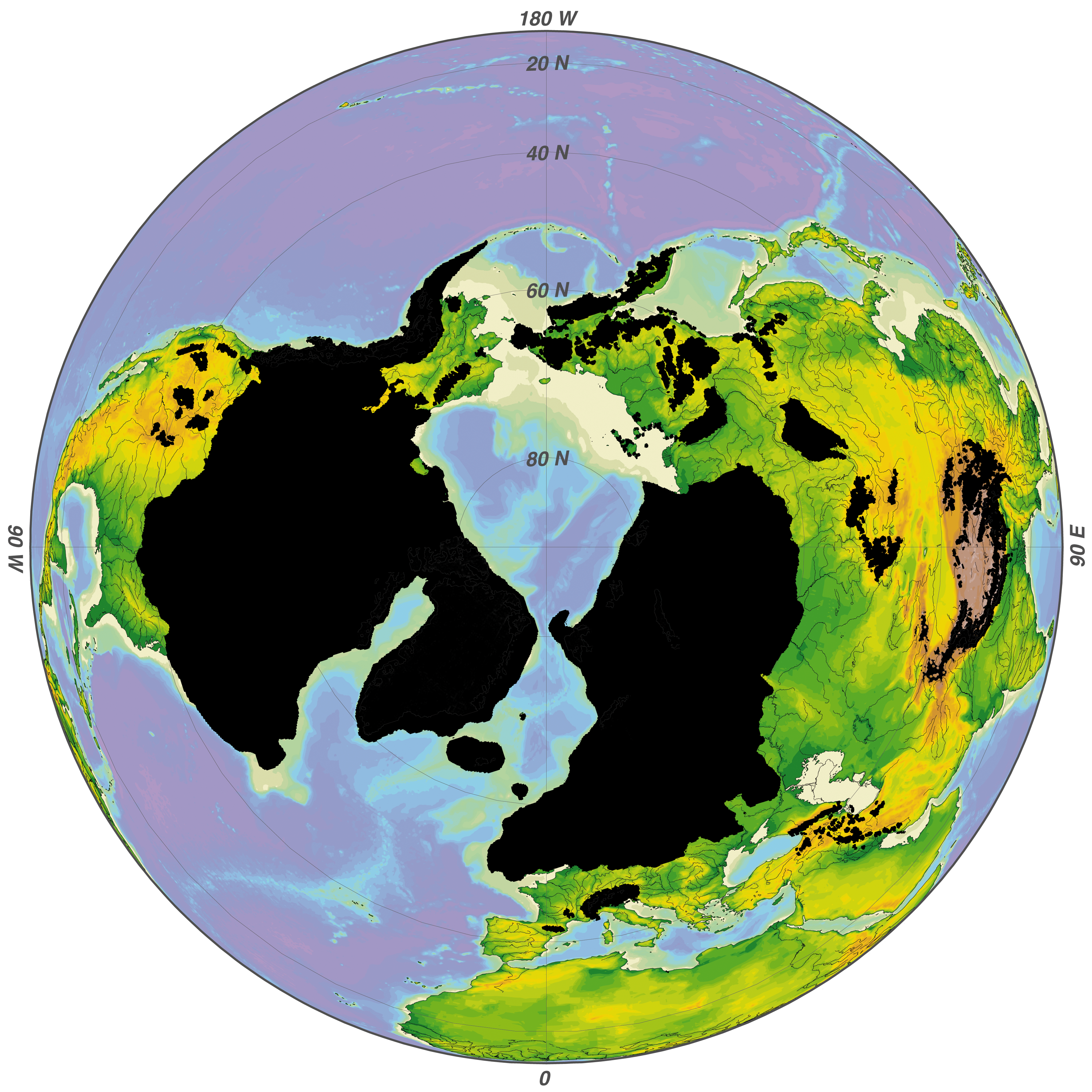
260萬年前開始、至今仍在持續的冰河期,包含多次冰期與間冰期,人類在此期間演化。
Ongoing ice age beginning 2.6 million years ago, with multiple glacial-interglacial cycles; humans evolved during this period.

最後一次冰河期,冰蓋覆蓋北美、歐洲大部,海平面下降120公尺,人類通過白令陸橋進入美洲。
Last glacial period; ice sheets cover North America and Europe; sea level drops 120m; humans cross into Americas via Bering land bridge.

多峇超級火山爆發導致全球降溫,人類瀕臨滅絕,僅存數千人
Toba supervolcano eruption causes global cooling; human population drops to as few as a few thousand.
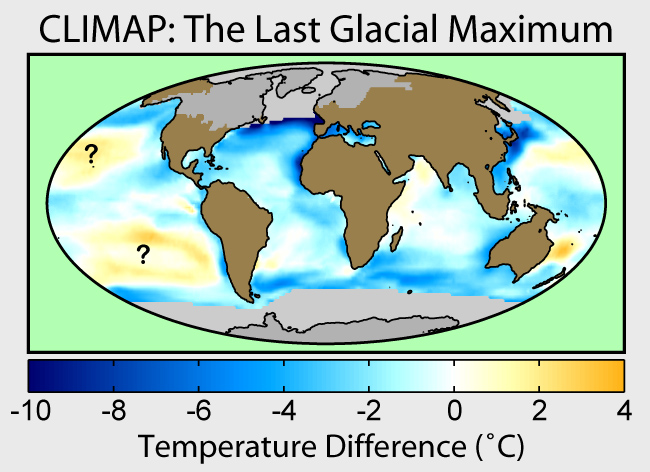
Peak of the last ice age ~26,000 years ago; ice sheets covered much of North America and Europe.

Warming after the last ice age begins the Holocene epoch, enabling agriculture and civilization.
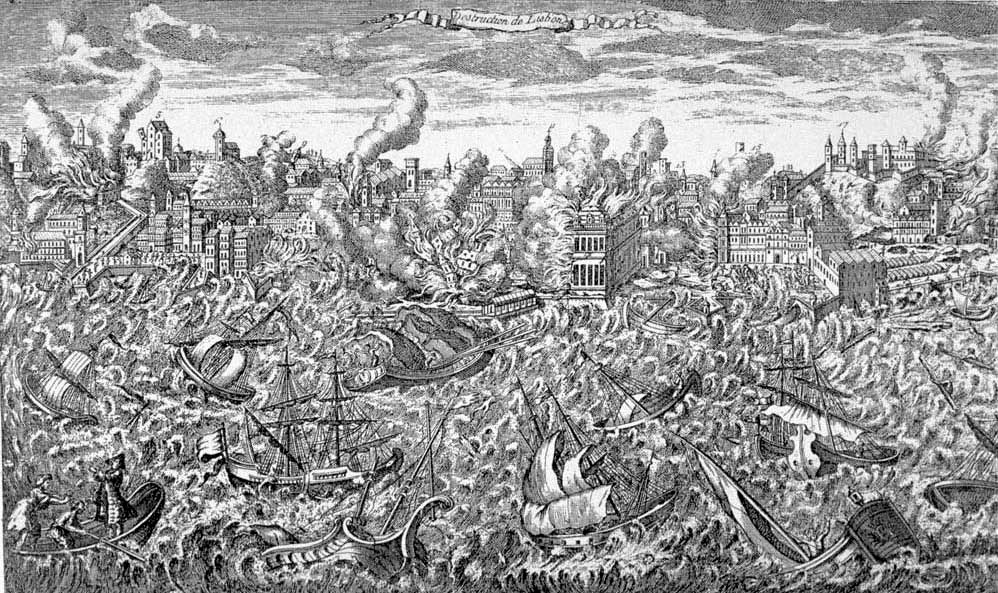
1755/11/1 萬聖節 9.0 級地震 + 海嘯 + 大火摧毀里斯本,5-10 萬死;動搖歐洲啟蒙思想對神意的信念(Voltaire 諷刺)。
On All Saints' Day 1755, a M9.0 earthquake + tsunami + fire destroyed Lisbon (50-100k dead), shaking Enlightenment beliefs (prompting Voltaire's satire).

Industrial-era fossil fuel combustion drives rising global temperatures from the late 19th century.
1883/8/26-27 印尼 Krakatoa 火山爆發,聲響 4800 km 外可聞,引發海嘯殺 3.6 萬人;火山灰入平流層造成數年全球氣溫下降。
The 1883 Krakatoa eruption (Indonesia) was heard 4,800 km away, triggered tsunamis killing 36,000, and cooled global climate for years.

6 月 30 日西伯利亞通古斯河上空小行星(或彗星)空爆,估 10-15 百萬噸 TNT 當量(≈1000 顆廣島彈)。摧毀 2000 平方公里森林,是人類有紀錄以來最大天體撞擊事件。偏遠無人居,奇蹟無人死亡。
On June 30, an asteroid (or comet) airburst over the Tunguska River, Siberia — estimated 10-15 megatons TNT (~1,000 Hiroshimas). It flattened 2,000 km² of forest, the largest recorded impact event in history. The remote location meant miraculously no deaths.
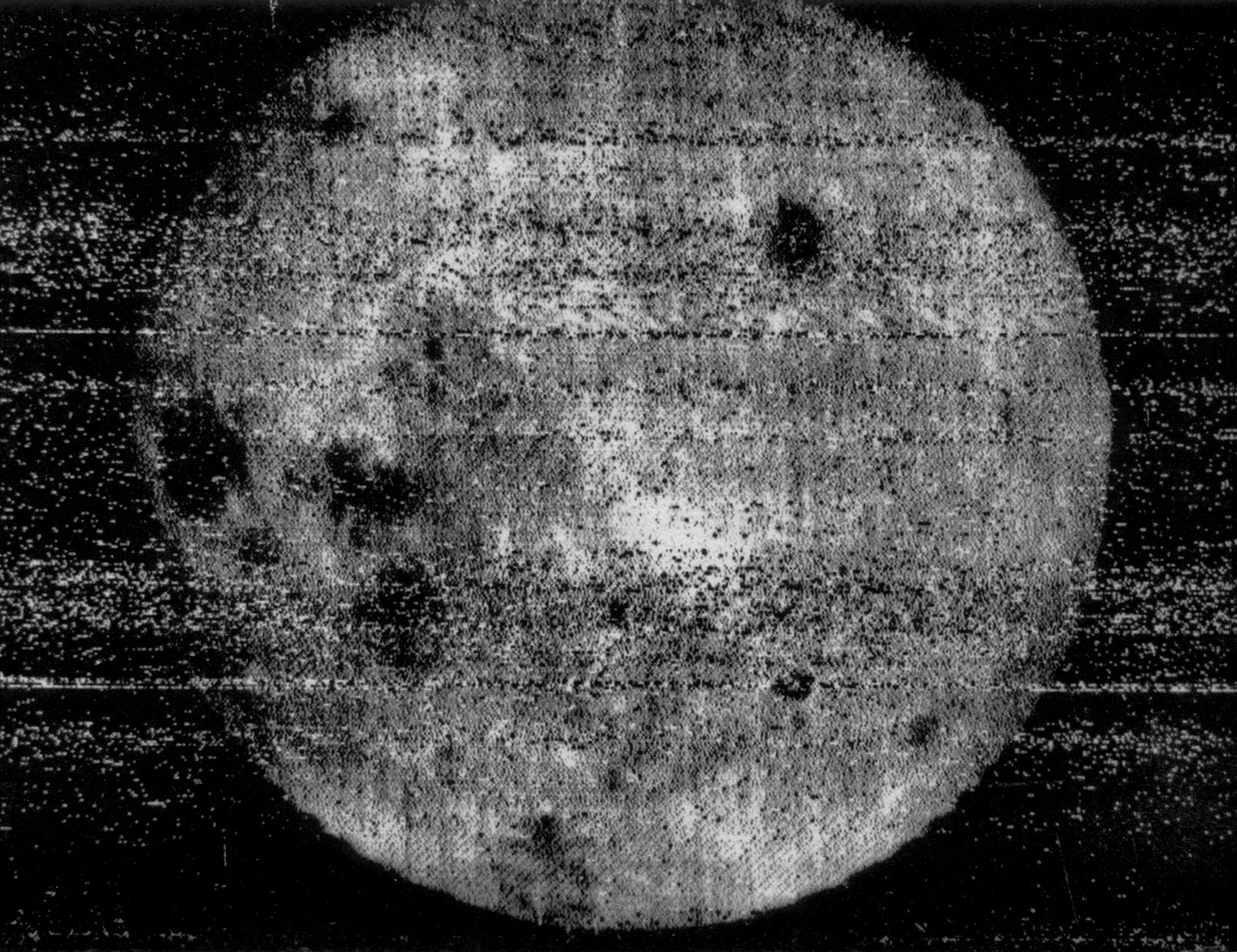
10 月 4-7 日(Sputnik 兩週年)Luna 3 飛掠月球背面,首次拍攝人類從未見過的另一半月球。29 張照片質量粗糙但歷史性。從此月背地名以蘇聯科學家為主:Lomonosov、Mendeleev、Tsiolkovsky 隕石坑。
On October 4-7 (the second anniversary of Sputnik), Luna 3 flew past the Moon and took the first-ever photographs of the lunar far side — the half humanity had never seen. 29 grainy but historic images. Lunar far-side features now bear Soviet scientists' names: Lomonosov, Mendeleev, Tsiolkovsky craters.
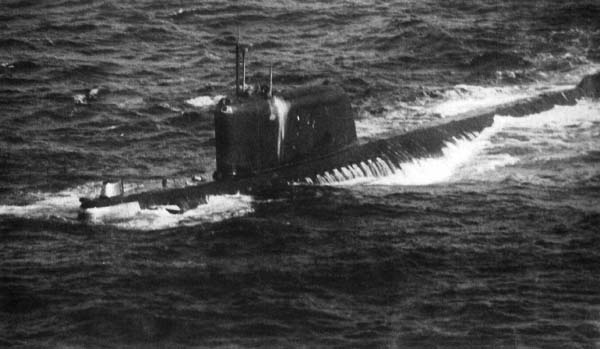
7 月 4 日蘇聯首艘戰略核潛艇 K-19 在北大西洋演習,反應爐冷卻系統故障。8 名艇員自願進入輻射區搶修,全數於數週內死亡。輻射污染艇身永久。電影《K-19: The Widowmaker》(2002)原型。
On July 4, the USSR's first strategic nuclear submarine K-19 suffered reactor coolant failure during North Atlantic exercises. 8 crew members volunteered to enter the radiation zone for repairs — all died within weeks. Radiation contaminated the boat permanently. Inspired the 2002 film 'K-19: The Widowmaker.'
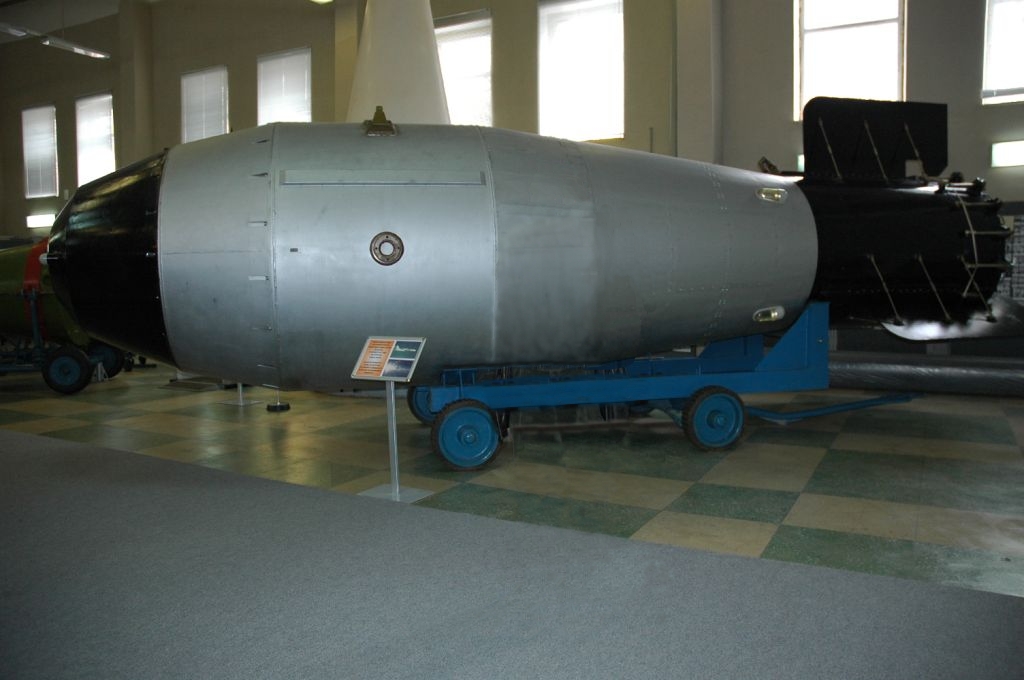
10 月 30 日蘇聯在新地島試爆 Tsar Bomba(AN602)熱核裝置,當量 50 百萬噸 TNT(約 1500 倍廣島)。蘑菇雲高 64 公里、衝擊波繞地球三圈、1000 公里外可見閃光。是史上最大規模單一爆炸事件。
On October 30, the USSR tested Tsar Bomba (AN602) thermonuclear device at Novaya Zemlya — yield 50 megatons TNT (~1,500x Hiroshima). The mushroom cloud reached 64 km; the shockwave circled Earth three times; the flash was visible 1,000 km away. The largest single explosion in history.

7 月 21 日 Aswan 高壩完工(1960 動工)。蘇聯資助建造,壩高 111 公尺、長 3830 公尺,形成 Nasser 湖(5250 km²)。結束 5000 年尼羅河氾濫歷史、擴耕地 30%、供電占埃及一半。Nasser 阿拉伯社會主義的象徵。
On July 21, the Aswan High Dam was completed (construction began 1960). Soviet-funded, 111 m tall, 3,830 m long, creating Lake Nasser (5,250 km²). It ended 5,000 years of Nile flooding, expanded farmland by 30%, and supplied half Egypt's electricity. The symbol of Nasser's Arab socialism.

12 月 15 日 Venera 7 在金星表面成功軟著陸,是人類首次在另一顆行星(地球以外)實現軟著陸並回傳資料(23 分鐘)。確認金星表面溫度 475°C、氣壓 90 atm。蘇聯金星探測領先美國甚多。
On December 15, Venera 7 made the first-ever soft landing on another planet, transmitting data from Venus's surface for 23 minutes. It confirmed surface temperature of 475°C and pressure of 90 atmospheres. The USSR led the US substantially in Venus exploration.
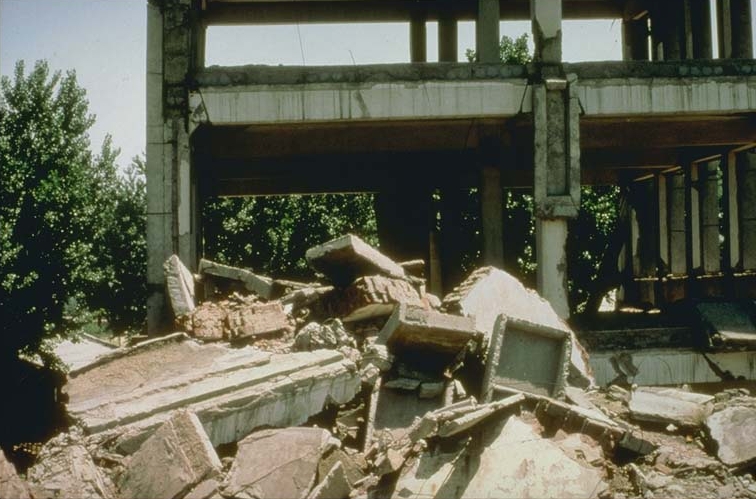
1976/7/28 凌晨 7.5 級地震夷平唐山市,24 萬死、16 萬重傷;同年毛澤東逝世與文革結束,象徵中國動盪年代。
On Jul 28, 1976, a M7.5 quake leveled Tangshan (240k dead, 160k injured)—the same year Mao died and the Cultural Revolution ended.
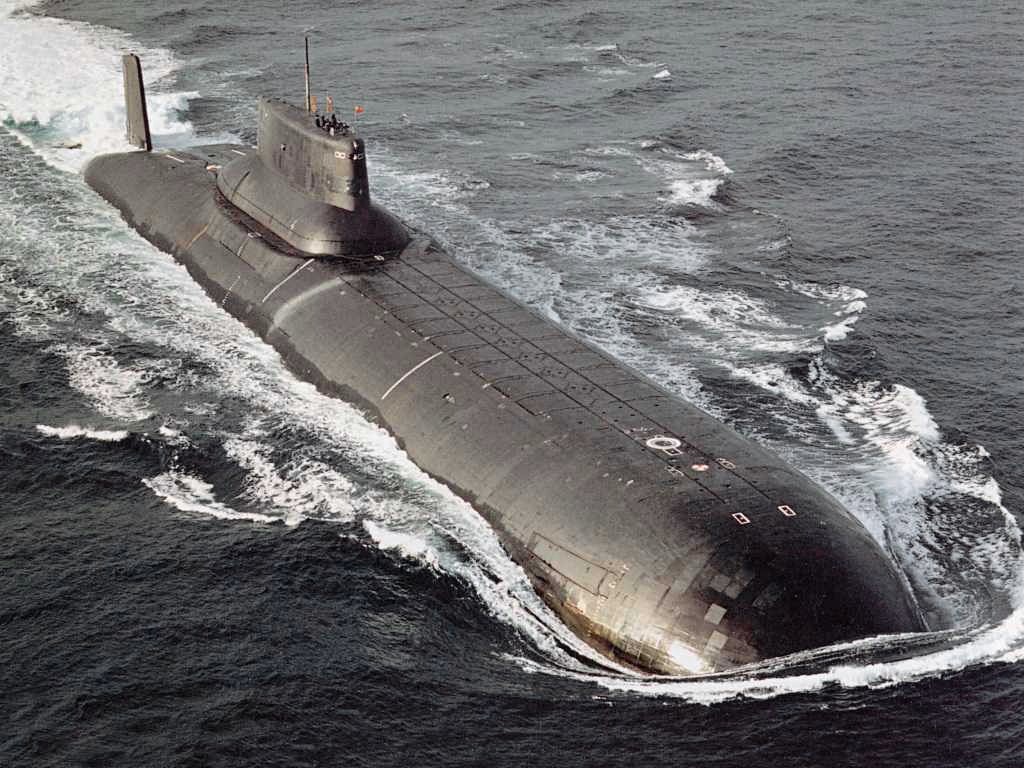
12 月首艘 Typhoon 級(Project 941 Akula)服役。長 175 公尺、水面 48,000 噸,史上最大潛艇。雙體鈦合金結構、可在北極冰下發射 20 枚 R-39 SLBM(每枚 10 個核彈頭)。電影《獵殺紅色十月》原型。
In December, the first Typhoon-class (Project 941 Akula) entered service. 175 m long, 48,000 tons surfaced — the largest submarine in history. Double-hulled titanium construction, capable of launching 20 R-39 SLBMs (each with 10 warheads) from under Arctic ice. Inspiration for 'The Hunt for Red October.'

科學家發現南極上空臭氧層嚴重破損
Scientists discover a severe depletion of the ozone layer over Antarctica.
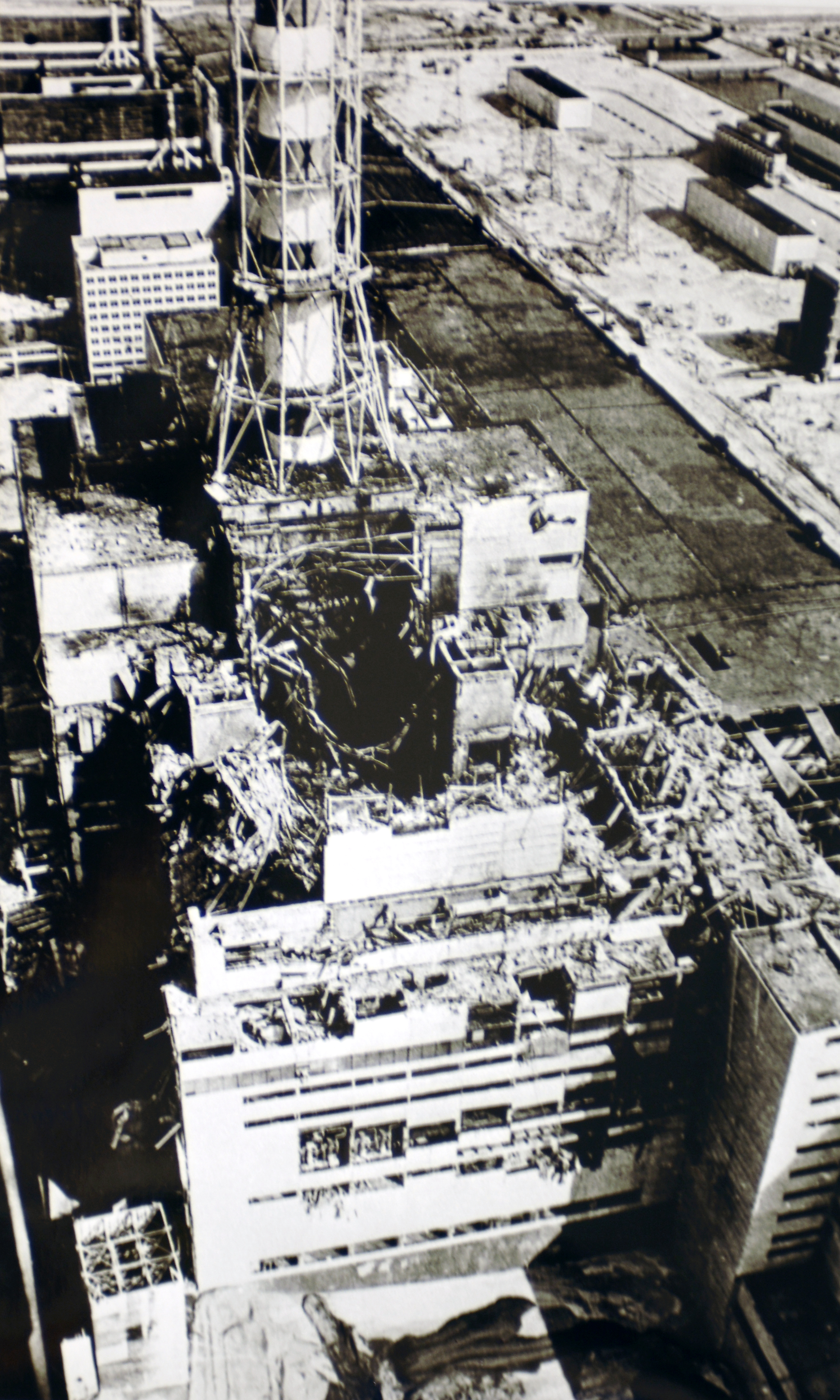
4 月 26 日烏克蘭 Chernobyl 核電廠 4 號反應爐爆炸,輻射雲擴散全歐。31 人立即死亡,數萬人後續罹癌死亡。蘇聯初期掩蓋資訊重創公信力,加速 Glasnost 與蘇聯解體。
On April 26, Reactor 4 at Chernobyl Nuclear Plant in Ukraine exploded. Radiation clouds spread across Europe. 31 died immediately; tens of thousands later from cancer. The Soviet cover-up early on shattered government credibility, accelerating Glasnost and the USSR's collapse.

Intergovernmental Panel on Climate Change established by UN to assess climate science.
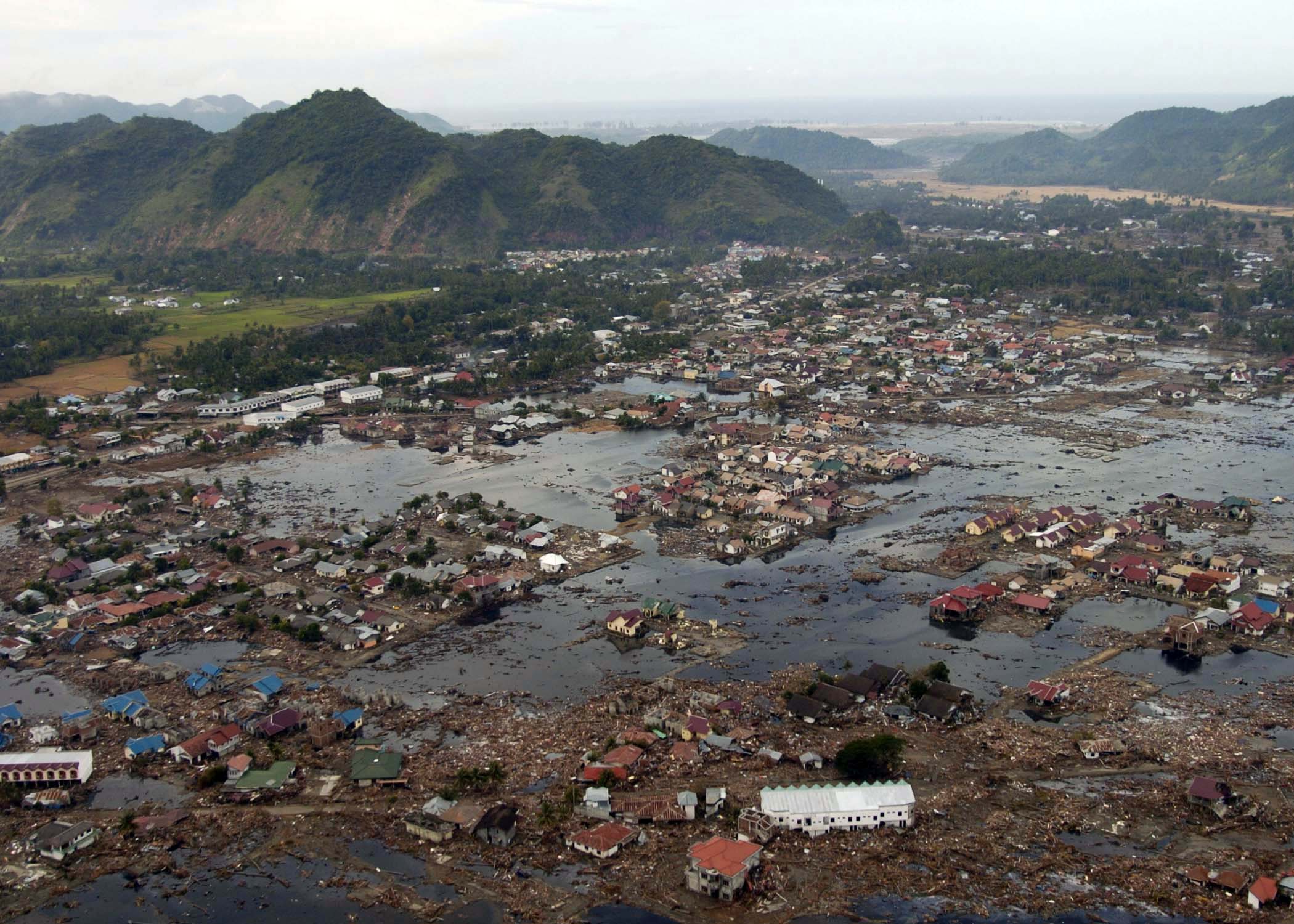
2004/12/26 蘇門答臘外海 9.1 級地震引發橫越印度洋的海嘯,14 國逾 23 萬死;世界最致命海嘯,國際人道援助空前。
On Dec 26, 2004, a M9.1 quake off Sumatra triggered a trans-Indian Ocean tsunami; 230,000+ died across 14 countries—the deadliest tsunami in history.

北極海冰面積縮減至衛星觀測以來最小
Arctic sea ice shrinks to smallest extent since satellite records began.

2 月 15 日烏拉爾車里雅賓斯克上空 18 公尺小行星進入大氣層空爆,估 50 萬噸 TNT(比 Tunguska 小 30 倍)。衝擊波震碎玻璃,1500 餘人受傷。是首次大規模隕石事件被全球行車記錄器記錄,影片瘋傳。
On February 15, an 18-meter asteroid airburst over Chelyabinsk in the Urals — estimated 500 kt TNT (30x smaller than Tunguska). The shockwave shattered windows, injuring over 1,500 people. The first major meteor event captured by dashcams worldwide; videos went viral.

196 nations adopt agreement to limit global warming to 1.5°C above pre-industrial levels.
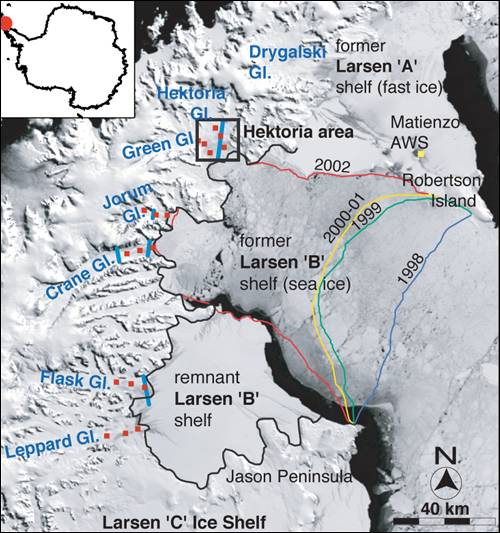
南極拉森C冰棚崩裂出一座特拉華州大小的冰山
A Delaware-sized iceberg breaks off the Larsen C ice shelf in Antarctica.

氣候變遷加劇引發的毀滅性森林大火
Devastating bushfires exacerbated by climate change.

2 月 6 日凌晨 7.8 級雙震在土東南 11 省+敘利亞北部造成 5.9 萬人亡(5.3 萬土、5 千敘)、200 萬人無家可歸。政府應變遲緩遭批,但 5 月 Erdoğan 仍在總統大選以 52% 險勝 Kılıçdaroğlu,任至 2028。是土耳其共和國史上最慘天災。
At dawn on February 6, twin 7.8-magnitude earthquakes struck 11 southeastern Turkish provinces and northern Syria — killing 59,000 (53,000 Turkish, 5,000 Syrian) and displacing 2 million. Slow government response drew criticism, but Erdoğan still won the May presidential election narrowly (52%) over Kılıçdaroğlu, serving until 2028. The worst natural disaster in Turkish Republic history.