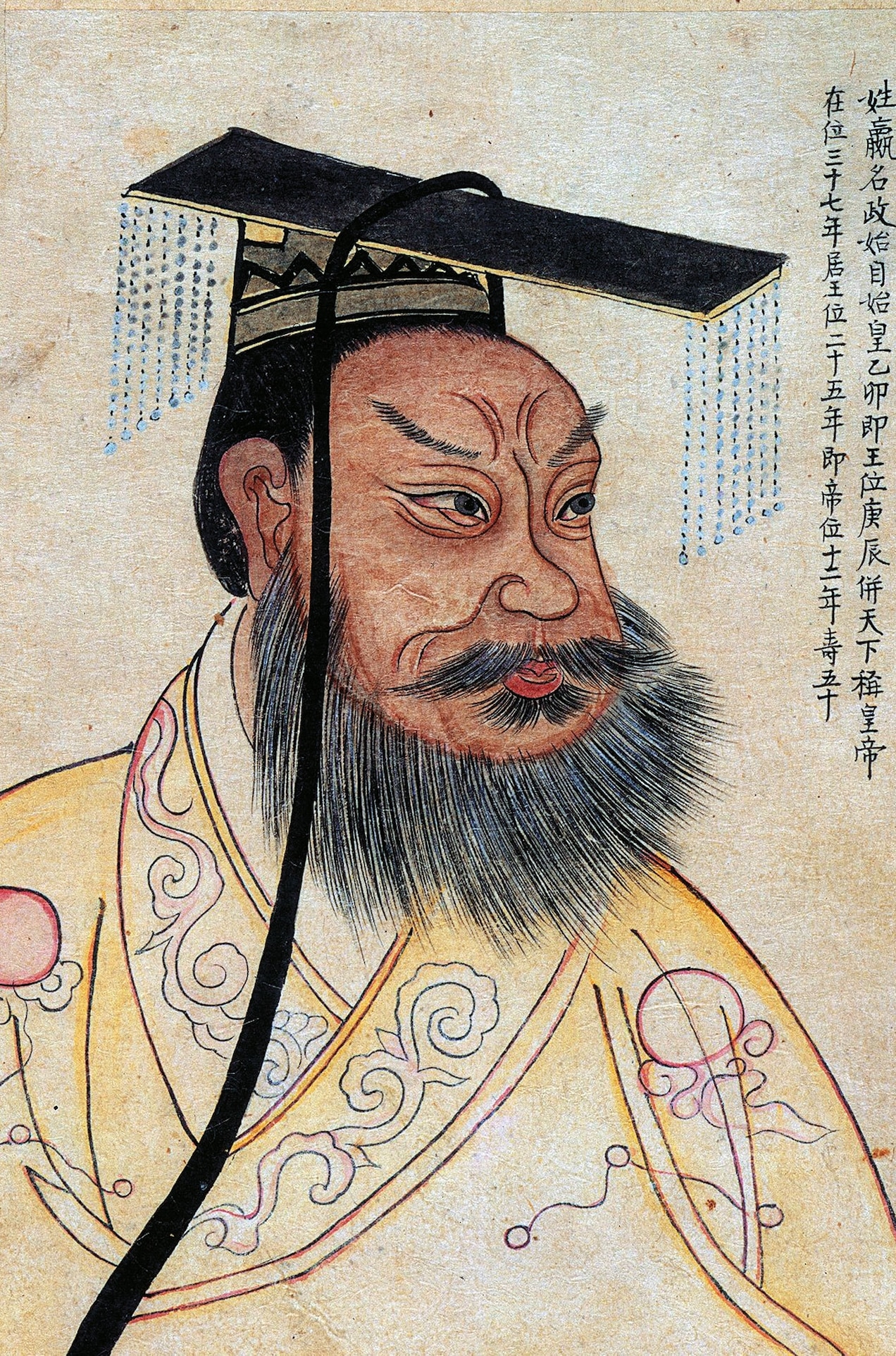
秦始皇 Qin Shi Huang

13 歲為趙國質子之子即位、22 歲誅嫪毐親政、39 歲完成中國第一次大一統。書同文、車同軌、修長城、建兵馬俑,也焚書坑儒、求長生不老。50 歲在第五次東巡途中暴斃,趙高矯詔——中國第一個皇帝以鮑魚遮屍臭返京。秦朝四年後亡。

At 13, son of a hostage prince, he inherited the Qin throne. At 22 he purged the Lao Ai conspiracy and took personal rule. At 39 he completed China's first unification. He standardized script, axles, and weights; built the Long Wall and the Terracotta Army; burned books and buried scholars; hunted for the elixir of immortality. At 50 he died on his fifth eastern tour. The eunuch Zhao Gao forged his will; salted fish hid the smell of his corpse on the journey home. The Qin dynasty fell within four years.

在互動時間軸上瀏覽 → Open in interactive timeline →
互動時間軸 Interactive Timeline 本 view 的 6 條軸線 · 滾輪縮放 · 拖曳平移 · 點事件查看詳情 6 axes · scroll to zoom · drag to pan · click events for detail
📌 內容與授權:本頁事件說明文字(中英)為 Cosmic History Timeline 編輯整理。 圖片來自 Wikimedia Commons,作者與授權詳見每張圖下方連結。 延伸閱讀的 Wikipedia 與 Amazon 連結著作權歸原權利人;Amazon 連結為聯盟連結(不影響你的價格)。 📌 Sources & Credits: Event descriptions (zh / en) are editorial work by Cosmic History Timeline. Images are sourced from Wikimedia Commons — author and license shown below each image. Wikipedia and Amazon links belong to their respective rights holders; Amazon links are affiliate links (no extra cost to you).

-265 – -247 · 2 條事件 -265 – -247 · 2 events

西元前 259 年 politics

出生於邯鄲·質子之子 Born in Handan — Son of a Hostage Prince

出生於邯鄲·質子之子 / Born in Handan — Son of a Hostage Prince
圖:Unknown (18??–18??) · Public domain · Wikimedia CommonsImage: Unknown (18??–18??) · Public domain · Wikimedia Commons

父親嬴異人 (子楚) 為秦在趙國的人質,呂不韋 (商人謀略家) 將自己的姬妾趙姬獻給異人,生下嬴政。後人懷疑嬴政實為呂不韋之子,史書留下千古之謎。

His father Yiren was a Qin prince held hostage in the rival state of Zhao. The merchant-strategist Lü Buwei gave his own concubine Zhao Ji to Yiren — and she gave birth to Ying Zheng. Later historians speculated that Lü Buwei himself was the real father — a mystery that has haunted Chinese history for 2,200 years.

相關主軸:Related axes:中國China
西元前 259 年 politics

秦始皇一生 49 年·中國第一個皇帝 Qin Shi Huang · 49 Years

秦始皇一生 49 年·中國第一個皇帝 / Qin Shi Huang · 49 Years
圖:Wolfgang Stanglmeier · CC0 · Wikimedia CommonsImage: Wolfgang Stanglmeier · CC0 · Wikimedia Commons

從邯鄲質子之子到統一六國、自稱「始皇帝」。13 歲即位、22 歲親政、39 歲完成統一。書同文、車同軌、修長城、建兵馬俑、求長生不老。50 歲死於東巡途中。

From the son of a hostage prince in Handan to the first "August Emperor" of unified China. Crowned at 13, took personal rule at 22, completed unification at 39. Standardized writing and axles, built the Great Wall, buried his Terracotta Army, hunted for the elixir of immortality. Died at 50 on a tour of the east.

相關主軸:Related axes:中國China東方East跨文明Cross-Civilization

-247 – -230 · 4 條事件 -247 – -230 · 4 events

西元前 247 年 politics

李斯來秦·拜呂不韋為師 Li Si Comes to Qin — Studies under Lü Buwei

李斯來秦·拜呂不韋為師 / Li Si Comes to Qin — Studies under Lü Buwei
圖:Antolavoasio · CC BY-SA 4.0 · Wikimedia CommonsImage: Antolavoasio · CC BY-SA 4.0 · Wikimedia Commons

楚國上蔡人李斯西入秦國,先為呂不韋門下舍人。後上《諫逐客書》阻止秦王驅逐六國客卿,從此受嬴政重用,最終任丞相。書同文、郡縣制、焚書都是他主導。

Li Si of Shangcai (Chu) came west to Qin, first serving as a retainer under Lü Buwei. He wrote the famous Memorial Against Expelling Foreign Officials, halting an edict that would have driven all non-Qin advisors out. From then on Ying Zheng trusted him; he became chancellor. Standardized script, the commandery system, and the burning of books were all his work.

相關主軸:Related axes:中國China秦始皇Qin Shi Huang
西元前 246 年 politics

13 歲即秦王位·呂不韋攝政 Crowned King of Qin at 13

13 歲即秦王位·呂不韋攝政 / Crowned King of Qin at 13
圖:Unknown (18??–18??) · Public domain · Wikimedia CommonsImage: Unknown (18??–18??) · Public domain · Wikimedia Commons

父親莊襄王早死,13 歲嬴政即位。國政由呂不韋與母后趙姬掌控,9 年期間秦國繼續向東擴張。

After his father's early death, 13-year-old Ying Zheng inherited the throne of Qin. For nine years, real power lay with regent Lü Buwei and the queen mother Zhao Ji, while Qin continued its eastward expansion.

相關主軸:Related axes:中國China
西元前 239 年 culture

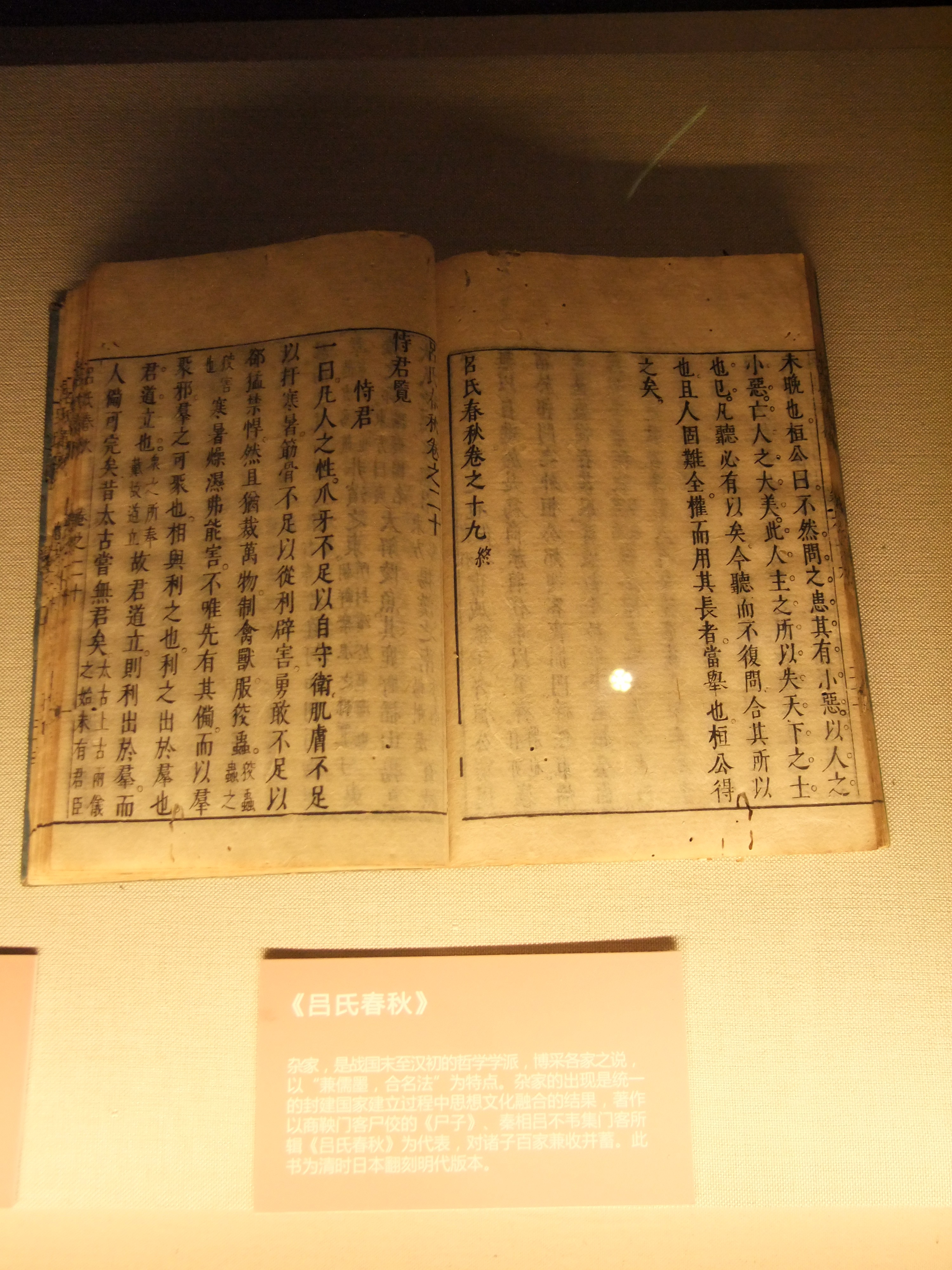
呂不韋編《呂氏春秋》·一字千金 Lü Buwei Edits the Annals of Lü — "A Thousand Gold for One Word"

呂不韋編《呂氏春秋》·一字千金 / Lü Buwei Edits the Annals of Lü — "A Thousand Gold for One Word"
圖:Huangdan2060 · Public domain · Wikimedia CommonsImage: Huangdan2060 · Public domain · Wikimedia Commons

丞相呂不韋集 3000 門客編寫《呂氏春秋》,雜糅諸子百家。書成懸於咸陽城門,宣告:「能改一字者賞千金」——竟無人敢動。後嫪毐案爆發、呂不韋被牽連免相、流放蜀,途中飲鴆自盡。

Chancellor Lü Buwei gathered 3,000 scholars to compile the Annals of Lü, blending the Hundred Schools. He hung the finished text at Xianyang's gate with a proclamation: "A thousand gold pieces to anyone who can change one word." None dared. Caught up in the Lao Ai scandal, he was dismissed, exiled to Shu, and drank poison on the road.

相關主軸:Related axes:中國China秦始皇Qin Shi Huang
西元前 238 年 politics

22 歲親政·誅嫪毐三族 At 22, Takes Personal Rule — Crushes the Lao Ai Revolt

22 歲親政·誅嫪毐三族 / At 22, Takes Personal Rule — Crushes the Lao Ai Revolt
圖:Unknown author · Public domain · Wikimedia CommonsImage: Unknown author · Public domain · Wikimedia Commons

母后趙姬與假宦官嫪毐私通生二子。嫪毐欲叛亂自立。嬴政親政後迅速平亂,誅嫪毐三族,囚母后於雍宮,逼呂不韋自盡。從此大權獨攬。

His mother had taken a fake eunuch, Lao Ai, as lover, bearing him two sons. When Lao Ai attempted a rebellion, Ying Zheng — newly come of age — crushed it within days, executed Lao Ai and his clan, exiled the queen mother, and forced Lü Buwei to suicide. From then on, absolute power.

相關主軸:Related axes:中國China

-230 – -212 · 11 條事件 -230 – -212 · 11 events

西元前 230 年 war

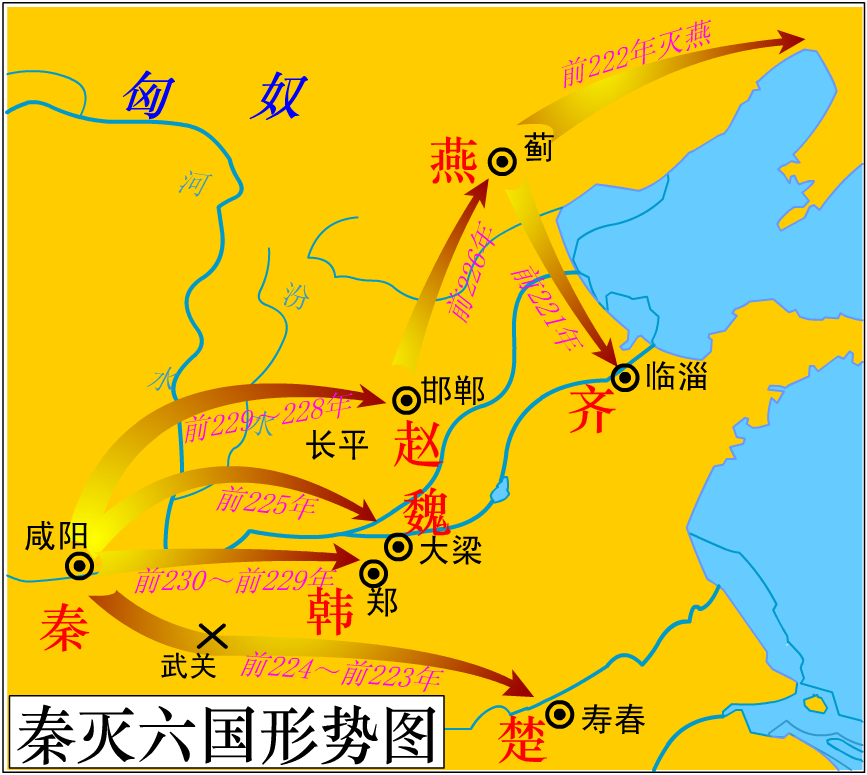
10 年滅六國·韓趙魏楚燕齊 10 Years, 6 Kingdoms — Han, Zhao, Wei, Chu, Yan, Qi

10 年滅六國·韓趙魏楚燕齊 / 10 Years, 6 Kingdoms — Han, Zhao, Wei, Chu, Yan, Qi
圖:竹围墙 · CC BY-SA 3.0 · Wikimedia CommonsImage: 竹围墙 · CC BY-SA 3.0 · Wikimedia Commons

-230 滅韓、-228 滅趙、-225 滅魏、-223 滅楚、-222 滅燕、-221 滅齊。十年連續軍事征服,結束自西周以來八百年諸侯割據局面,建立中國第一個中央集權帝國。

230 BC: Han falls. 228: Zhao. 225: Wei. 223: Chu. 222: Yan. 221: Qi. In ten years of continuous campaign, Qin ended 800 years of feudal fragmentation since the Western Zhou and built the first centralized empire of China.

相關主軸:Related axes:中國China跨文明Cross-Civilization
西元前 221 年 politics

自號「始皇帝」·書同文車同軌 Becomes "First August Emperor" — Standardizes Everything

自號「始皇帝」·書同文車同軌 / Becomes "First August Emperor" — Standardizes Everything
圖:Editor at Large · CC BY-SA 2.5 · Wikimedia CommonsImage: Editor at Large · CC BY-SA 2.5 · Wikimedia Commons

認為「王」不足以表達其偉業,採三皇五帝的尊號,自稱「皇帝」、「始皇帝」。書同文 (小篆)、車同軌、統一度量衡、廢封建、設郡縣 36 (後增至 48)。

Deciding the title "King" was inadequate, he combined "August" (Huang) of the Three Sovereigns and "Emperor" (Di) of the Five Emperors into one new title — "First August Emperor." Standardized script (Small Seal), axle width, weights and measures. Abolished feudalism, divided the realm into 36 (later 48) commanderies.

相關主軸:Related axes:中國China中國文學Chinese Literature
西元前 221 年 civilization

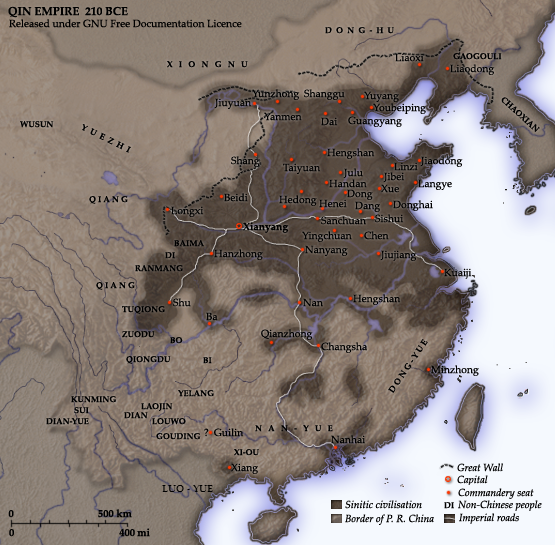
秦朝統一 Qin Unification

秦朝統一 / Qin Unification
圖:Itsmine · CC BY-SA 3.0 · Wikimedia CommonsImage: Itsmine · CC BY-SA 3.0 · Wikimedia Commons

秦始皇統一六國,建立中央集權制度,統一文字度量衡,修建長城。

Qin Shi Huang unifies China, standardizes writing, weights, and builds the Great Wall.

相關主軸:Related axes:中國帝王Chinese Emperor秦始皇Qin Shi Huang
西元前 221 年 civilization

秦始皇統一六國 Qin Shi Huang Unifies China

秦始皇統一六國 / Qin Shi Huang Unifies China
圖:Unknown artist · Public domain · Wikimedia CommonsImage: Unknown artist · Public domain · Wikimedia Commons

嬴政統一六國,建立中國第一個中央集權帝國,統一度量衡、文字。

Ying Zheng unified six states, founded the first centralized empire, standardized weights, measures, and writing.

相關主軸:Related axes:東方East中國帝王Chinese Emperor秦始皇·統一Qin Shi Huang · Unification
西元前 220 年 politics

五次東巡·刻石頌德 Five Imperial Tours of the East

五次東巡·刻石頌德 / Five Imperial Tours of the East
圖:Unknown (2??–2??) · Public domain · Wikimedia CommonsImage: Unknown (2??–2??) · Public domain · Wikimedia Commons

統一後十年內五次東巡,宣示帝國權威。在泰山封禪、瑯琊台、之罘、會稽刻石頌德。途中博浪沙遭張良行刺未中、湘江突遇大風幾乎覆船——皆預示晚年焦慮。

In the decade after unification he made five grand tours of the eastern provinces, projecting imperial authority. He performed the Feng Shan rites at Mount Tai and erected stone tablets at Langya, Zhifu, and Kuaiji to extol his virtue. Along the way Zhang Liang failed to assassinate him at Bolangsha; a storm nearly capsized his boat on the Xiang. The omens troubled him.

相關主軸:Related axes:中國China
西元前 219 年 culture

求長生不老·徐福東渡尋蓬萊 Quest for Immortality — Xu Fu Sails East

求長生不老·徐福東渡尋蓬萊 / Quest for Immortality — Xu Fu Sails East
圖:Utagawa Kuniyoshi · Public domain · Wikimedia CommonsImage: Utagawa Kuniyoshi · Public domain · Wikimedia Commons

晚年痴迷長生不老。命方士徐福帶 3000 童男童女、五穀百工出海尋蓬萊仙山與長生藥。徐福一去不返,後世傳說他到了日本。秦始皇也服用方士進獻的丹藥 (含汞),可能加速他的死亡。

In his later years he became obsessed with immortality. He sent the alchemist Xu Fu with 3,000 boys and girls and craftsmen across the sea to find Penglai, the legendary islands of the immortals. Xu Fu never returned — later legends say he reached Japan. The emperor himself took mercury-laced elixirs from court alchemists, which may have hastened his death.

相關主軸:Related axes:中國China日本Japan
西元前 215 年 war

蒙恬北擊匈奴·收河套 Meng Tian Defeats the Xiongnu — Recovers the Ordos

蒙恬北擊匈奴·收河套 / Meng Tian Defeats the Xiongnu — Recovers the Ordos
圖:ralph repo · CC BY 2.0 · Wikimedia CommonsImage: ralph repo · CC BY 2.0 · Wikimedia Commons

派蒙恬率 30 萬大軍北擊匈奴,奪回河套地區,迫匈奴退回陰山以北「七百餘里」、十年不敢南下。設置九原郡,並連接燕、趙、秦舊長城為萬里長城。

Sent General Meng Tian with 300,000 troops north against the Xiongnu, recovered the Ordos region, and pushed the nomads beyond the Yin Mountains "seven hundred li" — they did not return for a decade. Established Jiuyuan Commandery and linked the old walls of Qin, Yan, and Zhao into the Long Wall.

相關主軸:Related axes:中國China中亞/北亞Central Asia秦始皇Qin Shi Huang
西元前 215 年 war

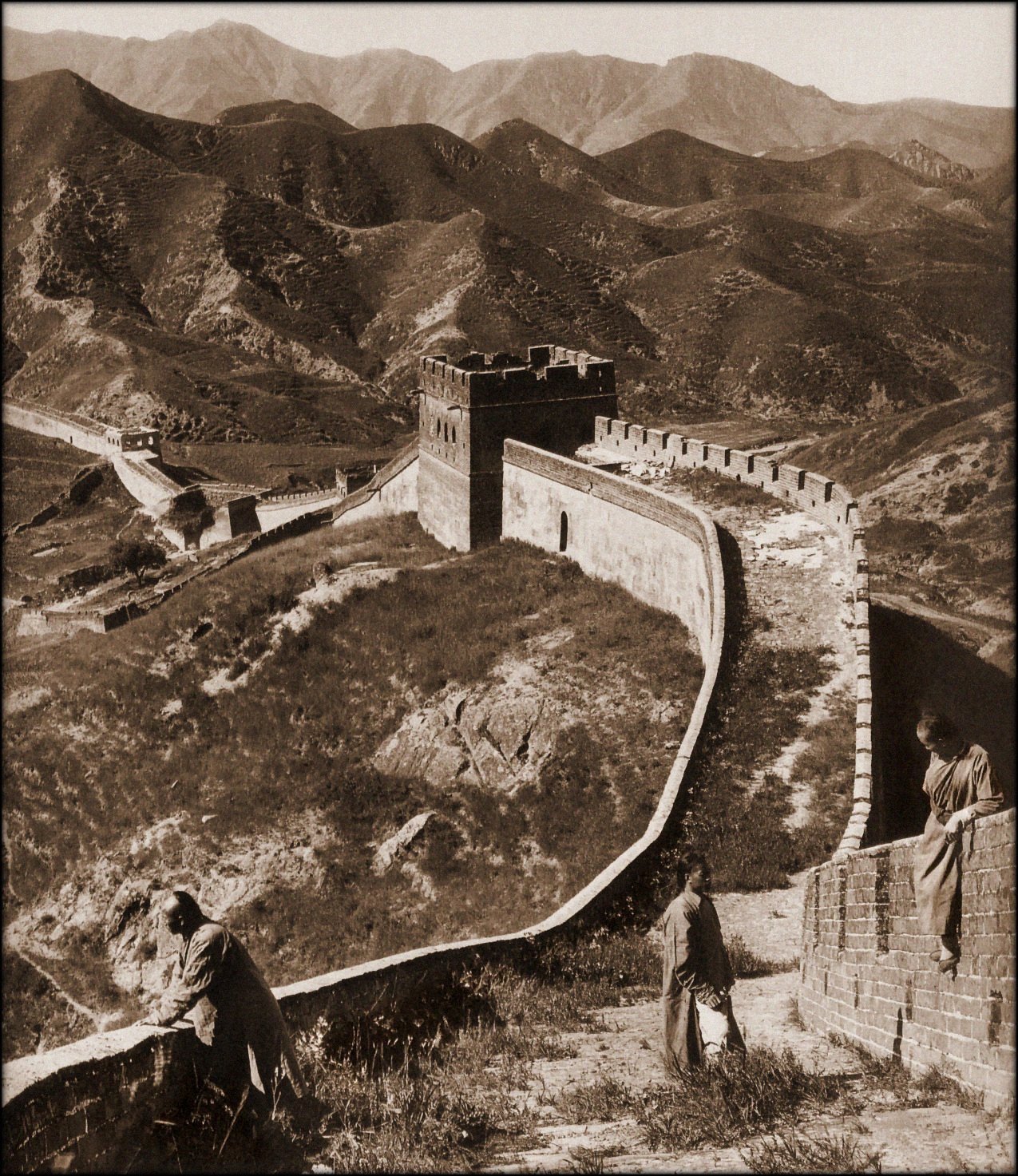
修築長城·連接燕趙秦舊牆 The Great Wall — Linking Three Old Frontier Walls

修築長城·連接燕趙秦舊牆 / The Great Wall — Linking Three Old Frontier Walls
圖:Mark Holmquist · CC BY-SA 3.0 · Wikimedia CommonsImage: Mark Holmquist · CC BY-SA 3.0 · Wikimedia Commons

派蒙恬率 30 萬大軍擊退匈奴,並徵發數十萬刑徒,連接燕、趙、秦三國的舊長城,形成西起臨洮、東至遼東 5000 餘里的萬里長城。死無數,民怨深。

He sent General Meng Tian with 300,000 soldiers to push back the Xiongnu nomads and conscripted hundreds of thousands of prisoners to link the older walls of Qin, Yan, and Zhao — creating the first Long Wall, stretching 5,000+ li from Lintao to Liaodong. Countless workers died.

相關主軸:Related axes:中國China中亞/北亞Central Asia
西元前 214 年 war

50 萬大軍南征百越 500,000 Troops March on the Hundred Yue

50 萬大軍南征百越 / 500,000 Troops March on the Hundred Yue
圖:Itsmine · Public domain · Wikimedia CommonsImage: Itsmine · Public domain · Wikimedia Commons

派屠睢、任囂率 50 萬大軍南征百越 (今廣東、廣西、越南北部)。三年苦戰、屠睢戰死,最終征服。設南海、桂林、象郡三郡,將秦疆推到嶺南。

Sent generals Tu Sui and Ren Xiao with 500,000 troops south against the Hundred Yue tribes (modern Guangdong, Guangxi, northern Vietnam). After three years of brutal jungle fighting, Tu Sui dead, the Yue were subdued. Three new commanderies — Nanhai, Guilin, Xiang — pushed Qin all the way to Lingnan.

相關主軸:Related axes:中國China越南Vietnam秦始皇Qin Shi Huang
西元前 214 年 science

靈渠開通·連接長江珠江 Lingqu Canal Opened — Linking Yangtze to Pearl River

靈渠開通·連接長江珠江 / Lingqu Canal Opened — Linking Yangtze to Pearl River
圖:Farm · CC BY 3.0 · Wikimedia CommonsImage: Farm · CC BY 3.0 · Wikimedia Commons

南征百越期間為解決後勤補給,命史祿開鑿靈渠 (今廣西興安),連接湘江 (長江水系) 與灕江 (珠江水系)。是世界最早的山地運河之一,至今仍可通船。

To solve supply problems during the Yue campaign, Shi Lu was ordered to dig the Lingqu Canal (modern Xing'an, Guangxi), linking the Xiang River (Yangtze system) to the Li River (Pearl system). One of the world's earliest mountain canals, still navigable today.

相關主軸:Related axes:中國China貿易Trade秦始皇Qin Shi Huang
西元前 213 年 politics

焚書坑儒·法家獨尊 Burning of Books and Burying of Scholars

焚書坑儒·法家獨尊 / Burning of Books and Burying of Scholars
圖:Unknown author · Public domain · Wikimedia CommonsImage: Unknown author · Public domain · Wikimedia Commons

-213 年丞相李斯建議焚毀《詩》《書》與諸子百家書 (醫藥、占卜、農業除外)。次年活埋 460 餘儒生於咸陽。儒家典籍幾乎絕跡,是中國思想史最大文化浩劫之一。

In 213 BC, Chancellor Li Si proposed burning the Classics of Poetry, Documents, and the Hundred Schools (sparing only books on medicine, divination, and agriculture). The next year, 460+ scholars were buried alive in Xianyang. Confucian texts nearly vanished — one of the great cultural disasters of Chinese history.

相關主軸:Related axes:中國China中國文學Chinese Literature

-212 – -195 · 6 條事件 -212 – -195 · 6 events

西元前 212 年 culture

建阿房宮·12 萬刑徒 Builds Epang Palace — 120,000 Convicts

建阿房宮·12 萬刑徒 / Builds Epang Palace — 120,000 Convicts
圖:Kimura Buzan · Public domain · Wikimedia CommonsImage: Kimura Buzan · Public domain · Wikimedia Commons

渭南建阿房宮,前殿東西五百步、南北五十丈,可坐萬人。徵 70 萬刑徒同時建阿房宮與驪山陵。後楚霸王項羽入咸陽焚之,傳「火三月不滅」(考古證實阿房宮主體未完工即被毀)。

On the south bank of the Wei River he began building the Epang Palace — front hall 500 paces east-west, 50 zhang north-south, seating 10,000. 700,000 convicts split between Epang and the Lishan tomb. Later Xiang Yu burned it on entering Xianyang — "fires that did not die for three months." (Modern archaeology confirms the main hall was never finished.)

相關主軸:Related axes:中國China秦始皇Qin Shi Huang
西元前 211 年 culture

隕石墜東郡·刻字「始皇帝死而地分」 Meteor at Dongjun — "The First Emperor Will Die"

隕石墜東郡·刻字「始皇帝死而地分」 / Meteor at Dongjun — "The First Emperor Will Die"
圖:Unknown (18??–18??) · Public domain · Wikimedia CommonsImage: Unknown (18??–18??) · Public domain · Wikimedia Commons

隕石墜東郡 (今河南濮陽)。有人在隕石上刻「始皇帝死而地分」。秦始皇大怒,派御史查不出兇手,將隕石附近居民全處決、隕石燒毀。同年又遇東巡使者夜遇白衣老人,奉璧託言「今年祖龍死」——皆不祥之兆。

A meteor fell at Dongjun (modern Puyang, Henan). Someone carved on it: "After the First Emperor dies, the land will be divided." Furious, Qin Shi Huang sent investigators who could not find the culprit; he had everyone living nearby executed and the meteor burned. The same year an envoy met an old man in white robes who handed him a jade disc and said: "This year the Ancestor Dragon dies." All omens of doom.

相關主軸:Related axes:中國China秦始皇Qin Shi Huang
西元前 210 年 politics

沙丘平台病死·趙高矯詔 Death at Shaqiu — Zhao Gao Forges the Will

沙丘平台病死·趙高矯詔 / Death at Shaqiu — Zhao Gao Forges the Will
圖:Unknown (18??–18??) · Public domain · Wikimedia CommonsImage: Unknown (18??–18??) · Public domain · Wikimedia Commons

第五次東巡途中病死於沙丘平台 (今河北)。宦官趙高與李斯密謀,假傳遺詔處死太子扶蘇與名將蒙恬,立胡亥為二世皇帝。為防消息洩露,車隊裝鮑魚遮蓋屍臭返咸陽。秦朝 4 年後滅亡。

Died on the fifth eastern tour at Shaqiu Plateau (modern Hebei). The eunuch Zhao Gao and Chancellor Li Si forged the will, ordering the death of crown prince Fusu and the great general Meng Tian, installing Huhai as the Second Emperor. To hide the death, they packed the carriage with salted fish to mask the smell on the journey back to Xianyang. The Qin dynasty fell within four years.

相關主軸:Related axes:中國China中國帝王Chinese Emperor
西元前 210 年 politics

扶蘇與蒙恬被矯詔賜死 Crown Prince Fusu and Meng Tian Forced to Suicide

沙丘事變後,趙高、李斯偽造詔書送至上郡,命太子扶蘇與蒙恬自盡。扶蘇接詔即自殺,蒙恬將軍懷疑、自請複奏,但仍被囚後吞藥死。秦亡的種子當下種下——胡亥即位,趙高為相,三年後陳勝吳廣起義。

After the Shaqiu coup, Zhao Gao and Li Si forged an imperial edict sent to Shangjun, ordering crown prince Fusu and General Meng Tian to commit suicide. Fusu killed himself on reading it. Meng Tian, suspecting forgery, asked to verify — but was imprisoned and forced to swallow poison anyway. The fall of Qin was sealed: Huhai took the throne, Zhao Gao became chancellor; three years later Chen Sheng and Wu Guang rebelled.

相關主軸:Related axes:中國China中國帝王Chinese Emperor秦始皇Qin Shi Huang
西元前 209 年 culture

兵馬俑·秦始皇陪葬 Terracotta Army

兵馬俑·秦始皇陪葬 / Terracotta Army
圖:xiquinhosilva · CC BY 2.0 · Wikimedia CommonsImage: xiquinhosilva · CC BY 2.0 · Wikimedia Commons

公元前 210 秦始皇陵兵馬俑 8,000 件,每尊面貌獨特;1974 陝西農民鑿井發現,改寫中國雕塑史。

Qin Shi Huang's Terracotta Army (~210 BC): 8,000 unique warriors; rediscovered by Shaanxi farmers in 1974, reshaping Chinese sculpture history.

相關主軸:Related axes:中國China秦始皇Qin Shi Huang