📌 內容與授權:本頁事件說明文字(中英)為 Cosmic History Timeline 編輯整理。
圖片來自 Wikimedia Commons,作者與授權詳見每張圖下方連結。
延伸閱讀的 Wikipedia 與 Amazon 連結著作權歸原權利人;Amazon 連結為聯盟連結(不影響你的價格)。
📌 Sources & Credits: Event descriptions (zh / en) are editorial work by Cosmic History Timeline.
Images are sourced from Wikimedia Commons — author and license shown below each image.
Wikipedia and Amazon links belong to their respective rights holders; Amazon links are affiliate links (no extra cost to you).
-100 – 431 · 2 條事件-100 – 431 · 2 events
9 年war
條頓堡森林戰役·日耳曼擊退羅馬Battle of the Teutoburg Forest
圖:Wilhelm Lindenschmit the Elder · Public domain · Wikimedia CommonsImage: Wilhelm Lindenschmit the Elder · Public domain · Wikimedia Commons
Arminius (Hermann) of the Cherusci ambushed and annihilated three Roman legions under Varus. Rome abandoned expansion east of the Rhine — Germania remained independent, and the battle became foundational to German identity.
In 376, the Visigoths crossed the Danube fleeing the Huns, opening two centuries of Germanic migrations: Goths, Vandals, Franks, Anglo-Saxons reshaped Europe's map — the key process that ended Rome and birthed the Middle Ages.
In September, Odoacer — a Germanic Sciri chieftain commanding Roman foederati — deposed the 16-year-old last Western emperor Romulus Augustulus and crowned himself King of Italy. The Western Roman Empire formally ended; Germanic peoples ruled the West.
In January, Emperor Henry IV stood barefoot in the snow for three days at Canossa, begging Pope Gregory VII to lift his excommunication — a symbolic triumph of papal over royal power, opening a century of church-state conflict.
Emperor Frederick Barbarossa granted the Duchy of Bavaria to Otto of Wittelsbach. The house ruled Bavaria 738 years until 1918 — one of Europe's longest dynasties, producing Holy Roman Emperors and kings of Sweden, Greece, Norway.
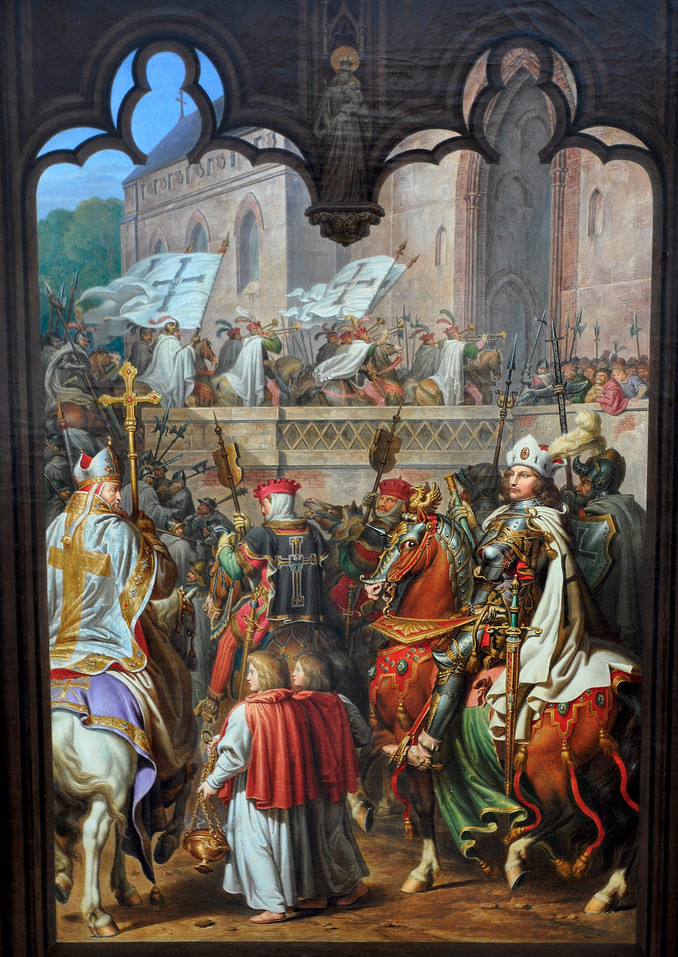
皇帝腓特烈二世頒《里米尼金璽詔書》授權條頓騎士團征服普魯士異教民族並永久領有。開啟德意志「東進運動」(Drang nach Osten),奠定普魯士地理基礎。
Emperor Frederick II issued the Golden Bull of Rimini, authorizing the Teutonic Knights to conquer and permanently hold pagan Prussia. The 'Drang nach Osten' eastward colonization established Prussia's geographical base.
Lübeck and Hamburg signed a mutual-defense pact to protect trade routes. This grew into a league of 100+ cities dominating North Sea and Baltic trade for three centuries — seedbed of North German civic autonomy and early commercial capitalism.
圖:emperor Frederick II
Original uploader was Pastorius at cs.wikipedia · Public domain · Wikimedia CommonsImage: emperor Frederick II
Original uploader was Pastorius at cs.wikipedia · Public domain · Wikimedia Commons
Emperor Charles IV issued the Golden Bull, fixing seven Prince-Electors (three archbishops, four lay princes) to elect the emperor. It served as the empire's constitutional basis until 1806.
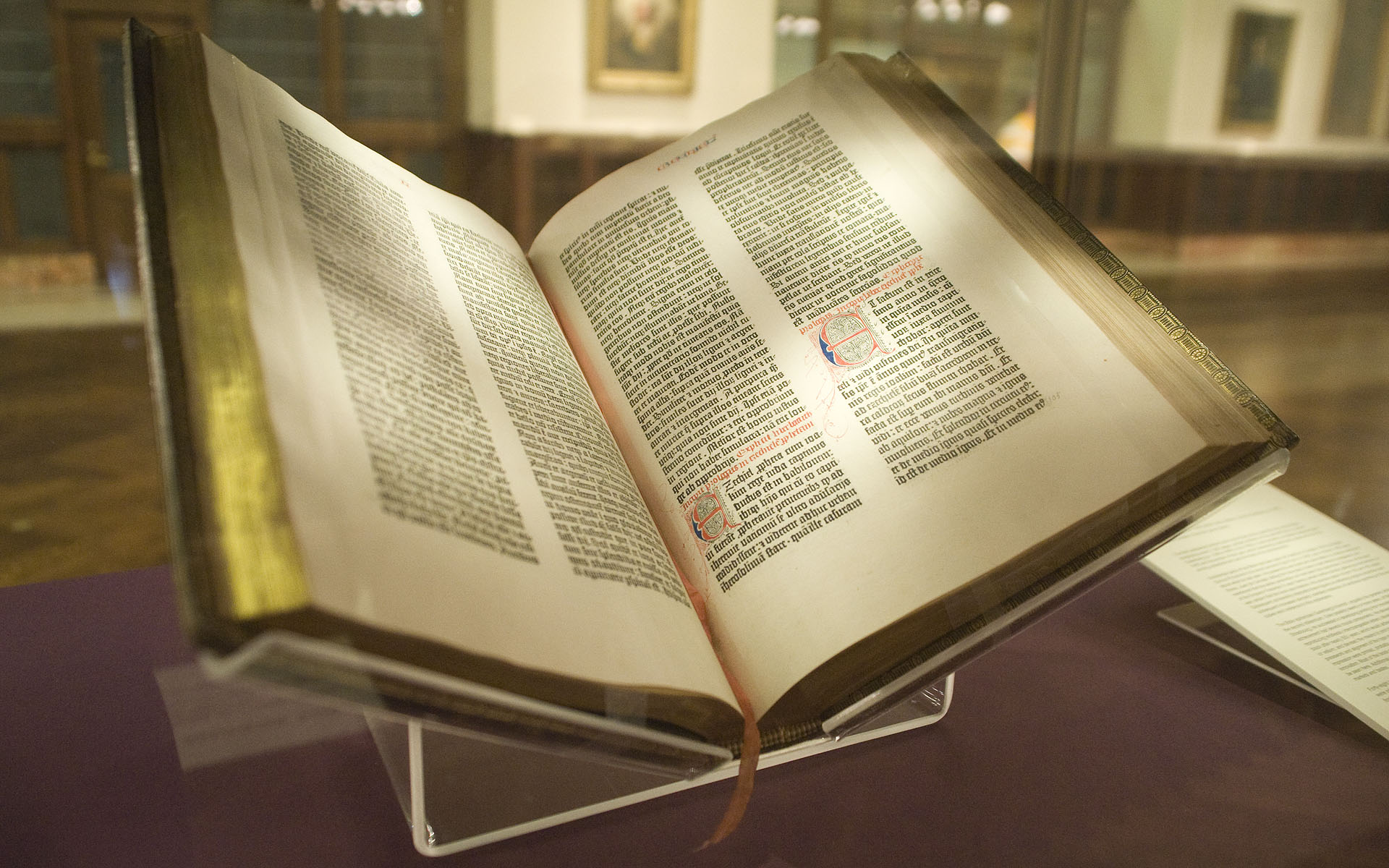
Around 1440, Gutenberg invented movable type; the 1455 Gutenberg Bible marked collapsing info costs, igniting the Reformation and Scientific Revolution.
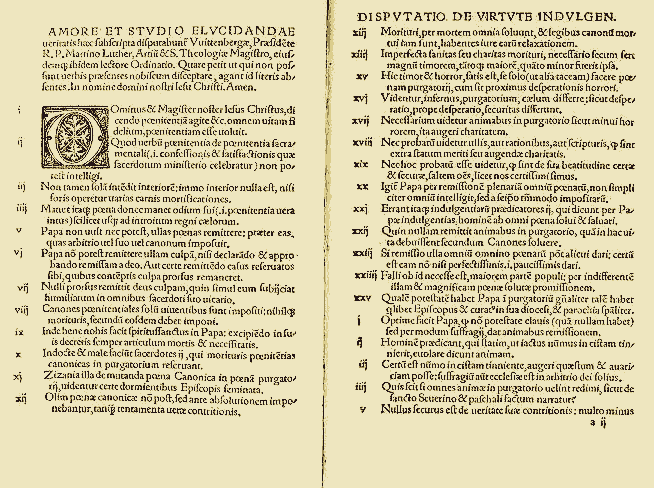
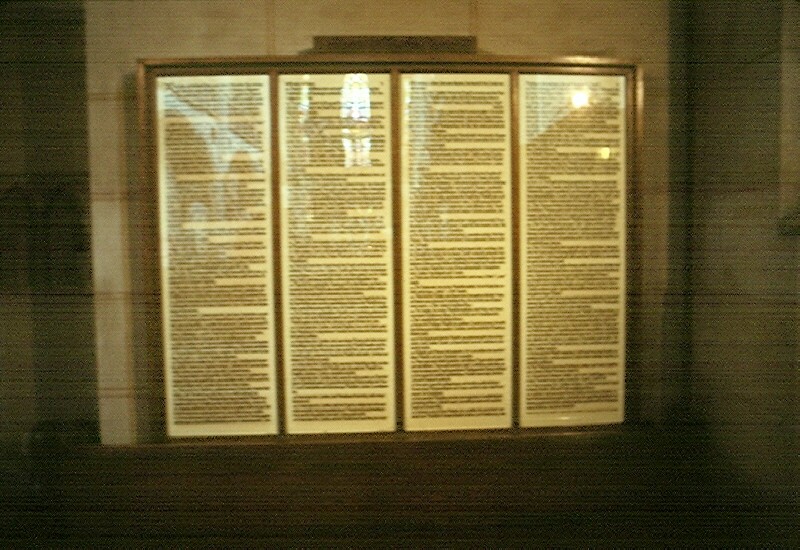
On October 31, Wittenberg theology professor Martin Luther posted his 95 Theses on the castle church door, attacking indulgences. The printing press spread it across Germany — igniting the Reformation and permanently splitting Western Christianity.
圖:Sansculotte at German Wikipedia
Later versions were uploaded by TMA-1, Wombat a · CC BY-SA 3.0 · Wikimedia CommonsImage: Sansculotte at German Wikipedia
Later versions were uploaded by TMA-1, Wombat a · CC BY-SA 3.0 · Wikimedia Commons
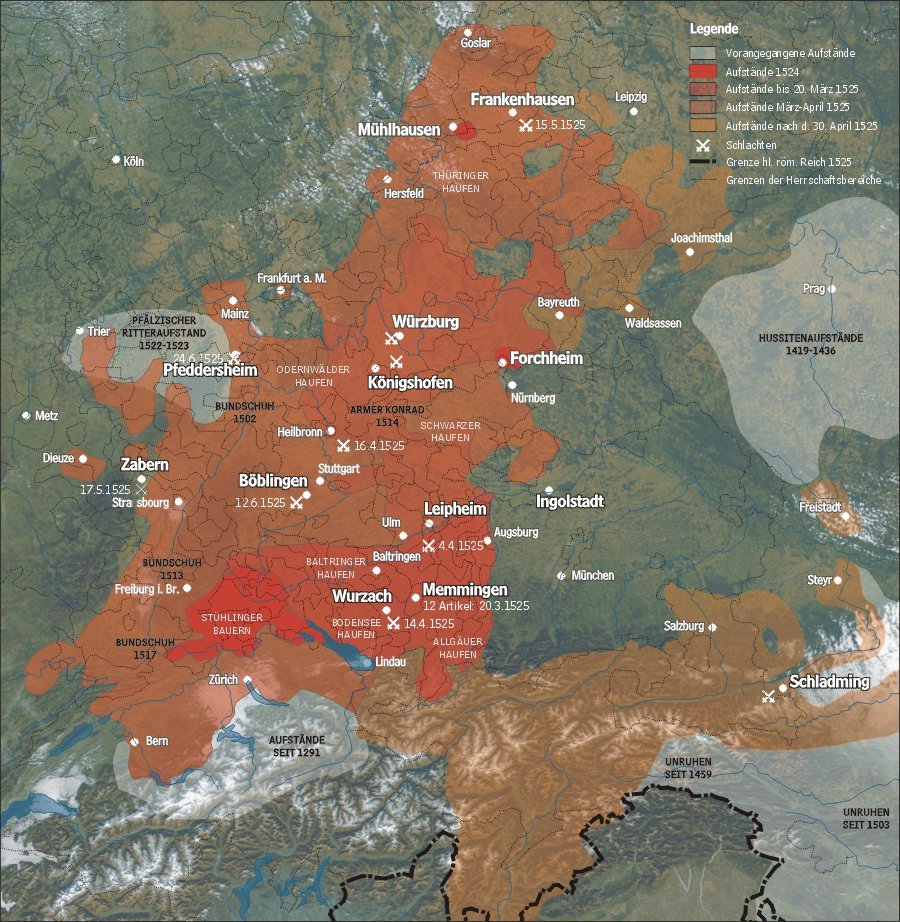
Inspired by Reformation ideas, peasants across southern and central Germany rose in 1524-1525, demanding abolition of serfdom in the 'Twelve Articles.' Luther denounced them; princely armies crushed the revolt — over 100,000 killed, Europe's first mass popular uprising of the modern era.
9 月 25 日帝國議會簽訂奧格斯堡和約,確立「教隨國定」(cuius regio, eius religio)原則,各諸侯自選天主教或路德派,臣民須從或遷徙。暫息德意志內戰,但埋下三十年戰爭伏筆。
On September 25, the Imperial Diet signed the Peace of Augsburg, establishing 'cuius regio, eius religio' — each prince chose Catholic or Lutheran, subjects must conform or emigrate. It paused German civil war but set the stage for the Thirty Years War.
Europe's most devastating religious war; Central Europe loses a third of its population; the Peace of Westphalia establishes the modern sovereign state system.
Signed in October, ending the Thirty Years' War. It recognized sovereignty of some 300 German states — effectively dissolving imperial authority. The 'Westphalian system' established the modern sovereign-state principle that still underpins international law.
On January 18, Elector Frederick III of Brandenburg crowned himself 'King in Prussia' Frederick I at Königsberg. Prussia rose from duchy to kingdom — the future nucleus of German unification.
On May 31, Frederick II became King of Prussia; by December he had invaded Austrian Silesia. An enlightened monarch, military genius, flautist, and friend of Voltaire — his 46-year reign made Prussia a European great power.
From 1756-1763 Frederick launched a preemptive strike on Saxony, facing Austria, France, Russia, and Sweden. On the brink of collapse, Russia's new Tsar Peter III withdrew — the 'Miracle of Brandenburg' — and Prussia kept Silesia while gaining European stature.
On August 6, under Napoleon's pressure, Emperor Francis II abdicated — ending a thousand-year empire. Napoleon's Confederation of the Rhine replaced it, stirring the first wave of German nationalism.
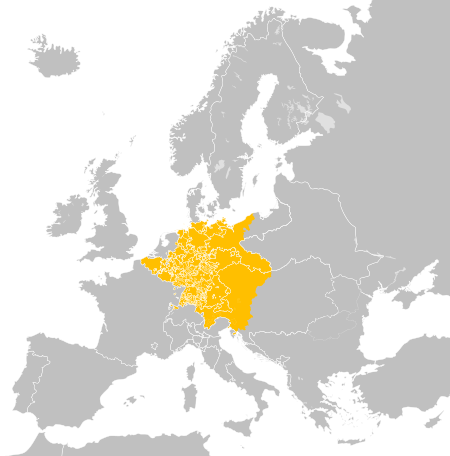
In June, the Congress of Vienna created the German Confederation of 39 states to replace the Holy Roman Empire — Austria chaired, Prussia second. Metternich's conservative order suppressed revolution for three decades.
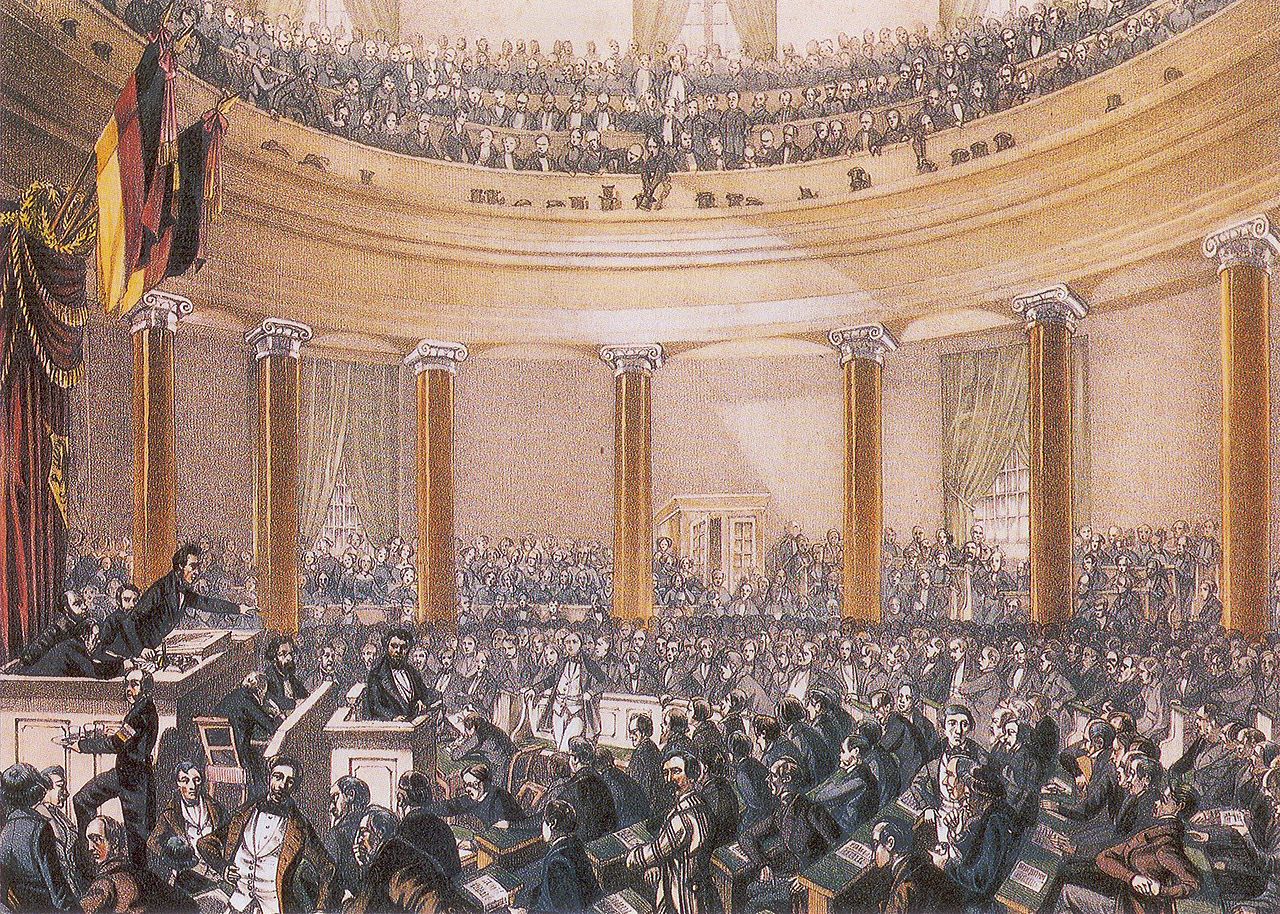
In March, revolutions in Berlin and Vienna shook the Confederation. In May, the first all-German elected National Assembly convened at St. Paul's Church in Frankfurt, drafting a constitution. In 1849 the Prussian king refused the crown — the liberal unification dream failed.
In March, 18-year-old Ludwig II ascended as King of Bavaria. He patronized Wagner's operas and built fairy-tale castles like Neuschwanstein — bankrupting Bavaria. Declared insane in 1886, he drowned mysteriously. His castles remain icons of German culture.
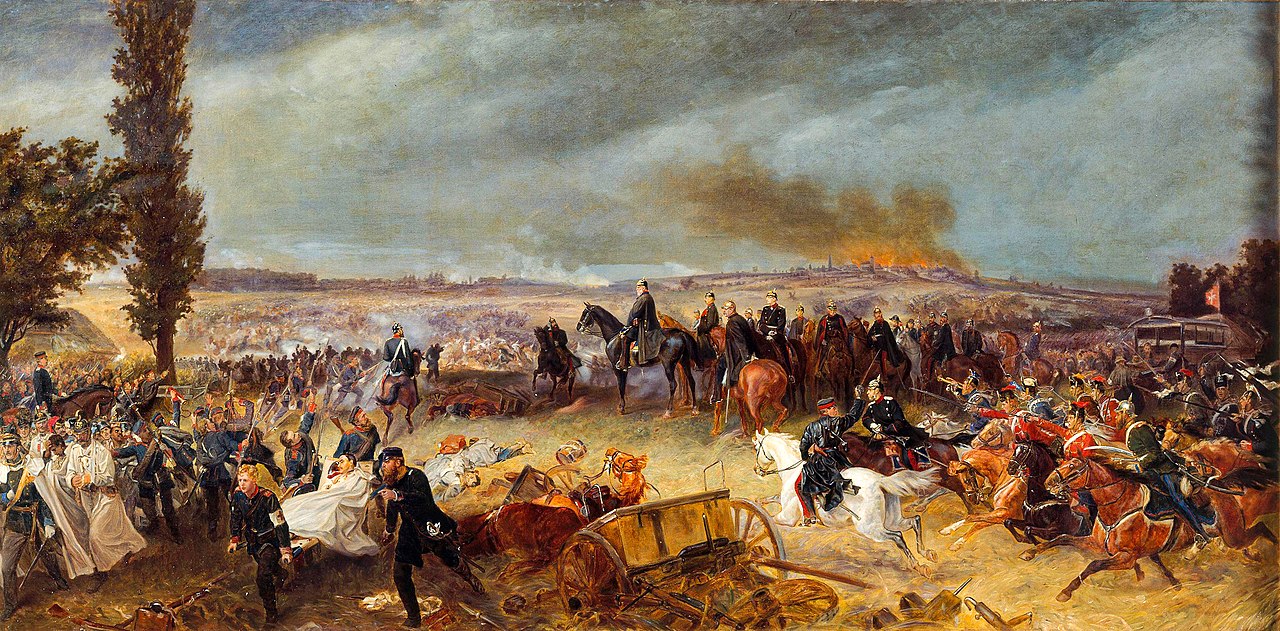
On July 3, Bismarck's Prussia defeated Austria at Königgrätz (Sadowa) in seven weeks using the needle-gun advantage. Austria was excluded from German affairs; Venetia went to Italy; Prussia led the North German Confederation — 'Lesser Germany' path.
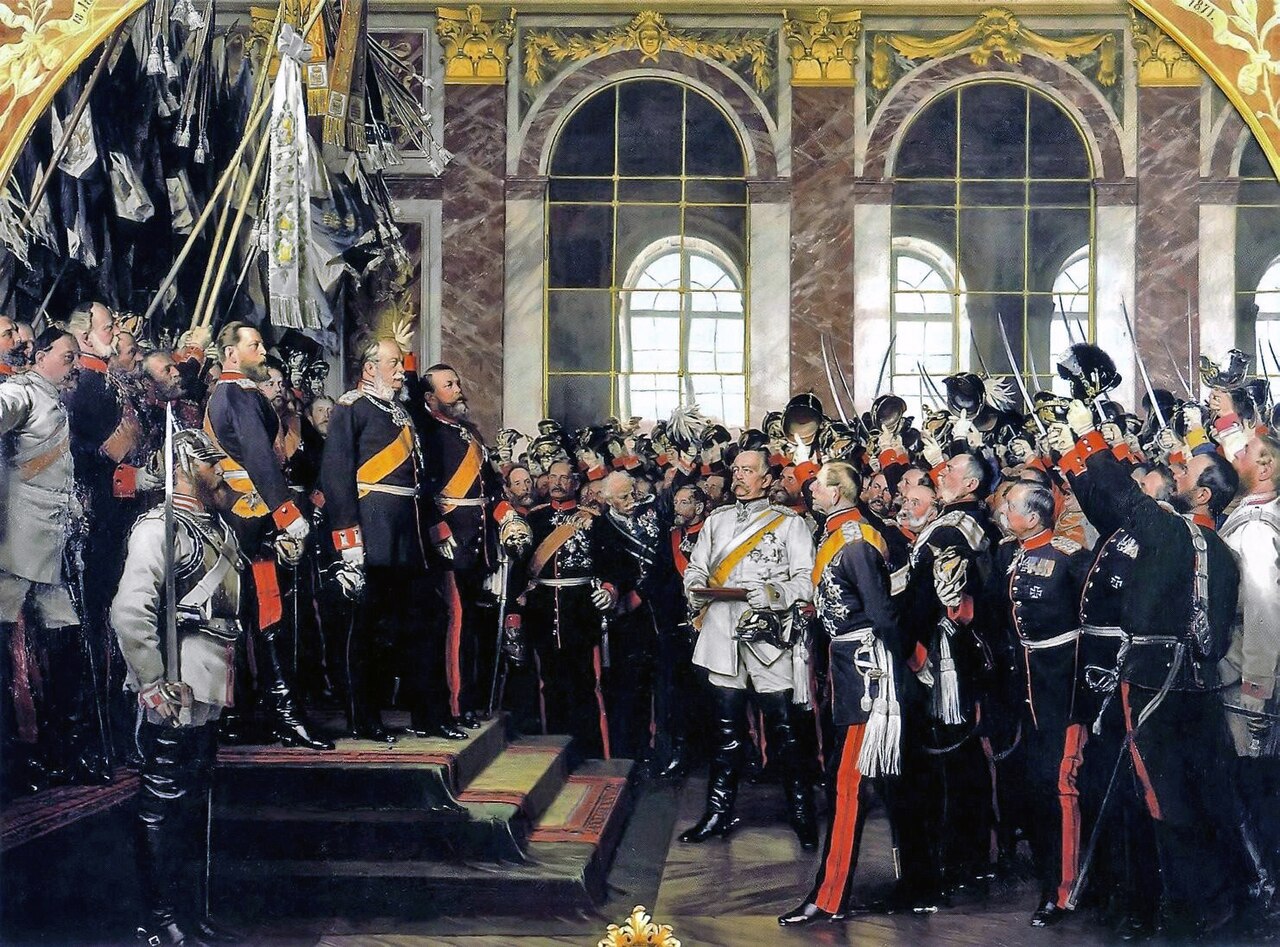
On January 18, after defeating France, King Wilhelm I of Prussia was crowned German Emperor in the Hall of Mirrors at Versailles, with Bismarck as Chancellor. Twenty-five states formed the federal Second Reich.
圖:historicair (French original)
Fluteflute & User:Bibi Saint-Pol (English tran · CC BY-SA 2.5 · Wikimedia CommonsImage: historicair (French original)
Fluteflute & User:Bibi Saint-Pol (English tran · CC BY-SA 2.5 · Wikimedia Commons
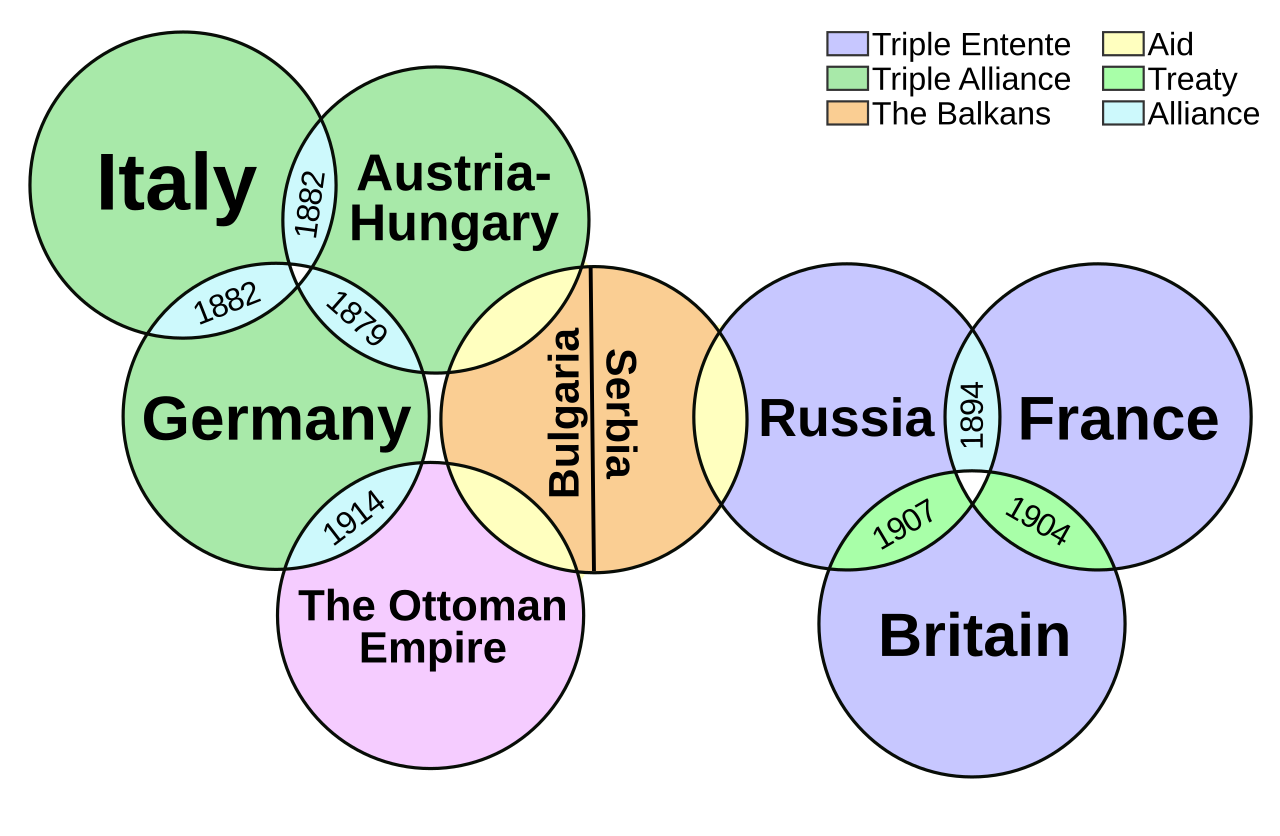
5 月德、奧匈、義大利三國簽訂秘密同盟條約,互保安全、共抗法國與俄國。歐洲兩大陣營分裂的起點。
In May, Germany, Austria-Hungary, and Italy signed a secret alliance for mutual defense against France and Russia — the starting point of Europe's two-bloc division.
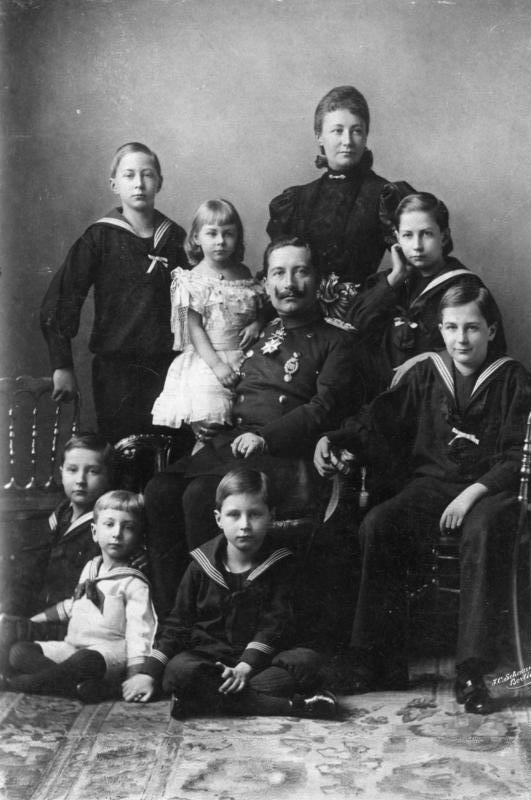
In March, young Kaiser Wilhelm II forced the 75-year-old Bismarck to resign. Germany abandoned Bismarck's Reinsurance Treaty system for an aggressive 'Weltpolitik' — a long fuse toward World War I.
Admiral Tirpitz drove Germany to build a navy rivalling Britain's. The 1898 Fleet Law began the Anglo-German naval race, transforming Anglo-German relations.
In April, Britain and France signed the Entente, resolving colonial disputes (Egypt vs. Morocco) and ending nearly a thousand years of rivalry — turning toward alliance. Germany's isolation deepened.
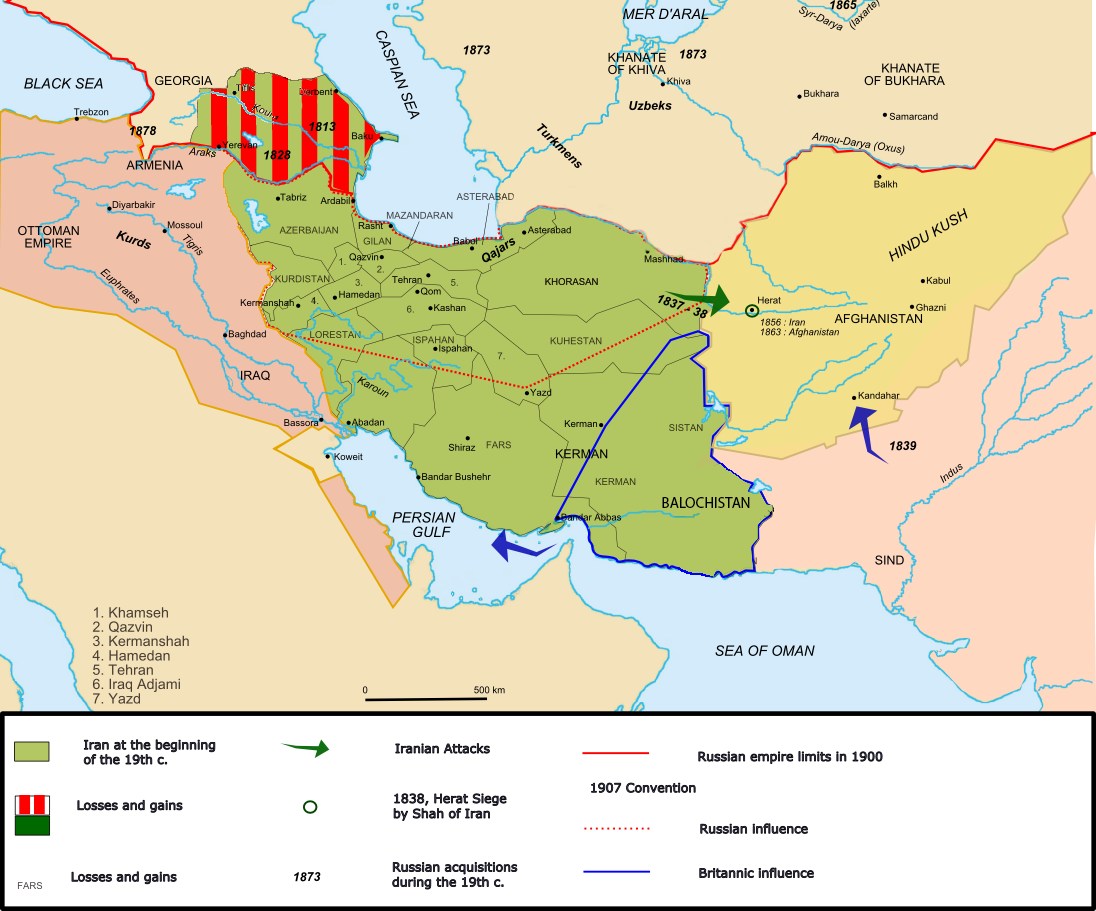
In August, Britain and Russia resolved Central Asian disputes (Persia, Afghanistan, Tibet). Combined with the 1904 Entente Cordiale and 1894 Franco-Russian Alliance, the Triple Entente of Britain, France, and Russia completed the encirclement of the Triple Alliance.
After Austria-Hungary's ultimatum to Serbia in July–August, chain mobilizations followed: Russia mobilized, Germany declared war on Russia and France, Britain joined after Belgium's neutrality was violated. Europe slid into world war.
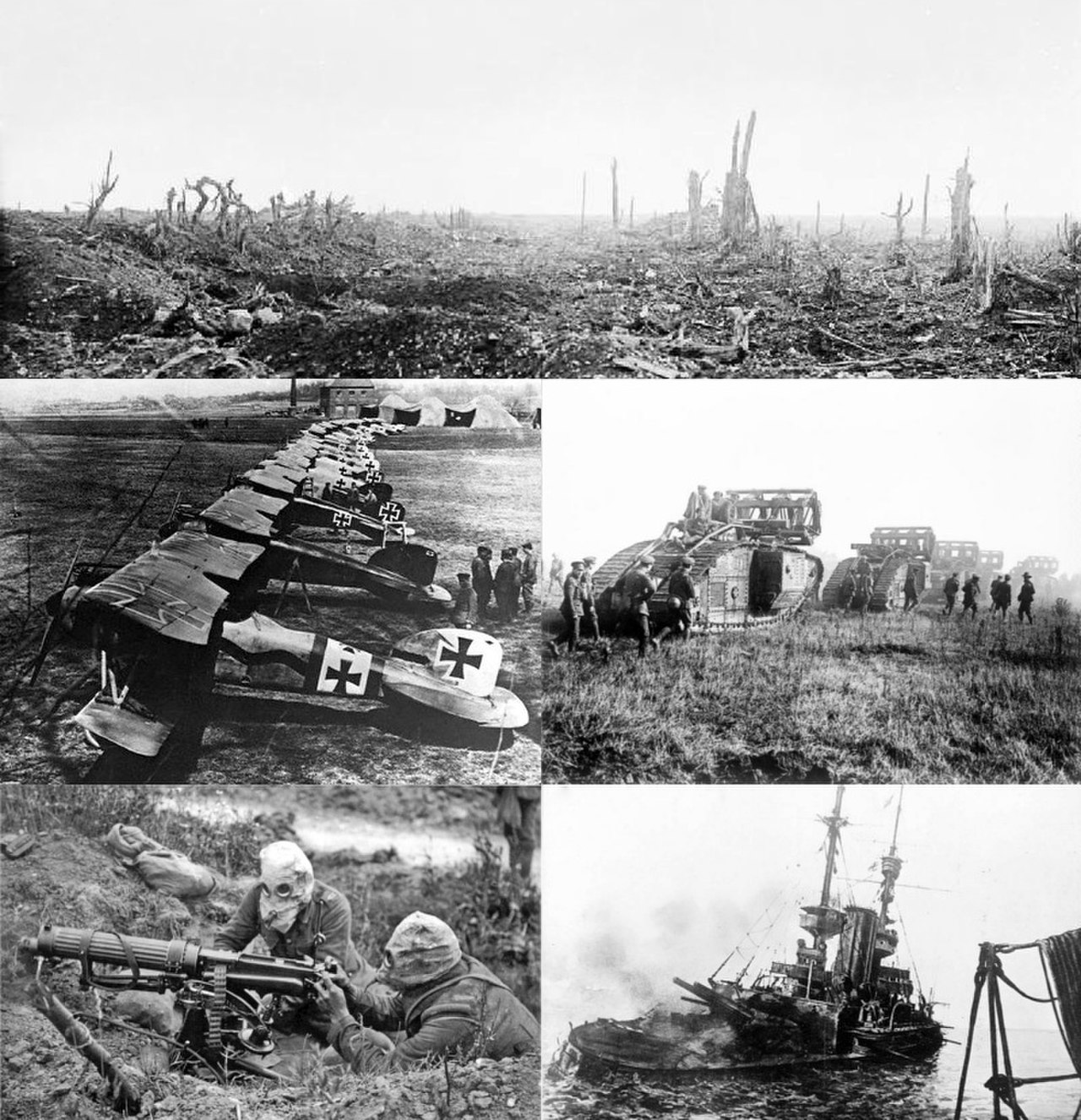
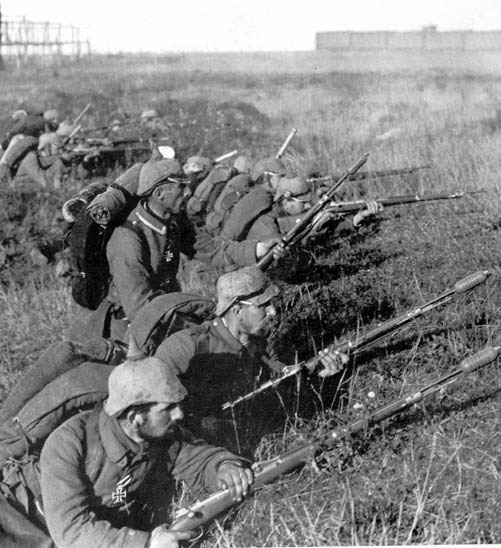
On August 1–4, Germany declared war on Russia and France and invaded neutral Belgium to execute the Schlieffen Plan. Britain entered the war over Belgium's violated neutrality.
圖:Unknown authorUnknown author or not provided · Public domain · Wikimedia CommonsImage: Unknown authorUnknown author or not provided · Public domain · Wikimedia Commons
In January, German Foreign Minister Zimmermann cabled Mexico proposing an alliance — if Germany and the U.S. went to war, Mexico would attack and reclaim Texas et al. British decryption and publication enraged American opinion.
On January 8, President Wilson outlined Fourteen Points in Congress, including self-determination, open diplomacy, and an international organization — the ideological blueprint for the postwar order.
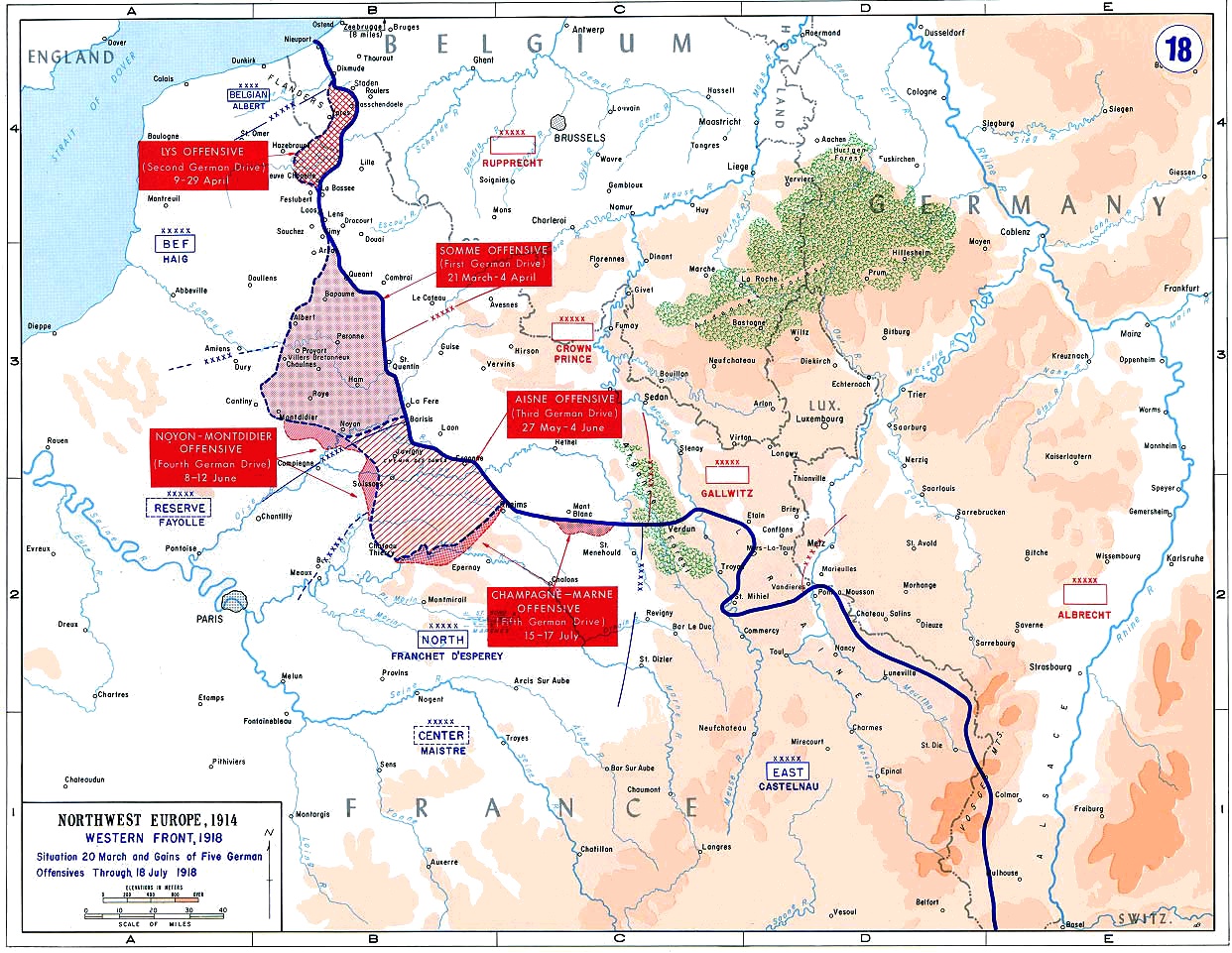
From March to July, Germany gambled everything with troops transferred from the East, advancing 100 km toward Paris. Allied defense and fresh U.S. forces exhausted the Germans, paving the way for the Hundred Days Offensive.
圖:Unknown authorUnknown author or not provided · Public domain · Wikimedia CommonsImage: Unknown authorUnknown author or not provided · Public domain · Wikimedia Commons
11 月初基爾水兵拒絕出擊引爆全德革命,德皇威廉二世退位流亡荷蘭,德意志帝國終結,威瑪共和成立。
In early November, the Kiel sailors' refusal to sortie sparked a nationwide revolution. Kaiser Wilhelm II abdicated and fled to the Netherlands; the German Empire fell and the Weimar Republic was born.
On August 11, the Weimar constituent assembly adopted the Weimar Constitution, founding Germany's first republic — universal suffrage, proportional representation. Battered by Versailles humiliation and economic chaos, it ended in 1933.
In January 1919, representatives of 32 countries gathered in Paris for the peace conference, led by the Big Four (US, UK, France, Italy). Six months of negotiations produced the Treaty of Versailles and other settlements.
圖:David Lloyd George, Woodrow Wilson and Georges Clemenceau · Public domain · Wikimedia CommonsImage: David Lloyd George, Woodrow Wilson and Georges Clemenceau · Public domain · Wikimedia Commons
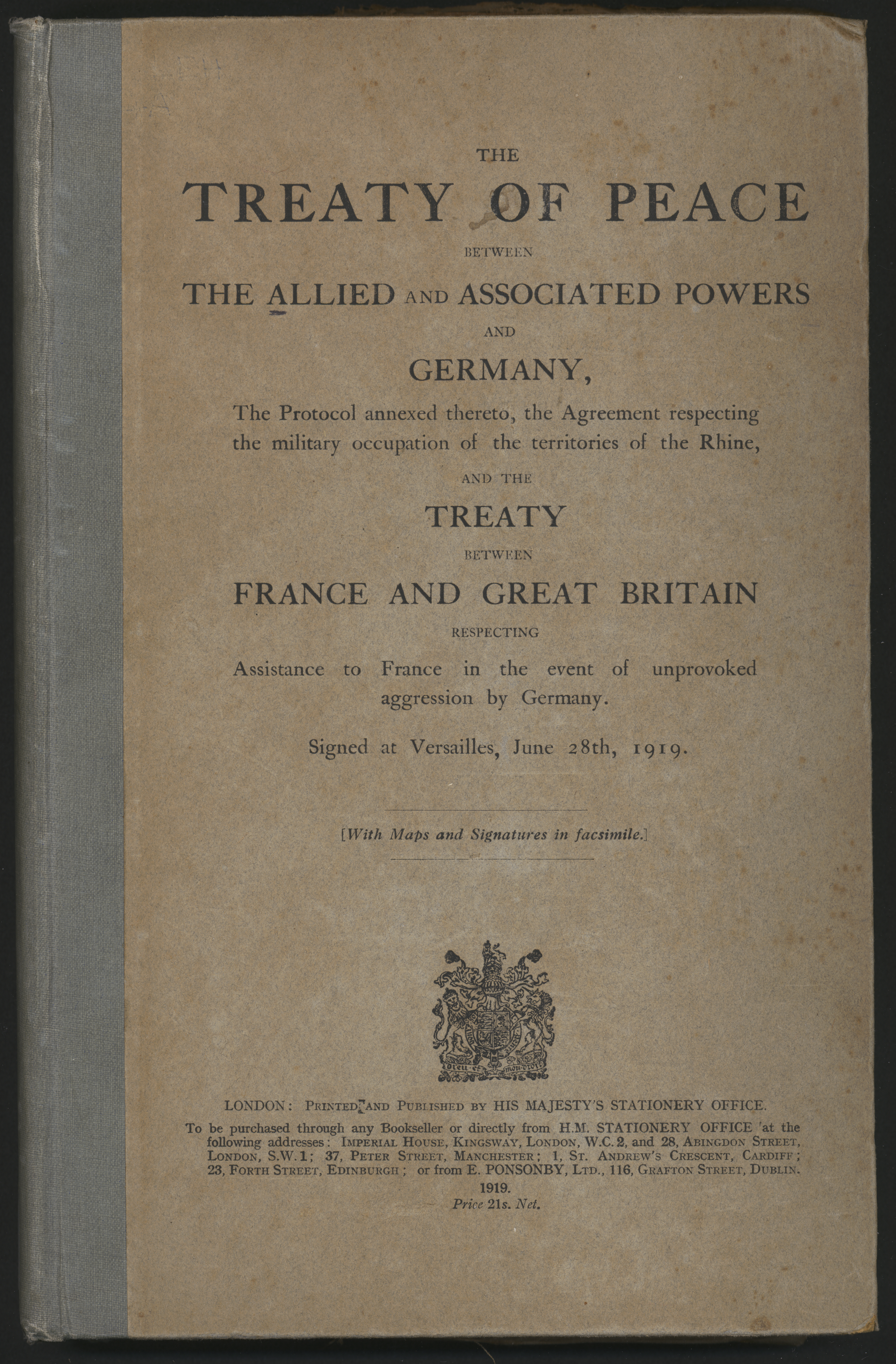
1919/6/28 Sarajevo 刺殺 5 週年,德於 Versailles 鏡廳簽屈辱條約:失 13% 領土、付賠款、限軍;埋二戰禍根。
On Jun 28, 1919 (5 years after Sarajevo), Germany signed the harsh Versailles Treaty in the Hall of Mirrors: 13% territory lost, reparations, army limits—seeding WWII.
圖:Edward N. Jackson (US Army Signal Corps) · Public domain · Wikimedia CommonsImage: Edward N. Jackson (US Army Signal Corps) · Public domain · Wikimedia Commons
Signed June 28 (five years after Sarajevo). Germany lost 13% of its territory and all colonies, its army was capped at 100,000, and it owed 132 billion gold marks in reparations. The humiliation laid seeds for Nazi rise.
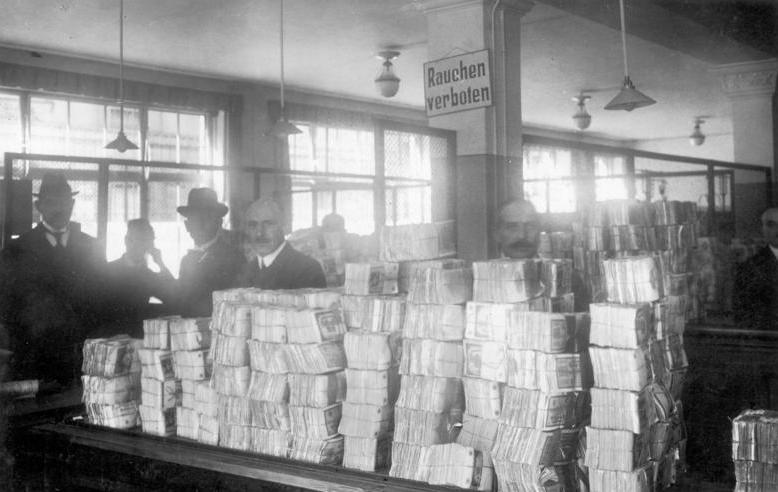
In November 1 US dollar = 4.2 trillion marks — workers paid by wheelbarrow. French-Belgian Ruhr occupation and reparations triggered hyperinflation. Stresemann's Rentenmark (November) stabilized it, but wiped-out middle-class savings seeded political extremism.
On January 30, Hitler was appointed Chancellor of Germany. Using the Reichstag fire as pretext, the Nazis passed the Enabling Act, seizing dictatorial power and ending the Weimar Republic.
In October, Hitler withdrew Germany from the League of Nations and the Disarmament Conference, escaping the Versailles framework — the opening move toward Nazi rearmament.
Nazi Germany used the Berlin Olympics as propaganda. In the same year, Germany signed the Rome–Berlin Axis and the Anti-Comintern Pact with Japan — the Axis alliance was forming.
In March, German troops entered Austria and it was absorbed into the Greater German Reich, legitimized by a 99% plebiscite. Britain and France again stood aside as Hitler expanded unopposed.
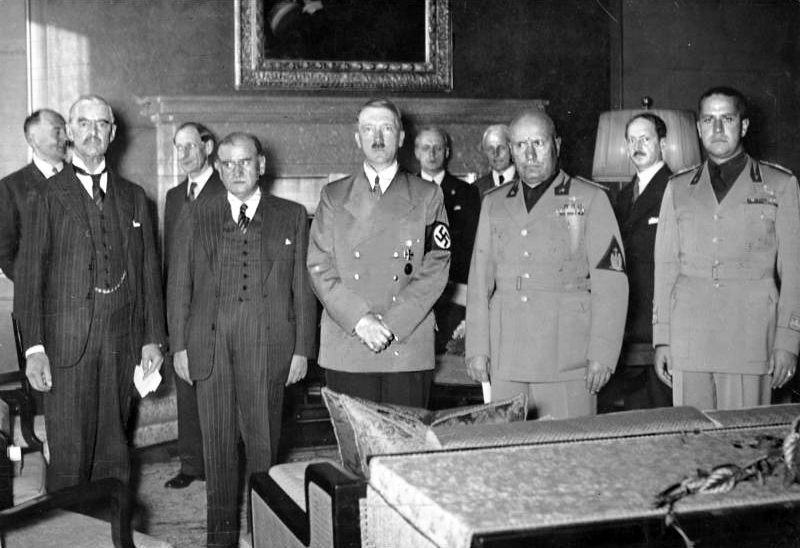
Britain and France allowed Germany to annex Czechoslovakia's Sudetenland. Chamberlain proclaimed 'peace for our time.' Appeasement became synonymous with enabling aggression.
圖:Center for Jewish History, NYC · Public domain · Wikimedia CommonsImage: Center for Jewish History, NYC · Public domain · Wikimedia Commons
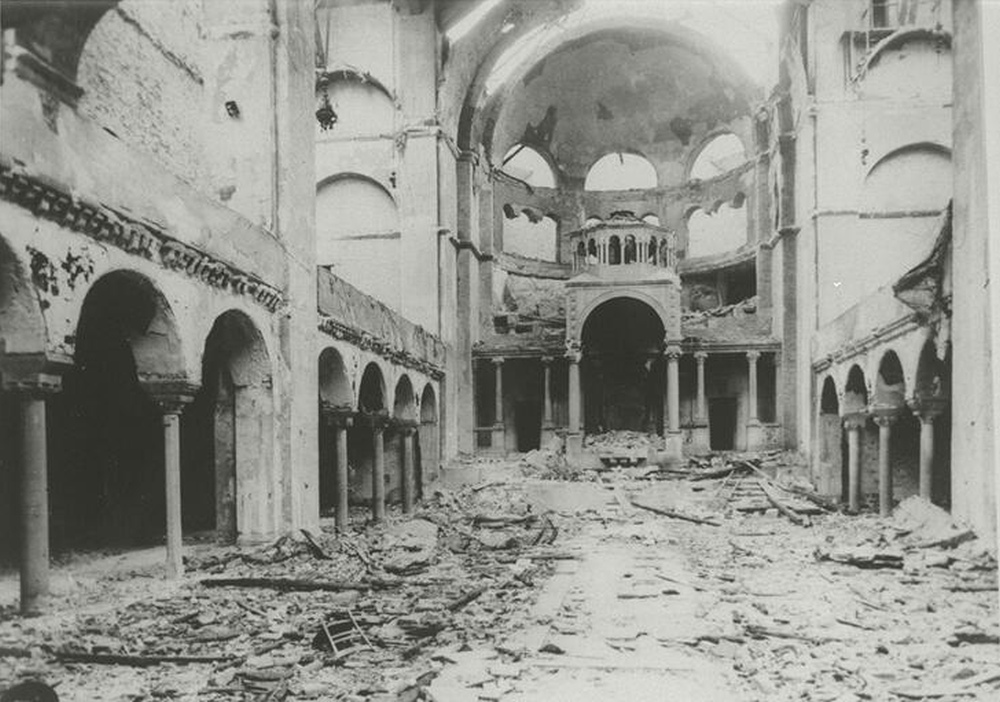
11 月 9 日納粹組織全德反猶暴動,摧毀猶太教堂與商店達 7 千間,是大屠殺升級的分水嶺。
On November 9, Nazis organized nationwide pogroms across Germany, destroying ~7,000 Jewish synagogues and shops. A turning point toward the Holocaust's escalation.
In March, German troops entered Prague and annexed the rest of Czechoslovakia, shredding the Munich Agreement. Britain and France finally recognized the failure of appeasement and issued guarantees to Poland.
Signed August 23, the Nazi–Soviet pact included a secret protocol partitioning Eastern Europe, freeing Hitler from two-front worries. Nine days later, Germany invaded Poland. The pact was later broken by Barbarossa.
On September 1, 1939, Nazi Germany launched a blitzkrieg on Poland; the Soviet Union invaded from the east per the Molotov–Ribbentrop Pact. Britain and France declared war on Germany, beginning WWII in Europe.
圖:By No 5 Army Film & Photographic Unit, Oakes, Harry (Sgt) · Public domain · Wikimedia CommonsImage: By No 5 Army Film & Photographic Unit, Oakes, Harry (Sgt) · Public domain · Wikimedia Commons
From 1942–1945, Nazis systematically murdered about 6 million Jews, with Auschwitz-Birkenau as the largest killing center. Millions more Romani, Soviet POWs, and others were also victims.
On January 20, senior Nazi officials met at a Wannsee villa to coordinate the 'Final Solution to the Jewish Question,' launching the systematic genocide.
圖:Chief Photographer's Mate (CPHoM) Robert F. Sargent · Public domain · Wikimedia CommonsImage: Chief Photographer's Mate (CPHoM) Robert F. Sargent · Public domain · Wikimedia Commons
圖:Yevgeny Khaldei / Adam Cuerden · Public domain · Wikimedia CommonsImage: Yevgeny Khaldei / Adam Cuerden · Public domain · Wikimedia Commons
蘇軍 250 萬兵力攻入柏林,4 月 30 日希特勒在總理府地堡自殺,蘇聯紅旗在國會大廈升起。
Soviet forces with 2.5 million troops stormed Berlin. On April 30, Hitler committed suicide in the Führerbunker; the Soviet flag was raised over the Reichstag.
圖:War Office official photographer, Major W. G. Horton · Public domain · Wikimedia CommonsImage: War Office official photographer, Major W. G. Horton · Public domain · Wikimedia Commons
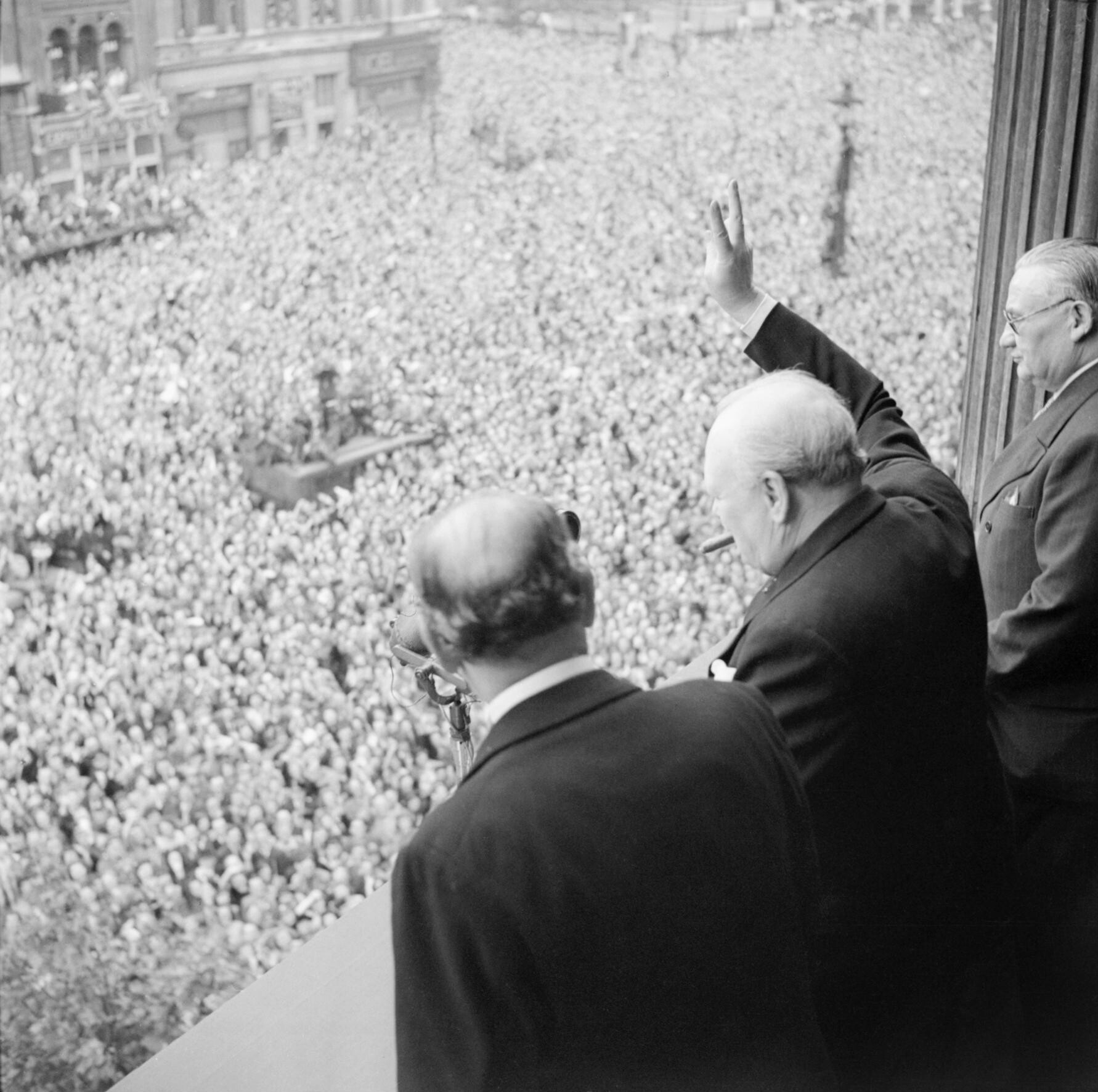
1945/5/8 納粹德國在 Reims 與柏林雙簽無條件投降,歐戰結束,歐洲各大城同日慶祝勝利。
On May 8, 1945, Nazi Germany signed unconditional surrender at Reims and Berlin; Europe erupted in VE-Day celebrations.
圖:Unknown authorUnknown author or not provided · Public domain · Wikimedia CommonsImage: Unknown authorUnknown author or not provided · Public domain · Wikimedia Commons
In July-August, Truman, Churchill (then Attlee), and Stalin met at Potsdam. Germany was divided into four occupation zones (US/UK/FR/USSR), Berlin likewise. Territory east of the Oder-Neisse line was ceded to Poland and the USSR.
Starting 1945–1946, the Allies tried Nazi German and Japanese war criminals in Nuremberg and Tokyo, establishing crimes against humanity and aggression as international law.
In June, Stalin blockaded all land routes to West Berlin, threatening 2.2 million residents. The US-UK airlift flew 270,000 sorties delivering 8,000 tons daily for 11 months until May 1949. The Cold War's first confrontation sealed German division.
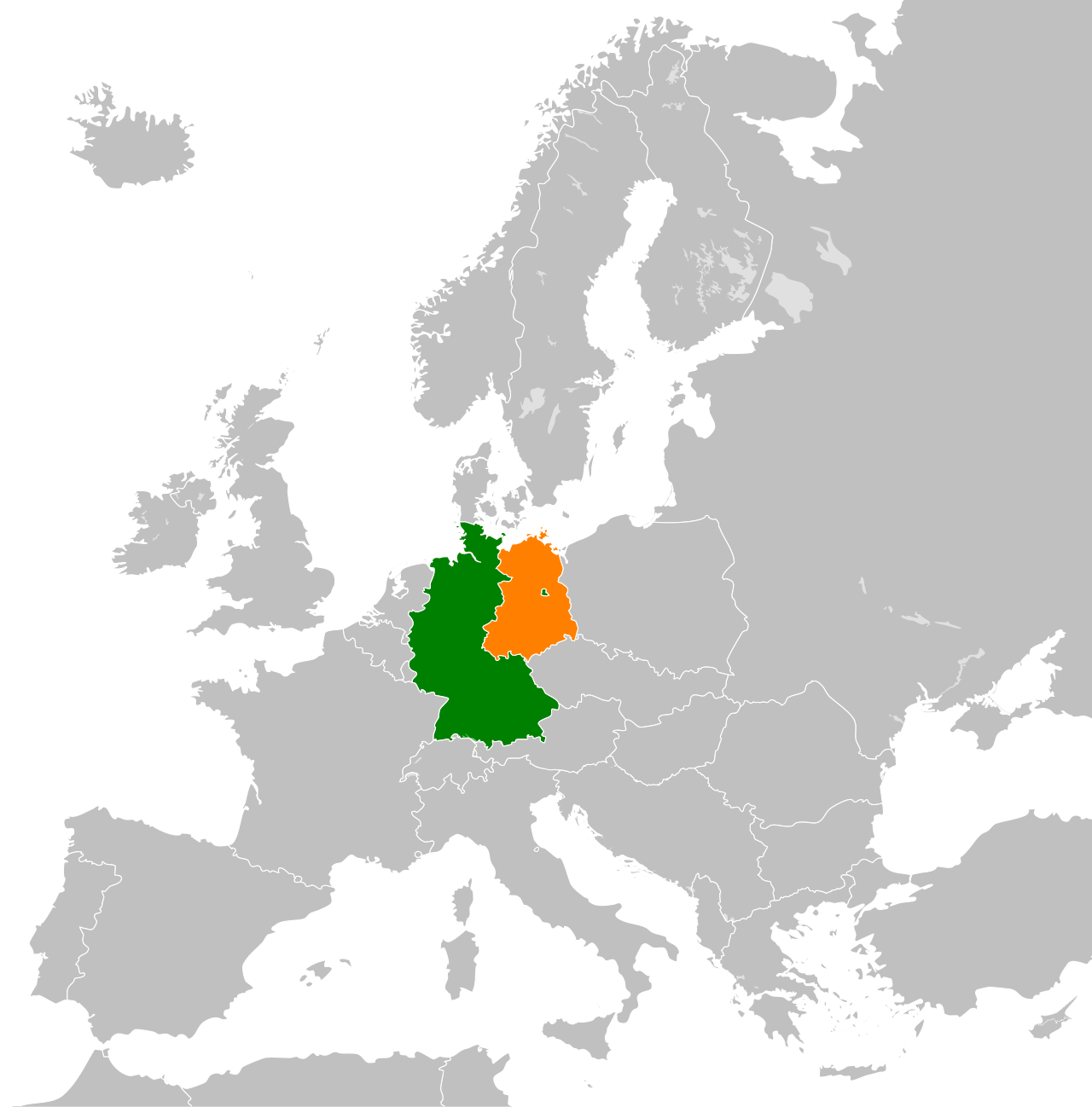
On May 23, the Western zones formed the Federal Republic (FRG) in Bonn with Adenauer as first chancellor; on October 7, the Soviet zone became the German Democratic Republic (GDR) in East Berlin. Germany was formally divided for 41 years.
8 月 13 日東德為阻止人才外流(已逃 350 萬)連夜封鎖東西柏林邊界,建起 155 公里圍牆。甘迺迪 1963 年訪柏林名言「Ich bin ein Berliner」。
On August 13, East Germany sealed the East-West Berlin border overnight to stop the hemorrhage of 3.5 million refugees, building a 155-km wall. Kennedy's 1963 visit yielded the line 'Ich bin ein Berliner.'
On December 7, SPD Chancellor Willy Brandt knelt at the Warsaw Ghetto Uprising Memorial — a symbolic act of atonement embodying West Germany's 'Ostpolitik' reconciliation with Eastern Europe. Brandt won the 1971 Nobel Peace Prize.
On Nov 9, 1989, an East German spokesperson mistakenly announced immediate travel liberalization; crowds rushed the Wall unopposed—the century's defining moment.
On November 9, an East German official mistakenly announced that travel was immediately free. Tens of thousands of East Berliners poured to the border; guards opened it. Crowds tore down the wall — the first domino in Eastern Europe's communist collapse.
On October 3, East Germany's five states joined the Federal Republic under Basic Law Article 23. The capital returned to Berlin. The Two Plus Four Treaty restored full sovereignty, ending 45 years of post-WW2 exceptional status.