人猿分化 Human-Ape Divergence

人類與黑猩猩的共同祖先分道揚鑣,人類演化的真正起點
The common ancestor of humans and chimpanzees diverges, marking the true start of human evolution.
相關主軸:Related axes:新生代生命演化Cenozoic Life Evolution
七百萬年前,一隻猿分開了兩條演化之路。之後的故事是骨頭、火焰、遷徙——以及一個物種如何征服了整個世界。
Seven million years ago, an ape split into two evolutionary paths. What followed was bones, fire, migration—and how one species came to dominate the world.
在互動時間軸上瀏覽 → Open in interactive timeline →人類與黑猩猩的共同祖先分道揚鑣,人類演化的真正起點
The common ancestor of humans and chimpanzees diverges, marking the true start of human evolution.

2001 年在查德發現,距今約 700 萬年。可能是最早的人族成員,但仍有爭議。腦容量與黑猩猩相近,但枕骨大孔位置暗示可能直立行走。
Discovered in Chad in 2001, ~7 million years old. Possibly the earliest hominin, though debated. Brain size similar to chimpanzees, but foramen magnum position suggests possible bipedalism.

2000 年在肯亞發現,距今約 600 萬年。股骨形態顯示可能已雙足行走,但仍生活在樹上。
Discovered in Kenya in 2000, ~6 million years old. Femur morphology suggests possible bipedalism while still arboreal.

1994 年在衣索比亞發現,距今約 440 萬年。能雙足行走也能攀樹。「Ardi」化石比「Lucy」更早 120 萬年,改寫了人類演化理解。
Discovered in Ethiopia in 1994, ~4.4 million years old. Could walk bipedally and climb trees. 'Ardi' predates 'Lucy' by 1.2 million years, reshaping our understanding of human evolution.

南方古猿開始直立行走,解放雙手,為大腦發展和工具使用創造條件。
Australopithecus begins walking upright, freeing the hands for tool use and enabling brain expansion.

最著名的早期人類化石,確認直立行走是人類演化的早期特徵
Most famous early human fossil, confirming bipedal walking as an early human trait.

距今約 280-150 萬年。「能幹的人」,最早被歸入人屬(Homo)的物種。腦容量約 600cc,是第一個製造石器的人族。
~2.8-1.5 million years ago. 'Handy man', the first species classified in genus Homo. Brain ~600cc, first toolmaker.
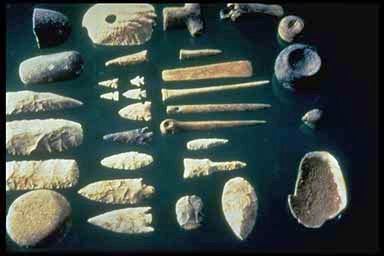
能人製造最早的石器工具(奧杜萬工業),標誌人類技術文明的起點。
Homo habilis creates the earliest stone tools (Oldowan industry), marking the dawn of human technology.
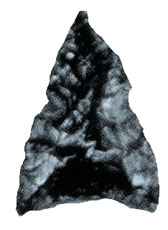
人類使用石器工具的漫長時代,涵蓋舊石器、中石器、新石器三個階段
The long era of human stone tool use, encompassing the Paleolithic, Mesolithic, and Neolithic periods.

直立人是第一個離開非洲擴散到亞洲和歐洲的人種
Homo erectus is the first human species to migrate out of Africa into Asia and Europe.

直立人學會控制和使用火,改變飲食方式,促進大腦發育,並提供保護。
Homo erectus controls fire, transforming diet, promoting brain development, and providing protection.

尼安德塔人和丹尼索瓦人從人類支系分化,後來與智人混血
Neanderthals and Denisovans diverge from the human lineage; they later interbreed with Homo sapiens.

現代智人在非洲演化出現,腦容量1400毫升,語言與抽象思維能力大幅提升。
Modern Homo sapiens evolves in Africa with a 1400ml brain, capable of language and abstract thought.
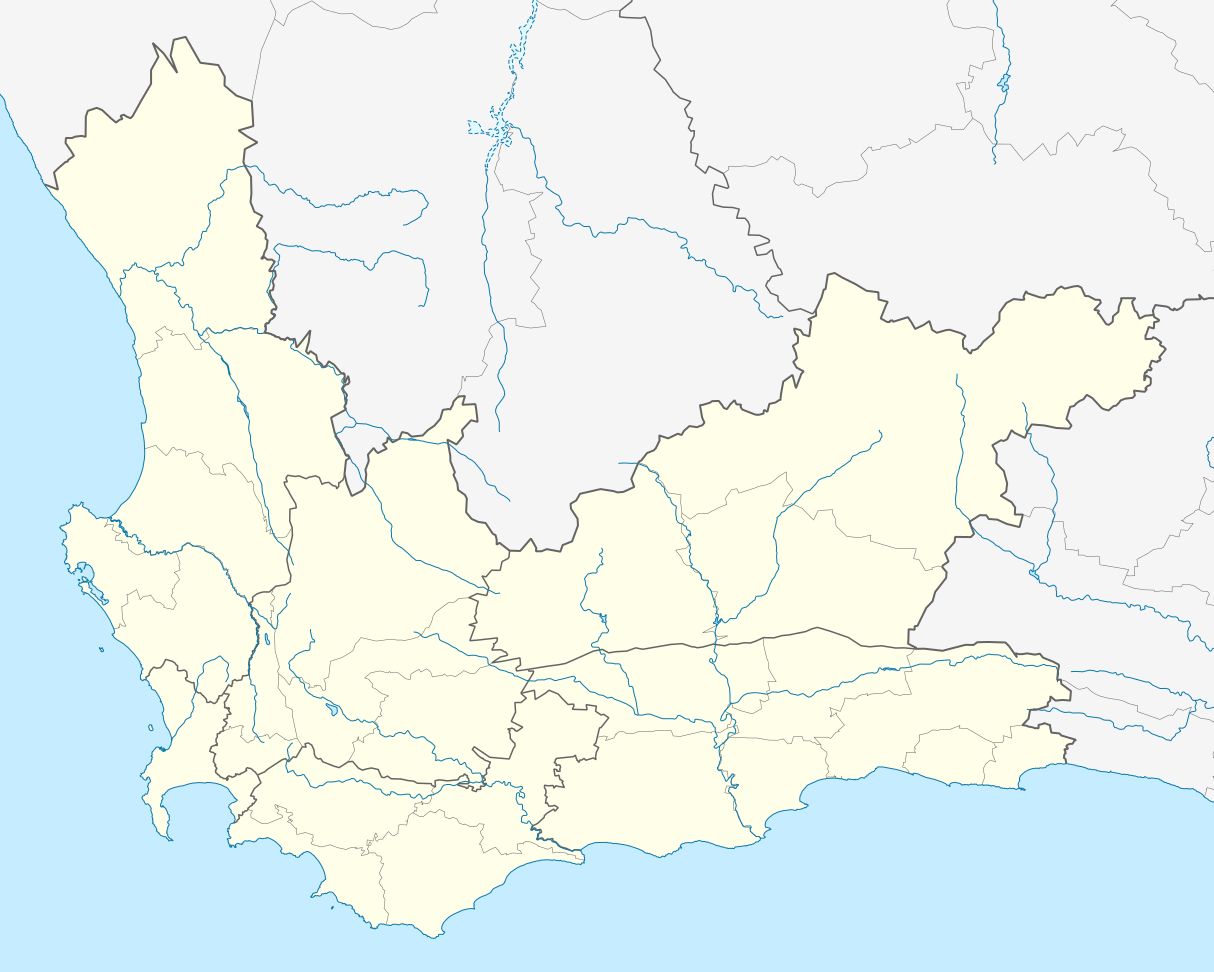
南非洞穴發現人類最早利用海洋資源的證據
Earliest evidence of humans harvesting marine resources found in South African caves.

最早的裝飾品出現,代表人類具備抽象思維與象徵行為
Earliest ornamental beads appear, indicating abstract thinking and symbolic behavior.

人類開始用骨針製作衣物,適應寒冷環境的關鍵技術
Humans begin making clothing with bone needles, a key adaptation for cold environments.

多峇超級火山爆發導致全球降溫,人類瀕臨滅絕,僅存數千人
Toba supervolcano eruption causes global cooling; human population drops to as few as a few thousand.

智人大規模走出非洲,向亞洲、歐洲、澳洲擴散,逐漸取代其他人屬物種。
Homo sapiens migrates out of Africa en masse, spreading to Asia, Europe, and Australia, replacing other hominins.
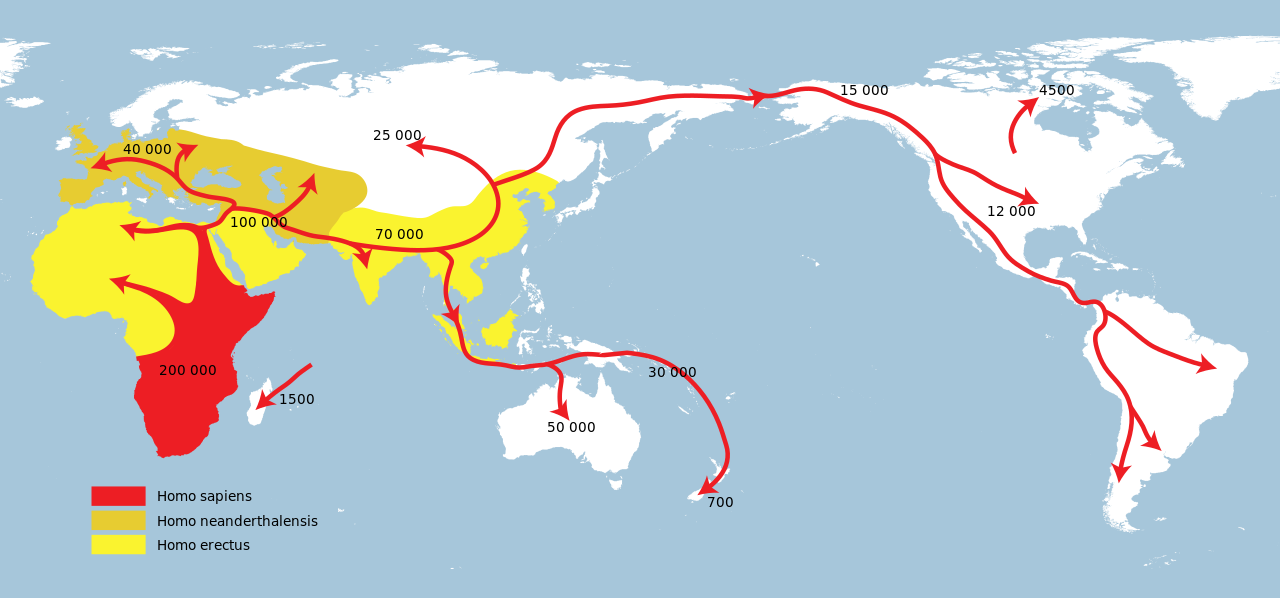
智人走出非洲後多數沿印度洋北岸東進:東非 → 阿拉伯半島 → 南亞 → 東南亞 → 澳洲。氣候溫和、海岸資源豐富、Sunda-Sahul 陸棚裸露使跨海容易,一代可推進 60 公里,因此 6.5 萬年前就抵達澳洲。
After leaving Africa, most Homo sapiens followed the Indian Ocean coast: East Africa → Arabia → South Asia → Southeast Asia → Australia. Mild climate, rich coastal resources, and the exposed Sunda-Sahul shelf enabled ~60 km per generation — reaching Australia by 65,000 years ago.

約 6.5 萬年前智人沿印度洋海岸東進,跨越 Sunda-Sahul 陸棚抵達澳洲,是**南線路線的最遠點**。當時海平面低,只需橫跨少數海峽。
About 65,000 years ago, Homo sapiens moved eastward along the Indian Ocean coast and crossed the Sunda-Sahul shelf to Australia — the farthest point of the **southern coastal route**. Low sea levels meant only short straits to cross.
約 6 萬年前智人自東非越過紅海抵達黎凡特走廊(今以色列、黎巴嫩、敘利亞),為後續擴散至歐亞兩大塊的橋頭堡。
About 60,000 years ago, Homo sapiens crossed the Red Sea from East Africa into the Levant corridor (modern Israel, Lebanon, Syria) — the bridgehead for Eurasian expansion.
約 5 萬年前智人沿印度洋北岸「南線」擴散抵達印度次大陸,是東進東南亞與澳洲的中繼點。
Around 50,000 years ago, Homo sapiens spread along the southern Indian Ocean coastal route into South Asia — the stepping stone to Southeast Asia and Australia.
Emergence of symbolic thought, art, and complex language marks behavioral modernity ~70,000 years ago.

長毛象、劍齒虎、大地懶等巨型動物在人類擴散後相繼滅絕。
Mammoths, saber-toothed cats, giant sloths went extinct as humans spread globally.
另一支人類向北進入中亞草原與西伯利亞,要跨越沙漠、高山、冰凍苔原。得先發展縫紉、毛皮衣、火塘、獸骨建材等禦寒技術才能突破,因此北線抵達中亞比南線抵達澳洲晚約 2 萬年,卻為日後跨白令陸橋進入美洲奠定基礎。
Another branch moved north into Central Asian steppes and Siberian tundra, crossing deserts, mountains, and frozen tundra. Tailored fur clothing, needles, hearth-based dwellings, and bone construction were required first. The northern route reached Central Asia ~20,000 years later than the southern reached Australia — but laid the groundwork for crossing Beringia to the Americas.
Modern humans arrive in Europe ~45,000 years ago, coexisting briefly with Neanderthals.

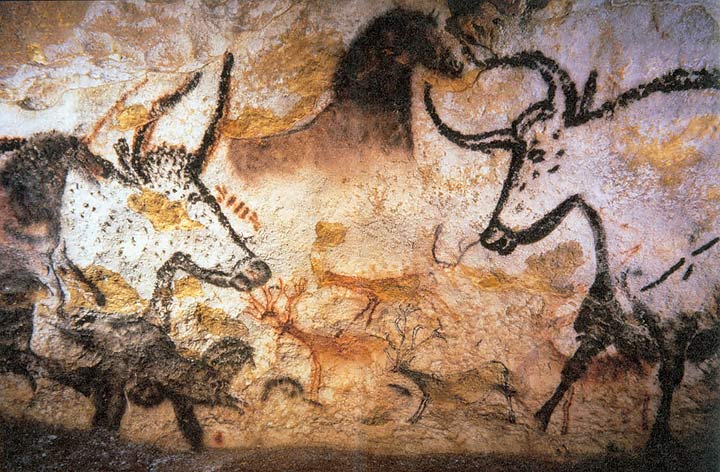
人類開始創作洞穴壁畫(如法國拉斯科),展現抽象思維和藝術表達能力。
Humans create cave paintings (e.g. Lascaux, France), demonstrating abstract thinking and artistic expression.

Humans settle across Southeast Asia ~40,000 years ago via island-hopping routes.

Last Neanderthals disappear ~40,000 years ago as Homo sapiens spreads across Europe.

約公元前 32,000 年法國 Chauvet 洞穴壁畫,人類已知最早具象藝術;200 獅 / 犀 / 馬圖像精湛。
Around 32,000 BC, Chauvet Cave in France holds humanity's earliest known figurative art—200 skilled images of lions, rhinos, horses.
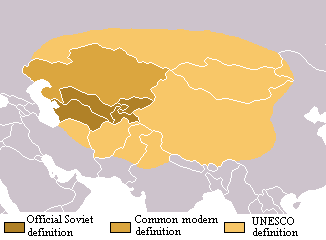
約 3 萬年前智人進入中亞草原與西伯利亞凍原,必須先發展縫紉、獸皮衣、骨針等禦寒技術才能突破寒帶,是**北線路線的關鍵突破**,比南線晚約 2 萬年。
About 30,000 years ago, Homo sapiens entered the Central Asian steppes and Siberian tundra. They had to develop needles, tailored hide clothing, and cold-adaptation technologies first — the **key breakthrough of the northern route**, achieved about 20,000 years after the southern route.

中國江西仙人洞出土世界最早的陶器碎片
World's earliest pottery fragments found in Xianrendong Cave, Jiangxi, China.

Humans cross the Bering land bridge into the Americas ~20,000 years ago during the ice age.
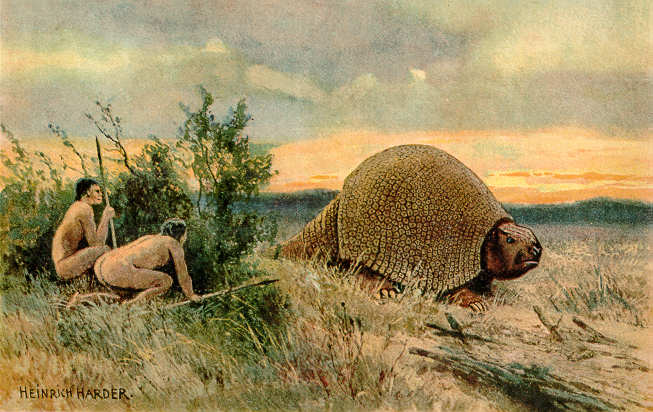
Humans spread through South America ~15,000 years ago, reaching Patagonia.

狼被馴化為狗,人類與動物合作的開始
Wolves domesticated into dogs, beginning the human-animal partnership.

約 13000 年前北美出現 Clovis 石器文化,特徵是槽狀矛頭,獵捕猛獁象等大型動物。長期被認為是北美最早文化,近年發現更早的前 Clovis 遺址。
Around 13,000 years ago, the Clovis culture appeared in North America, marked by fluted spear points used to hunt mammoths. Long considered the earliest, though pre-Clovis sites have recently been found.

從狩獵採集到農業定居的過渡時期
Transitional period between hunter-gathering and agricultural settlement.

冰河期結束後約 1 萬年前,近東新月沃土馴化小麥、大麥與山羊綿羊,人類從狩獵採集轉向定居農業,改變遷徙模式。
Around 10,000 years ago, after the Ice Age, the Fertile Crescent domesticated wheat, barley, goats, and sheep. Humanity shifted from hunter-gathering to settled agriculture, changing migration patterns.
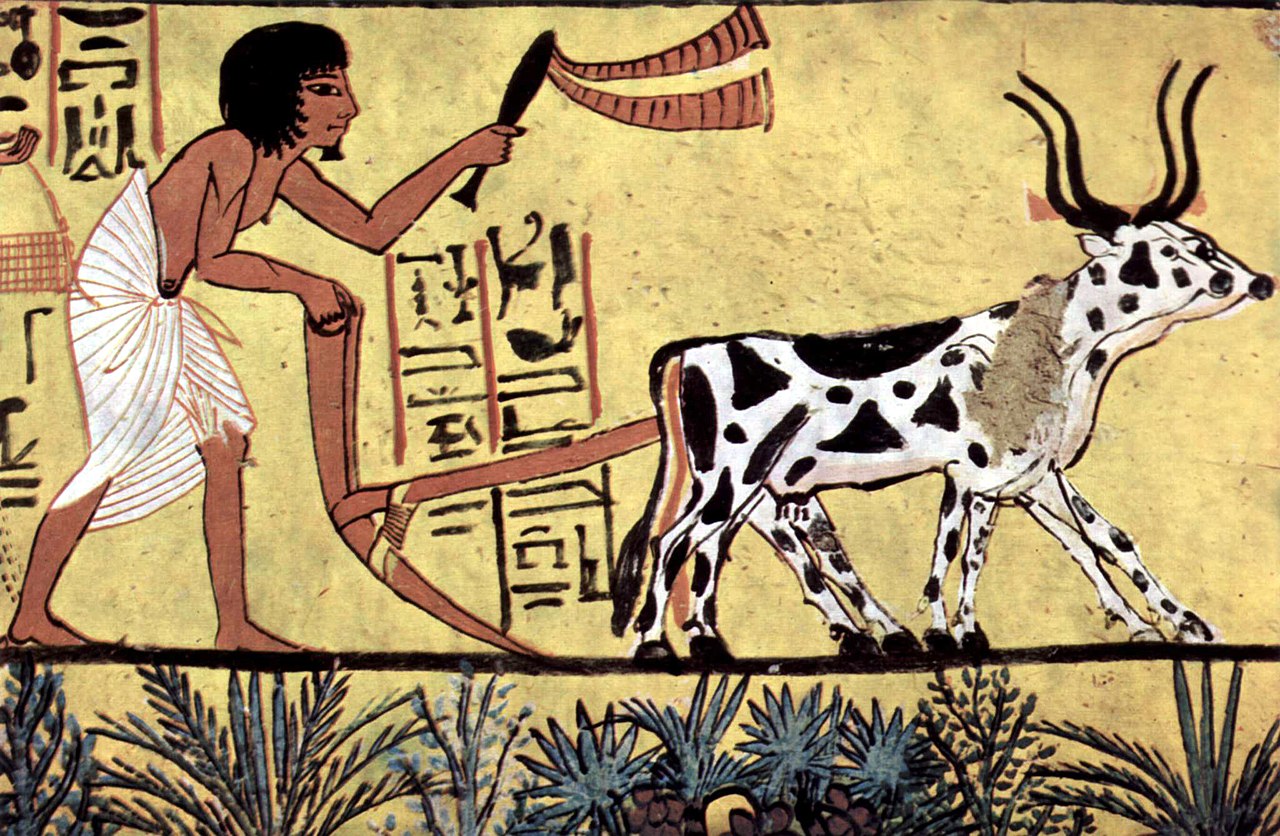
Transition from hunter-gathering to farming ~10,000 BC transforms human societies permanently.

Earliest urban centers like Eridu and Uruk emerge in Mesopotamia ~5,000 BC.

磨製石器、農業與定居生活開始的時代
Era of polished stone tools, agriculture, and settled communities.

語言學證據指台灣為南島語族發源地,向南擴散至太平洋。
Linguistic evidence suggests Taiwan as the origin point of Austronesian dispersal across the Pacific.

約前 3500 年烏克蘭-俄羅斯南部草原的顏那亞文化馴化馬匹、發明輪車,向歐洲、中亞、印度三面擴散,是印歐語系的起源。
Around 3500 BC, the Yamnaya culture of the Pontic-Caspian steppe domesticated horses and invented wheeled vehicles, spreading into Europe, Central Asia, and India — the origin of the Indo-European languages.

Cuneiform in Sumer and hieroglyphics in Egypt mark the birth of written records ~3,200 BC.
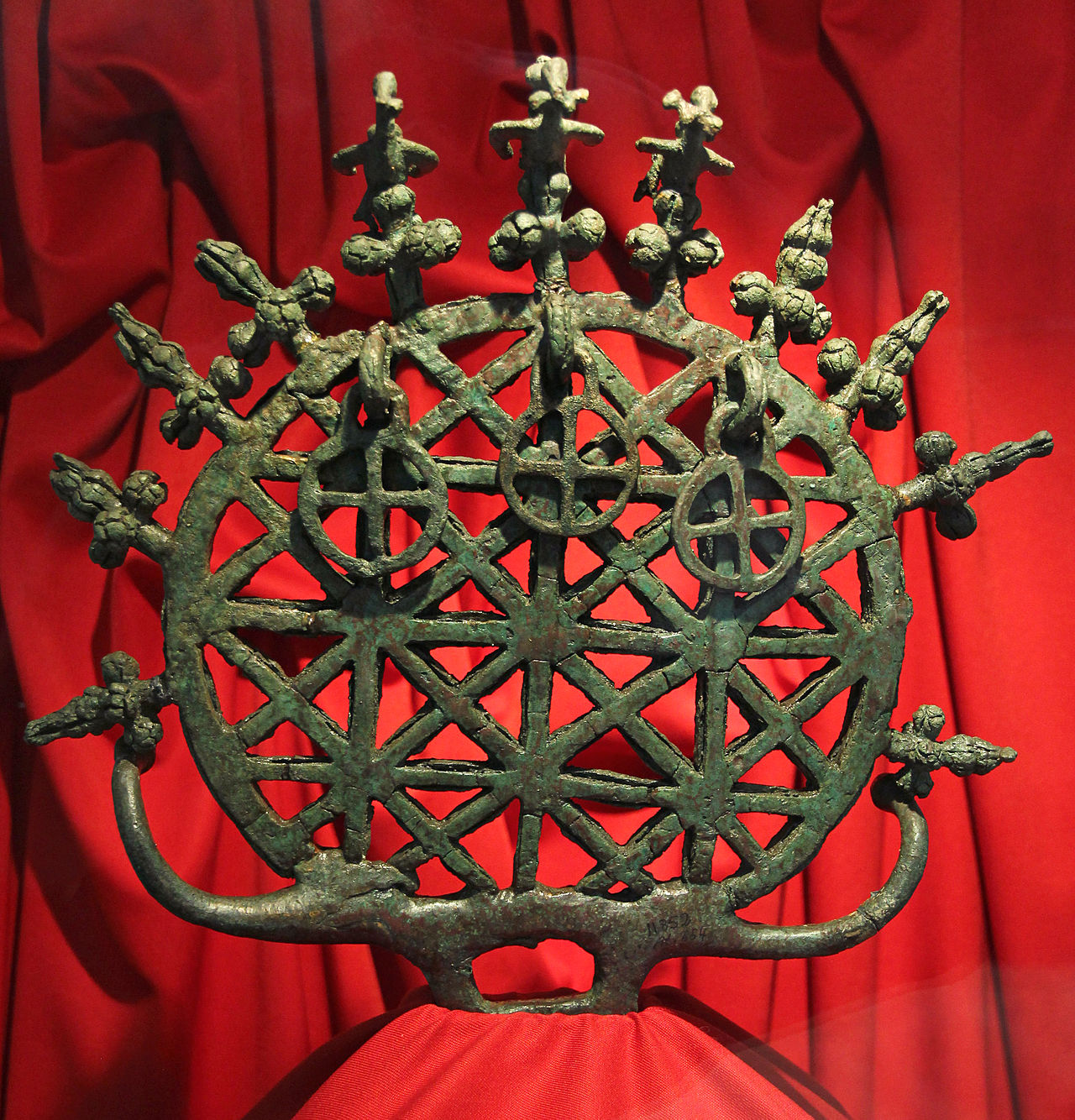
人類開始冶煉青銅,最早的文明與文字出現
Humans begin smelting bronze; earliest civilizations and writing systems emerge.
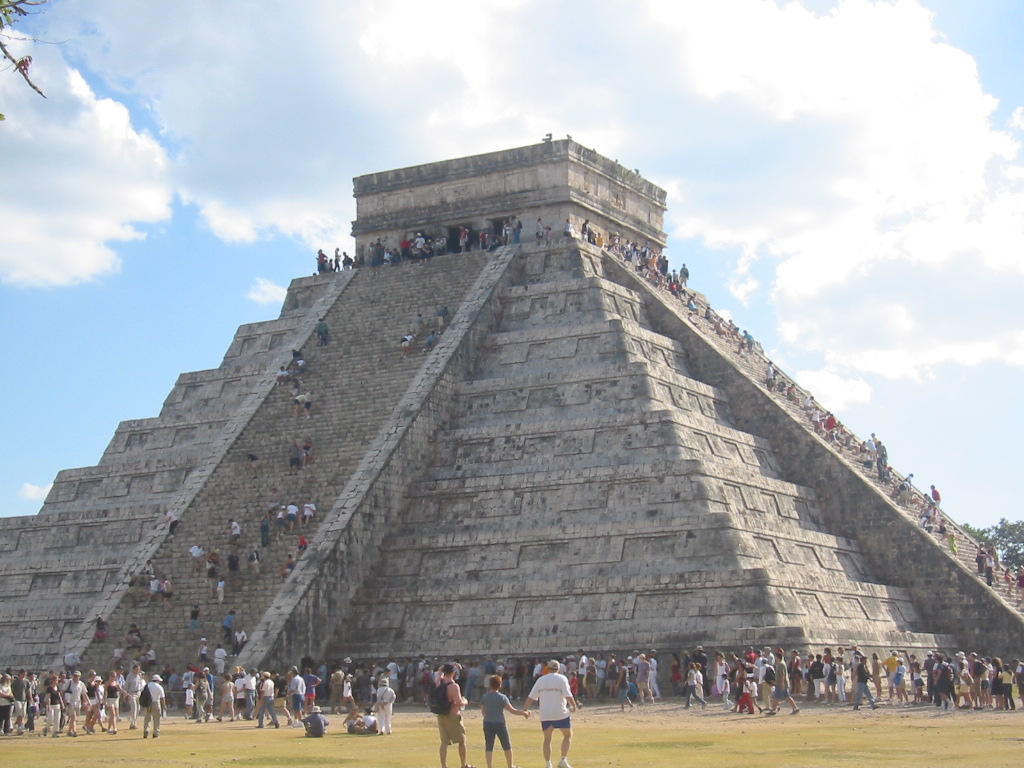
中美洲最重要的古代文明,發展出精密曆法、象形文字、天文學,建造壯觀的石造城市。
The most significant ancient Mesoamerican civilization, developing precise calendars, hieroglyphics, astronomy, and spectacular stone cities.

希臘青銅時代最重要的文明,特洛伊戰爭的歷史背景,後因「海上民族」入侵而崩潰,進入希臘黑暗時代。
The dominant Greek Bronze Age civilization; the historical context of the Trojan War; collapsed due to the Sea Peoples invasion, leading to the Greek Dark Ages.

鐵器取代青銅,帝國與古典文明興起
Iron replaces bronze; empires and classical civilizations arise.
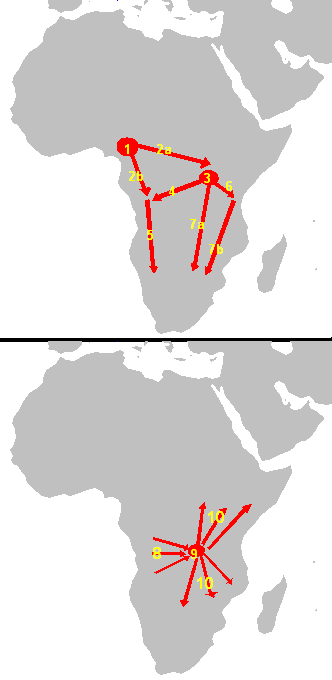
約前 1000 年起,班圖語族群自西非喀麥隆一帶向東、向南擴散橫跨撒哈拉以南非洲,帶動農業與鐵器技術傳播。今日非洲 3 億人使用班圖語。
From around 1000 BC, Bantu-speaking peoples expanded south and east from today's Cameroon across sub-Saharan Africa, spreading agriculture and ironworking. Over 300 million Africans now speak Bantu languages.
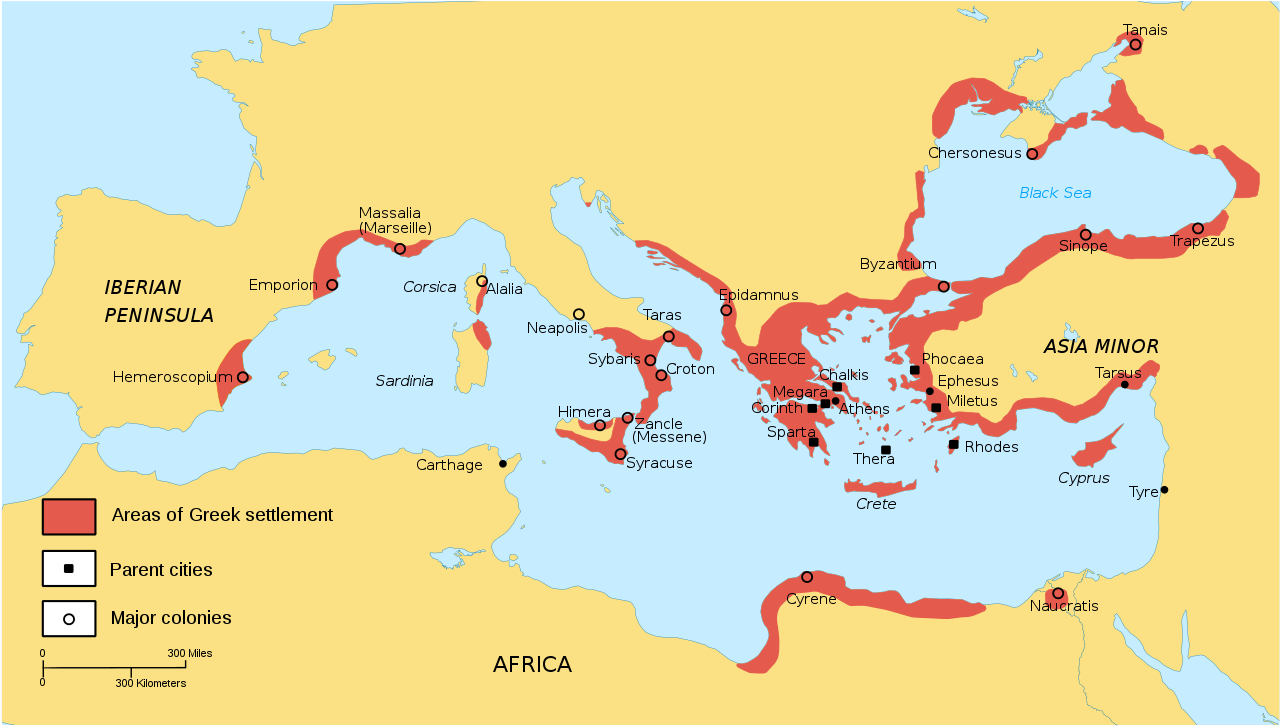
前 8-前 6 世紀希臘城邦因人口壓力向西地中海、黑海殖民,建立馬賽、拿坡里、敘拉古、拜占庭等城市,希臘文明擴散全地中海。
From the 8th to 6th centuries BC, Greek city-states founded colonies around the western Mediterranean and Black Sea (Marseille, Naples, Syracuse, Byzantium), spreading Greek civilization across the Mediterranean.
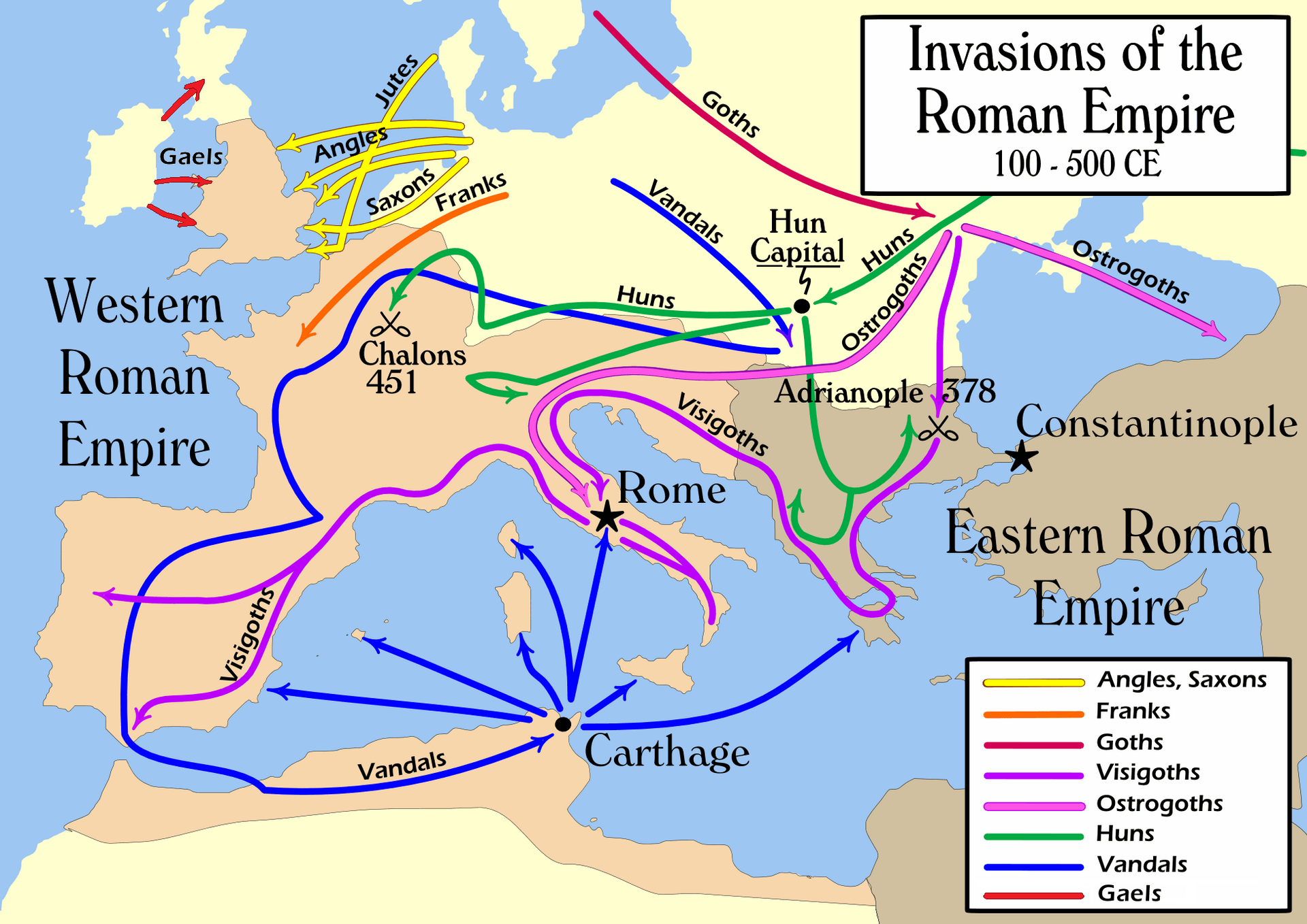
4-7 世紀哥德人、汪達爾人、法蘭克人、盎格魯-撒克遜人、倫巴第人陸續進入西羅馬版圖,建立各蠻族王國,奠定中世紀歐洲政治版圖。
From the 4th to 7th centuries, the Goths, Vandals, Franks, Anglo-Saxons, and Lombards entered the former Western Roman Empire, founding successor kingdoms that shaped medieval Europe.

基因與語言研究顯示羅姆人約於 1000 年前自印度西北部離開,經波斯、拜占庭進入巴爾幹與歐洲,成為歐洲最大無國族少數。
Genetic and linguistic studies show the Romani left northwestern India about 1,000 years ago, migrating through Persia and Byzantium into the Balkans and Europe — Europe's largest stateless minority.

1500-1866 年間約 1250 萬非洲人被強迫運往美洲為奴,是史上最大規模的強迫遷徙,塑造了整個大西洋世界的人口結構。
Between 1500 and 1866, an estimated 12.5 million Africans were forcibly shipped to the Americas — the largest forced migration in history, reshaping the entire Atlantic world's demography.

從 1607 Jamestown 到 1776 獨立宣言,13 個英屬北美殖民地發展 170 年:清教徒、貴格派、蘇格蘭-愛爾蘭移民、非洲奴隸構成人口基礎。1620 Mayflower Compact、1675 King Philip's War、1692 Salem 女巫審判、1754-63 French-Indian War、1765 Stamp Act、1773 Boston Tea Party。
From 1607 Jamestown to 1776 Declaration, 13 British colonies developed for 170 years: Puritans, Quakers, Scots-Irish migrants, and African slaves formed the population base. Key moments: 1620 Mayflower Compact, 1675 King Philip's War, 1692 Salem witch trials, 1754-63 French-Indian War, 1765 Stamp Act, 1773 Boston Tea Party.

從 1803 Louisiana Purchase 到 1861 內戰,58 年西進 + 奴隸制撕裂:Lewis & Clark 1804、1812 戰爭、Monroe 主義、Trail of Tears 1830、Texas 1845、美墨戰爭 1846、California Gold Rush 1849、Kansas-Nebraska 1854、Dred Scott 1857、Lincoln 1860。國土從 Mississippi 擴至 Pacific。
From the 1803 Louisiana Purchase to 1861 Civil War, 58 years of westward expansion and slavery tearing the nation: Lewis & Clark 1804, War of 1812, Monroe Doctrine, Trail of Tears 1830, Texas 1845, Mexican-American War 1846, California Gold Rush 1849, Kansas-Nebraska 1854, Dred Scott 1857, Lincoln 1860. The nation expanded from Mississippi to Pacific.

5 月 28 日 Jackson 簽 Indian Removal Act,強制五大族(Cherokee、Creek、Choctaw、Chickasaw、Seminole)從東南部遷至 Oklahoma「印第安領地」。1838-39 Cherokee「血淚之路」死 4 千人。是美國早期大規模種族清洗,至今民族記憶傷痛。
On May 28, Jackson signed the Indian Removal Act, forcibly relocating the Five Civilized Tribes (Cherokee, Creek, Choctaw, Chickasaw, Seminole) from the Southeast to Oklahoma 'Indian Territory.' The 1838-39 Cherokee 'Trail of Tears' killed 4,000 people. An early US mass ethnic cleansing, a lasting national wound.

1845-1852 年馬鈴薯枯萎病造成愛爾蘭百萬人餓死、150 萬人移民美國,愛爾蘭人口銳減四分之一。美國愛爾蘭裔自此成為重要少數族群。
The 1845–1852 potato blight killed 1 million in Ireland and drove 1.5 million to emigrate to the U.S. Ireland's population fell by a quarter. Irish Americans became a major U.S. minority.

4 月 25 日爆發。1848 年 Guadalupe Hidalgo 條約墨國割讓加州、新墨、亞利桑那、科羅拉多、猶他、內華達、懷俄明(計 135 萬平方公里),美付 1500 萬美元。國土擴 1/3。但新領土是否允奴隸制引燃南北分裂,為 Civil War 埋下遠因。
Broke out on April 25. The 1848 Treaty of Guadalupe Hidalgo ceded California, New Mexico, Arizona, Colorado, Utah, Nevada, and Wyoming (1.35 million km²) to the US for $15 million. National territory expanded by a third. But whether slavery would be allowed in the new territories ignited the North-South split, seeding the Civil War.

1 月 James Marshall 於 Sutter's Mill 發現金,消息 1849 年傳開,30 萬「49 人」湧入加州(世界各地,包括中國人稱「金山」)。加州 1850 年成州。3 年金礦產值 20 億美元。移民浪潮奠定西部開發基礎,但原住民被驅殺、華工遭歧視。
On January 24 James Marshall discovered gold at Sutter's Mill; news spread in 1849. 300,000 '49ers' flooded California from around the world (Chinese called it 'Gold Mountain'). California became a state in 1850. Three years of gold output totaled $2 billion. The migration laid the foundation for Western development — but indigenous peoples were driven out and killed, and Chinese laborers faced discrimination.

從內戰結束到美西戰爭,33 年間美國成工業強國:橫貫鐵路(1869)、Rockefeller 標準石油、Carnegie 鋼鐵、Vanderbilt 鐵路、Morgan 金融。移民 3 千萬湧入 Ellis Island(1892 起)、勞工血汗、Homestead 罷工 1892、Pullman 罷工 1894、Sherman Antitrust 1890。Mark Twain《鍍金時代》命名此期。
From Civil War's end to the Spanish-American War, 33 years saw America become an industrial power: Transcontinental Railroad (1869), Rockefeller's Standard Oil, Carnegie Steel, Vanderbilt railroads, Morgan finance. 30 million immigrants poured through Ellis Island (from 1892); labor exploitation, 1892 Homestead Strike, 1894 Pullman Strike, 1890 Sherman Antitrust Act. Mark Twain's 'Gilded Age' named this era.

19 世紀中葉後廣東、福建移民大批赴東南亞當苦力、商人,形成新加坡、馬來西亞、印尼等地華人社群;同時期亦有華工赴美國修鐵路、赴古巴種甘蔗。
From the mid-19th century, migrants from Guangdong and Fujian went to Southeast Asia as laborers and traders, forming the Chinese communities of Singapore, Malaysia, and Indonesia. Chinese coolies also built U.S. railroads and worked Cuban sugar fields.

3 月 Rutherford Hayes 當選總統交換條件:南方承認其勝選,聯邦撤軍南部終結 Reconstruction。南方白人重掌權,Jim Crow 種族隔離制、剝奪黑人投票權、私刑暴力興起。黑人從「奴隸」變「二等公民」近 100 年。民權運動 1950s 起才逆轉。
In March, Rutherford Hayes's presidency was secured via a compromise: the South accepted his win, and federal troops withdrew — ending Reconstruction. Southern whites regained power; Jim Crow segregation, Black disenfranchisement, and lynching rose. Blacks went from 'slaves' to 'second-class citizens' for nearly a century. Only the 1950s Civil Rights Movement reversed it.
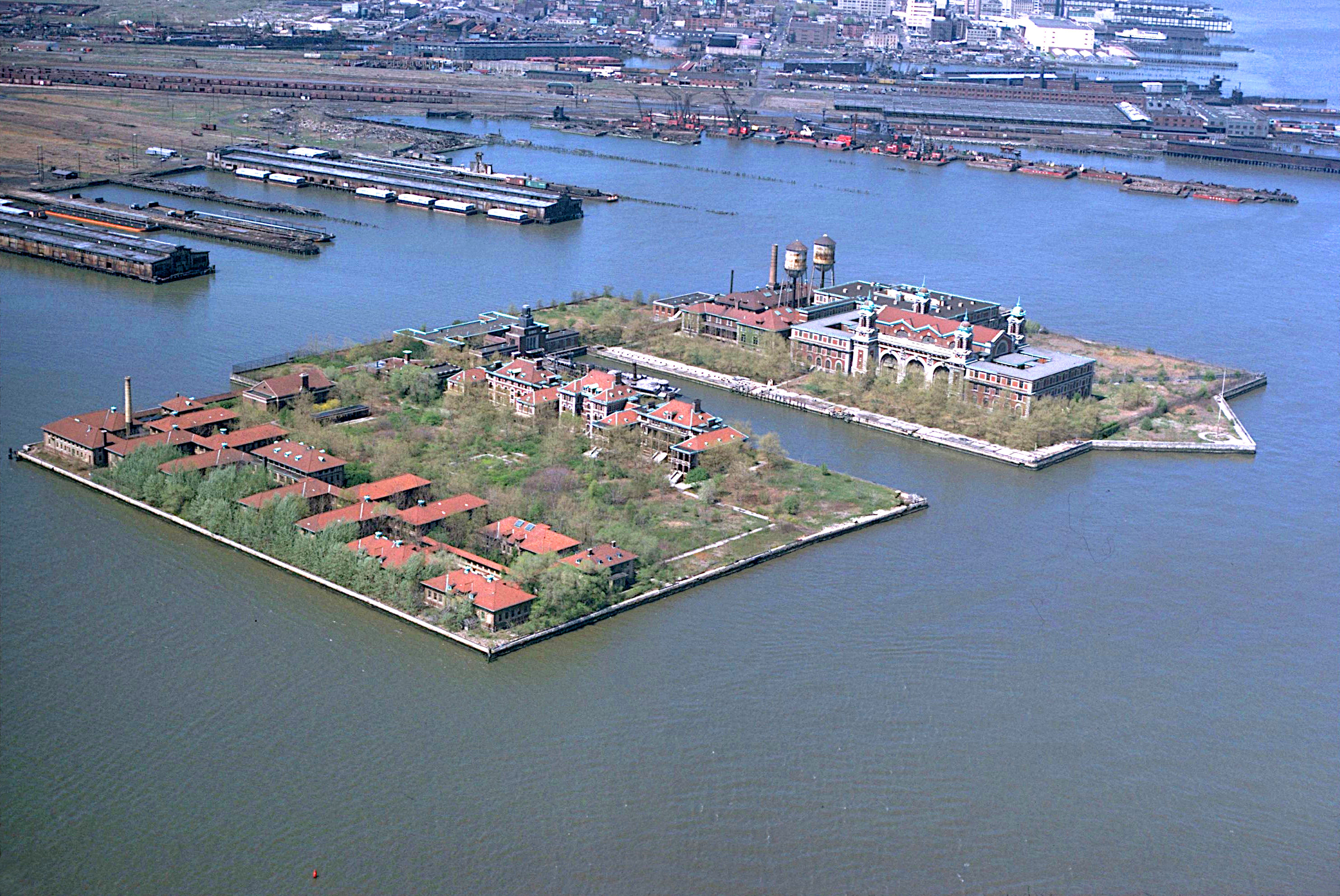
1 月 1 日 Ellis Island 移民檢疫站在 New York 港啟用。1892-1954 年共 1200 萬移民通過,主要來自義、愛、猶太、波蘭、俄羅斯、希臘。今日 40% 美國人有祖先通過此站。與 Statue of Liberty(1886)並列美國多元民族象徵。1924 移民配額法大幅收緊。
On January 1, Ellis Island immigrant inspection station opened in New York Harbor. From 1892 to 1954, 12 million immigrants passed through — mostly Italian, Irish, Jewish, Polish, Russian, Greek. 40% of Americans today have ancestors who came through. With the Statue of Liberty (1886), it became the symbol of American multi-ethnic identity. The 1924 Immigration Act drastically tightened quotas.
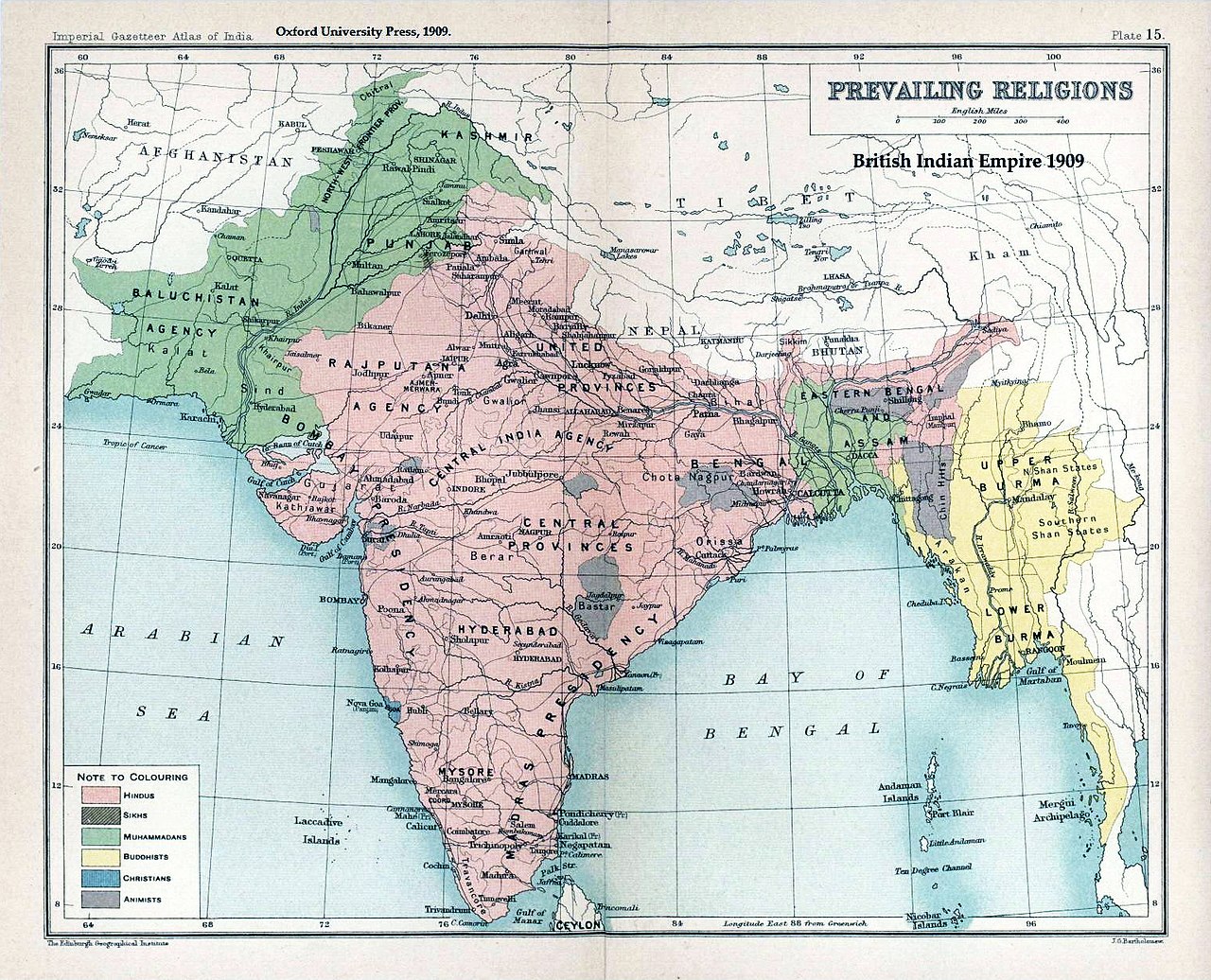
1947 年印巴分治引發人類史上規模最大的遷徙:約 1400 萬穆斯林、印度教徒與錫克教徒在巴基斯坦與印度之間遷移,100-200 萬人在宗教暴力中喪生。
The 1947 Partition of India triggered the largest migration in human history: some 14 million Muslims, Hindus, and Sikhs moved between Pakistan and India, with 1–2 million killed in sectarian violence.

8 月 14-15 日英屬印度依宗教分治為印度與巴基斯坦兩自治領。Mountbatten 倉促劃界,1500 萬人遷徙、約 100 萬死於宗教屠殺。是人類史上最大遷徙與大英帝國最大殖民地解體。
On August 14-15, British India was partitioned along religious lines into India and Pakistan. Mountbatten's hasty border drove 15 million people to migrate; about a million died in communal violence — history's largest migration and the British Empire's biggest decolonization.

1948 年以色列建國與第一次中東戰爭期間約 70 萬巴勒斯坦人被驅趕或逃離家園,阿拉伯語稱「浩劫」(Nakba)。難民問題至今是中東核心議題。
During Israel's 1948 founding and the First Arab-Israeli War, about 700,000 Palestinians were expelled or fled their homes — the 'Nakba' (catastrophe). The refugee issue remains central to Middle East politics.

1949 年國共內戰末期約 200 萬軍民隨國民政府遷台,形成戰後台灣「外省人」族群,徹底改變台灣人口與政治結構。
As the Chinese Civil War ended in 1949, about 2 million troops and civilians followed the ROC government to Taiwan, forming the postwar 'Mainlander' (waishengren) community that reshaped Taiwan's demographics and politics.

從 1954 Brown v Board(學校分離違憲)到 1968 MLK 遇刺 + 民權法案 II,14 年間非裔美人以非暴力抗爭、法律訴訟、媒體動員爭取公民權。Rosa Parks 1955、Little Rock Nine 1957、MLK 1963 I Have a Dream、1964 民權法案、1965 投票權法、Malcolm X、Selma 大遊行。
From 1954 Brown v Board (school segregation unconstitutional) to 1968 MLK assassination plus Civil Rights Act II, 14 years of African-American nonviolent protest, litigation, and media mobilization for civil rights. Rosa Parks 1955, Little Rock Nine 1957, MLK 1963 'I Have a Dream,' 1964 Civil Rights Act, 1965 Voting Rights Act, Malcolm X, Selma marches.